Selecting the right school canteen kitchen equipment in Indonesia requires more than purchasing several commercial appliances. A school kitchen must prepare hundreds or even thousands of meals within a limited service period while maintaining food hygiene, controlling operating costs and creating a safe working environment for kitchen staff.
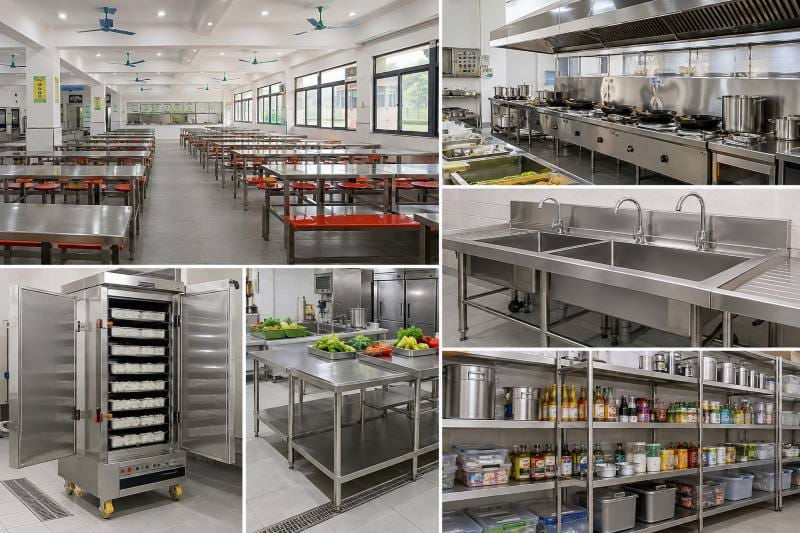
The equipment required for an Indonesian school canteen normally includes commercial rice steaming cabinets, stainless steel sinks, food preparation worktables, storage shelving, refrigeration equipment, gas cooking ranges, food holding equipment, serving counters and cafeteria furniture. However, the correct specification depends on student numbers, menu structure, serving schedules, kitchen dimensions, available utilities and local installation conditions.
For school operators, government procurement projects, contractors, distributors and commercial kitchen consultants, choosing suitable school canteen kitchen equipment in Indonesia is therefore a complete project-planning decision rather than a simple product purchase.
A properly planned school kitchen should support the fundamental food safety principles promoted by the World Health Organization, including keeping food preparation areas clean, separating raw and cooked food, cooking thoroughly, maintaining safe temperatures and using safe water and ingredients.
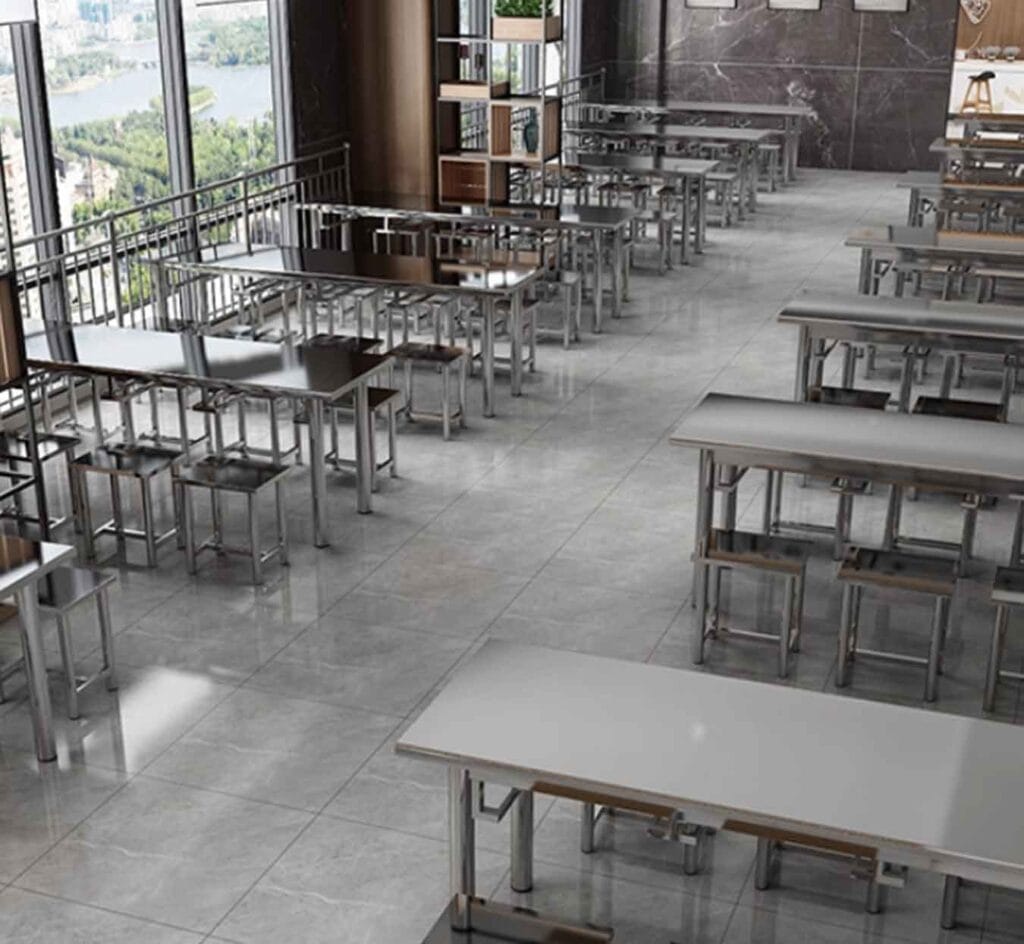
Table of Contents
What School Canteen Kitchen Equipment Is Needed in Indonesia?
A complete school canteen should be divided into functional working zones. Each area requires different equipment to support receiving, storage, washing, preparation, cooking, serving and cleaning.
| Kitchen area | Recommended equipment | Main function |
|---|---|---|
| Receiving area | Inspection table, weighing scale and transport cart | Receiving and checking ingredients |
| Dry storage area | Stainless steel shelving and storage cabinets | Organizing packaged ingredients and kitchen supplies |
| Cold storage area | Commercial refrigerators and freezers | Storing meat, vegetables, dairy products and frozen food |
| Vegetable washing area | Stainless steel sinks and drainboards | Washing vegetables and ingredients |
| Food preparation area | Stainless steel worktables and overshelves | Cutting, sorting, mixing and portioning food |
| Cooking area | Rice steaming cabinet, gas range and cooking appliances | High-volume meal production |
| Food holding area | Warming cabinets and transport carts | Holding cooked food before service |
| Serving area | Serving counters, trays and food distribution equipment | Distributing meals efficiently |
| Dishwashing area | Multi-bowl sinks, sterilizing cabinets and drying shelves | Washing and sanitizing utensils |
| Dining area | Stainless steel cafeteria tables and chairs | Providing durable seating for students |
The individual products should not be selected separately. The size, capacity and location of each machine affect the efficiency of the entire kitchen.
For example, a high-capacity rice steaming cabinet will not solve production delays if the kitchen lacks sufficient washing space, ingredient preparation tables, transport carts or serving stations.
Buyers can review Bafang’s commercial kitchen equipment solutions when planning a complete school canteen project.
Calculate Daily Meal Volume Before Selecting Equipment
The number of students is an important starting point, but it should not be the only factor used to select school canteen kitchen equipment in Indonesia.
A school may prepare 800 lunches each day, but the kitchen might need to serve most students within only 60 minutes. The equipment must therefore complete ingredient preparation, cooking, portioning and food distribution before the peak serving period.
Before requesting a quotation, buyers should confirm:
- Total meals prepared per day
- Number of breakfast, lunch and dinner services
- Number of students served during the busiest period
- Available preparation and cooking time
- Number of kitchen employees
- Main menu items
- Frequency of ingredient deliveries
- Number of available production cycles
- Required backup production capacity
- Expected future growth in student numbers
A simple capacity calculation is:
Required capacity per production cycle =
total meals required ÷ available production cycles
For example, if a school must prepare 800 portions and can complete two full cooking cycles before lunch, each production cycle should support approximately 400 portions.
However, equipment capacity should always be confirmed according to the actual food being prepared. Rice, vegetables, steamed buns, soup and meat products may require different tray quantities, loading weights and cooking times.
When comparing equipment, buyers should ask:
- How many kilograms can be processed per batch?
- How long does one complete production cycle require?
- Is preheating time included?
- What is the recommended loading quantity for each tray?
- How much time is needed between batches?
- What electrical power or gas pressure is required?
- Is the stated output based on rice or another food product?
This information provides a more reliable basis for comparing suppliers.
Select the Right Commercial Rice Steamer
Rice is a core part of many school meals in Indonesia, making a commercial rice steamer one of the most important components of school canteen kitchen equipment in Indonesia.
A rice steaming cabinet should not be selected only according to the number of trays. Buyers should also consider:
- Tray dimensions
- Tray depth
- Recommended rice load per tray
- Total batch capacity
- Heating time
- Steam circulation
- Gas or electric configuration
- Cabinet insulation
- Water inlet requirements
- Drainage requirements
- Safety controls
- Cleaning procedures
Bafang supplies commercial rice steaming cabinets for schools, company canteens, restaurants and institutional kitchens.
The double-door rice steaming cabinet can be configured for gas or electric operation and can use different trays for rice, vegetables, steamed buns and other foods.
Gas Rice Steamer
A gas rice steaming cabinet may be suitable when:
- The school has a stable gas supply
- The building has limited electrical capacity
- The kitchen requires high-volume batch cooking
- Other cooking appliances already use the same gas system
- Local gas operating costs are more favorable
Electric Rice Steamer
An electric rice steaming cabinet may be suitable when:
- The school has sufficient electrical capacity
- Gas installation is restricted
- The project requires simpler utility management
- The kitchen prefers electric heating controls
- Gas storage or piping is difficult to arrange
Before manufacturing equipment for an Indonesian project, the supplier should confirm:
Voltage
Frequency
Electrical phase
Rated power
Gas type
Gas pressure
Water inlet
Drainage position
The manufacturer should never assume that one standard electrical or gas configuration will suit every Indonesian school project.
Choose the Correct Rice Steamer Tray Configuration
Tray design directly affects the types of food that can be prepared.
Non-perforated trays are usually suitable for rice and foods that require water, sauce or liquid retention. Perforated trays allow steam to circulate through the food and may be suitable for vegetables, buns and selected steamed products.
Buyers should confirm:
- Tray material
- Tray outside dimensions
- Tray depth
- Recommended loading capacity
- Number of trays included
- Perforated and non-perforated options
- Availability of replacement trays
- Compatibility with existing trays
- Cleaning and storage requirements
The largest rice steaming cabinet is not always the most efficient choice. An oversized model may increase initial investment, occupy more kitchen space and consume unnecessary energy during lower-volume production periods.
The correct model should match the school’s peak meal volume while maintaining enough additional capacity for menu changes and future demand.
Plan Separate Washing Areas
A school kitchen should not use one sink for every washing task.
Raw vegetables, meat, cookware, serving trays and cleaning tools have different hygiene requirements. Using one washing station for all tasks can create congestion and increase the risk of cross-contamination.
An effective kitchen workflow should follow:
Receiving → Storage → Washing → Preparation → Cooking → Holding → ServingDirty trays and used utensils should move through a separate return route:
Dining Area → Dirty Dish Collection → Washing → Sanitizing → Drying → Clean StorageThis layout reduces contact between dirty utensils and clean food preparation areas.
Bafang’s commercial stainless steel sink range includes single-bowl, double-bowl and three-compartment configurations.
A double-bowl stainless steel sink can support separate washing and rinsing activities. Larger school canteens may require additional sinks, drainboards or dedicated washing stations.
When purchasing sinks as part of school canteen kitchen equipment in Indonesia, buyers should check:
- Stainless steel grade
- Stainless steel thickness
- Sink bowl dimensions
- Bowl depth
- Drainboard position
- Backsplash height
- Drain outlet diameter
- Leg and frame construction
- Adjustable feet
- Undershelf configuration
- Faucet installation holes
- Welded or knock-down design
- Export packaging method
The sink should also be large enough for the biggest trays, pots and containers used in the kitchen.
Use Stainless Steel Worktables for Different Tasks
Preparation space is often underestimated during school kitchen planning.
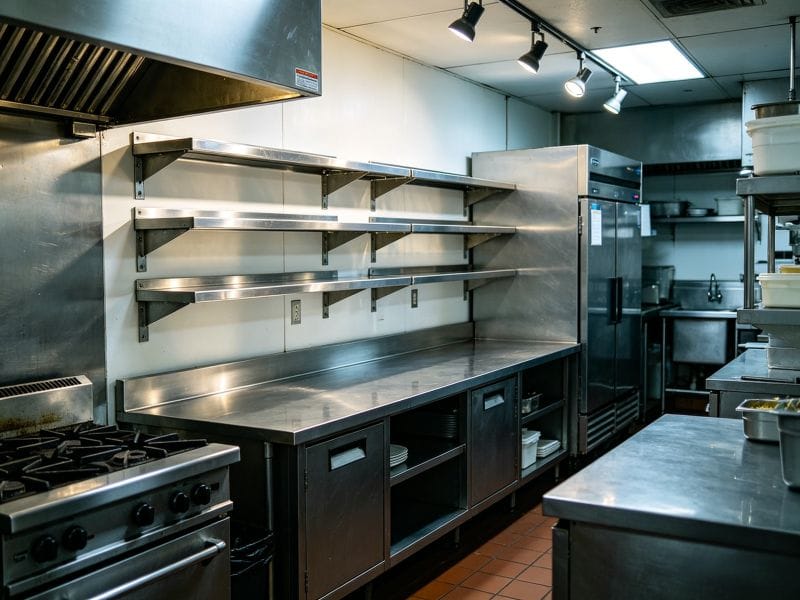
Kitchen employees require enough space to wash, cut, mix, portion and organize ingredients without placing raw food and cooked food on the same surface.
Instead of using one table for every task, the kitchen should create separate stations for:
- Raw meat preparation
- Vegetable preparation
- Cooked food handling
- Meal portioning
- Tray assembly
- Dough or bakery preparation
- Beverage preparation
- Temporary food staging
Bafang’s stainless steel worktables can be configured for food preparation, temporary storage and equipment support.
Important specifications include:
- Tabletop stainless steel grade
- Actual sheet thickness
- Reinforcement structure
- Recommended load capacity
- Worktable dimensions
- Undershelf position
- Leg tube dimensions
- Adjustable feet
- Backsplash option
- Drawer or cabinet options
- Welded or flat-pack structure
- Surface finish
- Edge treatment
A worktable may appear strong when empty but become unstable when loaded with heavy cookware, ingredients or countertop equipment. Load capacity and reinforcement should therefore be included in the quotation.
Bafang also supplies stainless steel overshelves for workbenches, helping school kitchens increase storage without occupying additional floor space.
Plan Stainless Steel Shelving and Dry Storage
Storage planning has a direct effect on kitchen efficiency.
Ingredients, cookware, serving trays, cleaning supplies and replacement parts should have dedicated storage locations. Frequently used items should be easy to reach without blocking walkways or food preparation stations.
Commercial stainless steel shelving can provide durable and easy-to-clean storage for school kitchens.
Before placing an order, confirm:
- Overall width, depth and height
- Number of tiers
- Load capacity per shelf
- Solid or slatted shelf design
- Distance between shelves
- Fixed or adjustable shelf positions
- Floor clearance
- Adjustable feet
- Stationary or mobile configuration
- Assembly method
- Anti-tip requirements
Cleaning chemicals should always be stored separately from food ingredients, cookware and serving utensils.
The shelving layout should also leave sufficient clearance for cleaning floors and walls. Equipment that is difficult to clean around can create long-term sanitation problems.
Select Refrigeration for Indonesia’s Climate
Refrigeration capacity depends on the menu, ingredient delivery schedule and expected storage period.
A school that receives fresh ingredients every day may require less storage than a school receiving deliveries only twice per week. Menus containing meat, dairy products, frozen food and prepared ingredients also require greater cold-storage capacity.
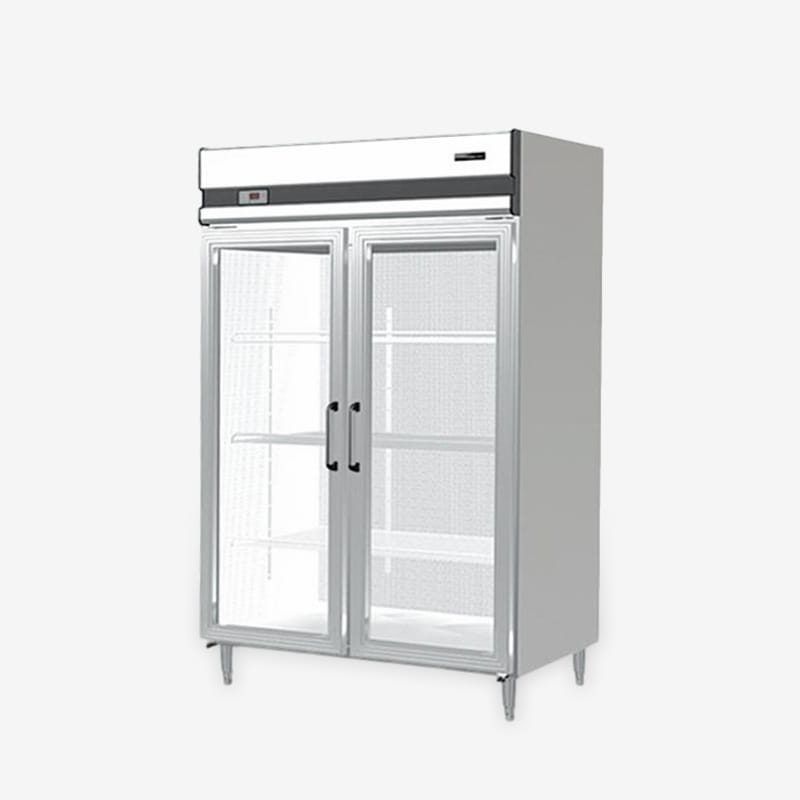
Bafang supplies commercial refrigeration equipment for institutional and commercial kitchens.
Buyers should evaluate:
- Chilled storage volume
- Frozen storage volume
- Ingredient delivery frequency
- Raw and cooked food separation
- Ambient kitchen temperature
- Door-opening frequency
- Compressor position
- Refrigerant type
- Temperature control system
- Defrost method
- Drainage requirements
- Door gasket availability
- Internal shelf configuration
- Electrical requirements
- Spare parts availability
Indonesia’s tropical climate can increase the operating load on commercial refrigeration equipment. Refrigerators and freezers require adequate ventilation and should not be installed directly beside high-heat cooking equipment unless the manufacturer confirms that the arrangement is acceptable.
Daily temperature monitoring should also be part of the school’s food safety system. Equipment supports safe storage, but it cannot replace staff training, proper cleaning and documented operating procedures.
The FAO Good Hygiene Practices and HACCP Toolbox provides additional guidance for food hygiene and safety management.
Match Cooking Equipment to Indonesian School Menus
A school canteen in Indonesia may prepare rice, vegetables, soup, noodles, eggs, meat, fish and fried or stir-fried dishes.
The cooking line should therefore be designed around the actual menu instead of a generic restaurant equipment package.
Common cooking equipment includes:
- Commercial rice steaming cabinet
- Commercial gas stove
- Stock pot range
- Soup cooker
- Frying equipment
- Steaming equipment
- Exhaust hood
- Hot-water system
- Food holding cabinet
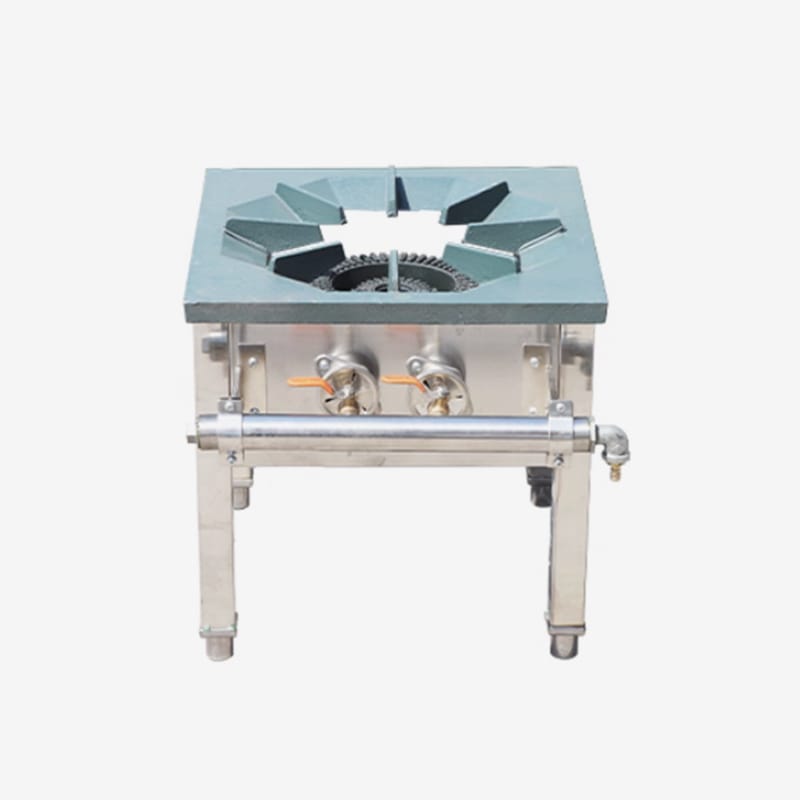
A commercial gas stove can support boiling, stir-frying and other high-volume cooking tasks.
Before ordering, buyers should confirm:
- Number of burners
- Burner output
- Natural gas or LPG compatibility
- Required gas pressure
- Ignition method
- Flame failure protection
- Equipment dimensions
- Stainless steel grade
- Panel thickness
- Adjustable feet
- Cleaning access
- Ventilation requirements
The cooking line should allow prepared food to move toward the holding and serving area without crossing the raw food preparation zone.
Include Food Holding and Serving Equipment
Cooking capacity is only one part of school meal service.
Once food is prepared, it must be held, portioned, transported and served efficiently. A kitchen with sufficient cooking equipment can still experience delays when the holding or serving area is too small.
Depending on the project, the serving area may require:
- Insulated food transport carts
- Heated holding cabinets
- Stainless steel serving counters
- Tray storage racks
- Portioning tables
- Beverage stations
- Clean utensil storage
- Waste collection units
The serving line should be designed according to the number of students arriving during the busiest period. For schools with short lunch breaks, several serving points may be more efficient than one long service counter.
Dining furniture should also be durable, stable and easy to clean. Bafang’s stainless steel cafeteria tables and chairs can be used in school canteens, company cafeterias and other high-traffic dining environments.
Consider Indonesia’s Regional Conditions
A useful guide to school canteen kitchen equipment in Indonesia must address actual regional conditions rather than simply adding “Indonesia” to a general equipment article.
Tropical Humidity
Indonesia’s warm and humid environment makes material selection, welding quality, surface treatment and routine cleaning especially important.
Equipment installed in coastal areas may face greater exposure to moisture and salt in the air. Buyers should discuss the installation environment with the manufacturer before choosing stainless steel grades and finishes.
Different Project Locations
Projects in Jakarta, Surabaya, Bandung, Medan, Bali or other Indonesian regions may have different:
- Transportation conditions
- Port arrangements
- Building access restrictions
- Utility infrastructure
- Installation support
- Local project specifications
The final equipment proposal should therefore be based on the individual project rather than one standard national package.
Utility Compatibility
Before production, confirm:
- Electrical voltage
- Electrical frequency
- Single-phase or three-phase supply
- Maximum available electrical load
- LPG or natural gas
- Gas pressure
- Water inlet pressure
- Drainage location
- Exhaust requirements
- Ventilation capacity
Incorrect utility specifications can make imported equipment difficult or unsafe to install.
Operating Documents
Indonesian buyers should consider requesting:
- English operating manual
- Bahasa Indonesia manual or labels where necessary
- Electrical wiring diagram
- Gas connection instructions
- Cleaning procedures
- Preventive maintenance schedule
- Spare parts list
- Troubleshooting guide
Clear documentation helps reduce installation errors and supports long-term operation.
Compare 201 and 304 Stainless Steel
Stainless steel grade is an important consideration when selecting school canteen kitchen equipment in Indonesia.
There is no single material grade suitable for every component. The correct material depends on exposure to water, cleaning chemicals, salt, acidic food, humidity and project budget.
| Stainless steel grade | Potential applications | Purchasing considerations |
|---|---|---|
| 201 stainless steel | Selected dry-storage and lower-corrosion applications | More economical but requires careful evaluation in humid and wet environments |
| 304 stainless steel | Sinks, work surfaces and frequently cleaned kitchen areas | Commonly selected for stronger corrosion resistance |
| 316 stainless steel | Specialized high-corrosion or chloride-exposure environments | Higher cost and usually used for demanding applications |
The stainless steel grade alone does not determine equipment quality.
Buyers should also inspect:
- Actual material certificate
- Sheet thickness
- Surface finish
- Weld treatment
- Corner construction
- Structural reinforcement
- Cleaning chemical compatibility
- Exposure to salt and acidic ingredients
A poorly reinforced 304 stainless steel table may perform worse structurally than a properly designed table with clearly specified construction. Material selection and fabrication quality should be evaluated together.
Standard or Customized School Canteen Equipment
Standard equipment can reduce design time and simplify replacement. It may be suitable for schools with common kitchen dimensions and production requirements.
Customized equipment is more appropriate when:
- Kitchen space is limited
- Existing plumbing cannot be relocated
- A table must fit around a column
- The school uses a specific tray system
- Serving counters must match an existing dining layout
- The project needs special stainless steel thickness
- Equipment must pass through restricted doors or elevators
- The buyer needs a coordinated equipment line
Bafang provides OEM and ODM commercial kitchen equipment for project-specific dimensions, materials, structures and functions.
For an accurate quotation, buyers should provide:
- Kitchen floor plan
- Equipment layout
- Daily meal quantity
- Menu information
- Required equipment dimensions
- Stainless steel grade
- Stainless steel thickness
- Electrical information
- Gas specifications
- Water and drainage positions
- Door and elevator dimensions
- Destination port
- Packaging requirements
- Required delivery schedule
Complete project information reduces quotation errors and helps the manufacturer prepare suitable drawings.
How to Evaluate a Supplier
A professional supplier of school canteen kitchen equipment in Indonesia should help buyers verify specifications instead of only providing a price list.
Before placing an order, request:
- Detailed product drawings
- Complete specification sheets
- Stainless steel grade and thickness
- Utility requirements
- Capacity calculations
- Product photographs and videos
- Welding and surface-finishing details
- Quality inspection procedures
- Packaging drawings
- Spare parts lists
- Warranty terms
- Installation instructions
- Production lead time
- Container loading information
For customized projects, all drawings should be approved in writing before production.
The approved drawing should show:
- Overall dimensions
- Work height
- Door direction
- Shelf location
- Sink bowl dimensions
- Drainboard position
- Backsplash height
- Utility connections
- Leg structure
- Custom accessories
Buyers should compare the complete offer rather than only the unit price.
Material + thickness + structure + capacity + accessories +
packaging + inspection + warranty + spare parts + landed cost
This provides a more accurate comparison between manufacturers.
Common Procurement Mistakes
Purchasing Before Completing the Kitchen Layout
Large equipment may block doors, drainage points, ventilation systems or working aisles when the final layout has not been confirmed.
Selecting Capacity Only from Student Numbers
Peak service volume and available production cycles are more useful than the total number of enrolled students.
Accepting Vague Material Descriptions
“Stainless steel construction” does not explain grade, thickness, reinforcement or surface treatment.
Ignoring Electrical and Gas Specifications
Incorrect voltage, phase or gas pressure can prevent equipment from operating correctly.
Mixing Raw and Cooked Food Routes
Poor workflow can cause raw ingredients, dirty cookware and prepared meals to cross in the same area.
Underestimating Packaging and Freight
Welded equipment may require less assembly but occupy more container space. Knock-down equipment can reduce freight volume but requires installation after arrival.
Failing to Plan Spare Parts
Heating elements, switches, burners, door gaskets and control components should be identified before shipment.
Choosing the Lowest Price
Lower prices may result from thinner materials, weaker reinforcement, fewer accessories or reduced packaging protection.
School Canteen Equipment Procurement Checklist
| Project item | Information to confirm |
|---|---|
| Location | Indonesian city and installation environment |
| Daily meal volume | Breakfast, lunch and dinner quantities |
| Peak demand | Students served during the busiest period |
| Menu | Rice, vegetables, soup, meat and other dishes |
| Kitchen size | Floor plan, ceiling height and aisle width |
| Building access | Doors, elevators, stairs and corridors |
| Utilities | Electricity, gas, water, drainage and exhaust |
| Rice steamer | Tray quantity, tray dimensions, energy source and batch capacity |
| Sinks | Bowl quantity, bowl size, drainboard and backsplash |
| Worktables | Dimensions, material grade, thickness and load |
| Shelving | Number of tiers, size and load capacity |
| Refrigeration | Chilled and frozen storage requirements |
| Cooking line | Burner configuration, output and ventilation |
| Serving equipment | Holding cabinets, carts and counters |
| Dining furniture | Seating quantity, table size and aisle space |
| Packaging | Export packing and container-loading method |
| Documentation | Drawings, manuals and spare parts lists |
| Compliance | Requirements verified by the local importer or consultant |
Why Choose Bafang?
Bafang manufactures commercial kitchen equipment for schools, restaurants, hotels, company canteens and institutional foodservice projects.
The current product range includes:
- Rice steaming cabinets
- Stainless steel sinks
- Stainless steel worktables
- Commercial kitchen shelving
- Refrigeration equipment
- Commercial gas ranges
- Cafeteria tables and chairs
- Customized stainless steel equipment
For buyers sourcing school canteen kitchen equipment in Indonesia, Bafang can support standard products and project-specific customization.
Available services include:
- Custom equipment dimensions
- Stainless steel material options
- Gas and electric configurations
- School kitchen equipment combinations
- OEM and ODM manufacturing
- Product drawings
- Export packaging
- Container-loading planning
- Project-based quotations
Buyers can submit their meal volume, menu, floor plan, equipment requirements and destination information through the Bafang contact page.
Conclusion
Selecting school canteen kitchen equipment in Indonesia requires careful planning around food safety, peak meal volume, kitchen workflow, utility conditions, material specifications and long-term maintenance.
The best solution is not necessarily the equipment package with the highest capacity or lowest initial price. It is a coordinated system that allows employees to receive, store, wash, prepare, cook, hold and serve food safely and efficiently.
FAQ
What school canteen kitchen equipment is required in Indonesia?
Most school canteens require refrigeration equipment, stainless steel sinks, preparation worktables, storage shelving, commercial rice steamers, gas cooking equipment, food holding systems and serving equipment. The final list depends on the number of meals, menu and kitchen layout.
How should a school choose rice steamer capacity?
Calculate the number of rice portions needed before each meal service. Then compare tray capacity, batch loading weight, heating time and available production cycles. Capacity should be verified using the school’s actual menu.
Is 304 stainless steel suitable for an Indonesian school kitchen?
304 stainless steel is commonly selected for sinks, food preparation surfaces and frequently cleaned areas because of its corrosion resistance. The final choice should also consider thickness, reinforcement, welding quality and the installation environment.
Is gas or electric equipment better for Indonesian schools?
The correct choice depends on electrical capacity, gas availability, operating costs and building requirements. Buyers should confirm voltage, phase, frequency, gas type and gas pressure before production.
Can school kitchen equipment be customized?
Yes. Sinks, worktables, shelving, serving counters and selected cooking equipment can be customized according to dimensions, material, thickness and functional requirements.