Table of Contents
Why cleaning needs an equipment-specific plan · Start with the manufacturer’s manual · Define who does what · Prepare food and the work area first · Clean interior surfaces without damaging them · Give door gaskets and handles focused attention · Keep the exterior and surrounding area clean · Choose intervals based on observed conditions · Use a comparison table to assign the work · Document the work and close the loop · Food safety and supplier information · Frequently asked questions · Build the procedure around the exact unit
Quick answer: A useful commercial refrigerator cleaning plan separates routine operator cleaning from periodic inspection and technician-only work. It identifies food-safe products, protects stored food, follows the equipment manual, and records who completed each task. The exact interval depends on the refrigerator design, workload, environment, and manufacturer instructions, so a written site plan is more reliable than copying a generic calendar.
Why cleaning needs an equipment-specific plan
A commercial refrigerator works in a demanding setting. Doors open throughout service, containers enter and leave, spills happen, and warm, humid air can enter whenever a door is left open. Dust and grease may collect around external surfaces, while food residue can accumulate on shelves, gaskets, handles, and floor areas. A consistent commercial refrigerator cleaning routine helps staff keep the storage area orderly and makes unusual changes easier to notice.
Cleaning is not a substitute for temperature monitoring, safe food handling, or maintenance. Nor does a clean cabinet prove that the equipment is operating correctly. The purpose of the plan is to define repeatable tasks, prevent avoidable soil build-up, protect components from unsuitable chemicals or water, and establish a clear handoff when a problem needs qualified service.
Start with the manufacturer’s manual
Before writing a commercial refrigerator cleaning schedule, locate the model-specific operating and care instructions. Record the model and serial number, the approved cleaning agents, any surfaces that need special treatment, and the procedure for removing shelves or guards. Instructions differ among finishes, controls, door designs, cooling systems, and accessories. A method that is acceptable for one surface can damage another.
Ask the supplier for the current manual if the document is missing. Keep a copy where the person responsible for the equipment can find it, and note the service contact route. Do not assume that a product described as stainless steel is compatible with every abrasive pad, acidic solution, chloride-containing cleaner, or sanitizing chemical. Follow the equipment maker’s care guidance and the chemical label; where instructions conflict or are unclear, stop and ask the manufacturer or a qualified service provider.
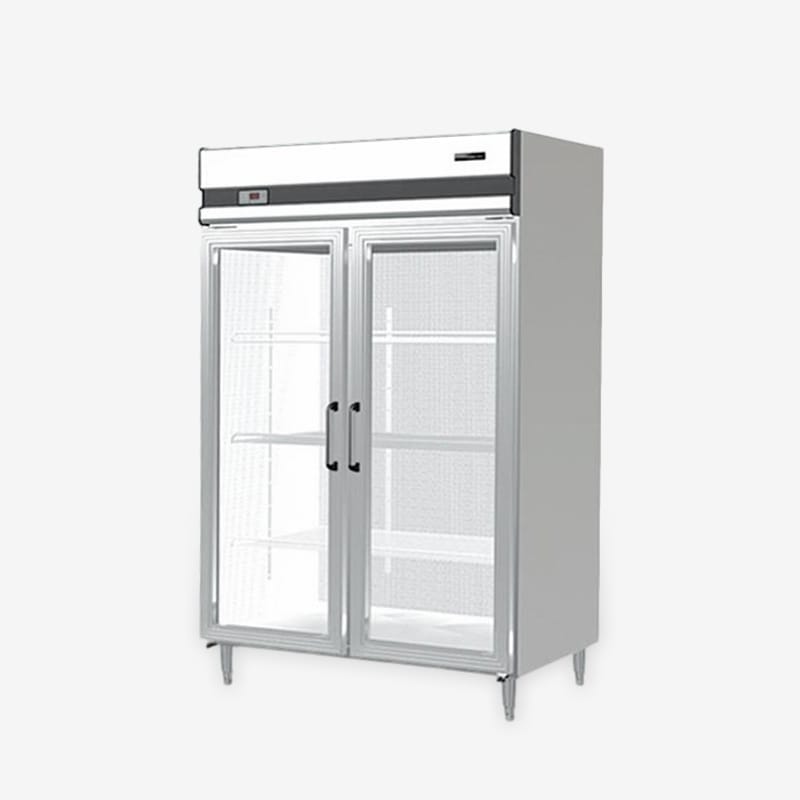
Make the plan specific to each unit. A glass-door display refrigerator, a reach-in cabinet, and a multi-door freezer may have different removable parts, seals, airflow paths, and access panels. Include the equipment location and model in the cleaning record so instructions are not accidentally applied to the wrong machine.

Define who does what
A reliable commercial refrigerator cleaning routine distinguishes daily housekeeping from deeper cleaning and technical work. Operators can usually follow the approved procedure for visible food spills, handles, accessible shelves, and nearby floor areas. A trained supervisor can verify that the unit is emptied and protected correctly, that cleaning products are stored and used as directed, and that the work is documented.
Electrical, refrigeration, refrigerant, and sealed-system work is different. Staff should not remove covers, probe electrical parts, handle refrigerant, or dismantle components unless they are qualified and authorized under the manufacturer’s instructions and local requirements. The plan should state how to report a damaged cord, unusual noise, persistent water, a torn gasket, a fault code, or a temperature concern. It should also identify who can decide whether a unit needs to be taken out of service.
Assign an owner and a backup for each shift or area. If everyone assumes somebody else will clean the door seal, the task may be missed. If several teams share the same refrigerator, make the responsibility visible in the local procedure and shift handover rather than relying on memory.
Prepare food and the work area first
Plan a full interior clean for a time when the operation can safely protect the food and minimize disruption. Identify suitable temporary storage before moving ingredients. Follow the site’s food safety procedure for product identification, separation, time control, and return to storage. Keep raw and ready-to-eat products protected from cross-contamination, and do not place food on floors or unclean work surfaces while cleaning.
Check the cabinet’s current condition before removing items. Note any abnormal display, alarm, visible water, damaged packaging, or product that requires a food-safety decision. If the unit appears to be outside the operating limits set by the food safety plan, follow that plan and notify the responsible supervisor. Cleaning should not delay a response to a potential temperature-control issue.
Gather only the tools and products approved for the surfaces. Use clean cloths and dedicated equipment to avoid transferring soil from floors or other tasks. Read chemical labels, observe stated dilution and contact directions, and never mix cleaning chemicals. Keep cleaners away from food and food-contact items. Ensure the floor is managed to reduce slip risk, and keep the work area clear of customer or staff traffic.
Clean interior surfaces without damaging them
For routine commercial refrigerator cleaning, remove product in a controlled way and take out only the shelves, trays, and accessories the manual permits staff to remove. Clean detached pieces in the designated area using the specified method. Wash accessible interior surfaces with the approved solution and materials, paying attention to corners, shelf supports, drawer edges, and places where spills can remain hidden. Rinse or wipe as the product directions and equipment instructions require.
Avoid flooding the cabinet or directing water toward controls, lights, sensors, electrical connections, fan openings, or other components. Do not use a sharp tool to scrape residue. Avoid abrasive materials unless the manual explicitly approves them for the particular finish. If a part does not release easily, do not force it; check the instructions or ask service personnel.
Allow cleaned surfaces to dry as directed before replacing accessories or food. Confirm that shelves and supports are correctly seated and that stored items do not block the airflow openings identified by the manufacturer. Return products promptly in an organized way that supports stock rotation and the site’s food handling procedures. Recheck the unit’s display and alarms according to the operator procedure after the cleaning work is complete.
Give door gaskets and handles focused attention
Door handles receive frequent contact, while gaskets collect crumbs, liquid, and debris in folds. Include them in the commercial refrigerator cleaning plan, using a method compatible with the material. Wipe the full accessible length of the seal, including corners, and inspect it for tears, permanent distortion, loose sections, or areas that no longer meet the cabinet evenly.
Cleaning can reveal a condition that needs repair, but it does not authorize staff to adjust hinges or replace parts without approval. Report a gasket that appears damaged or fails to close properly. Also report a door that swings open, does not latch, or requires unusual force. Keep the findings in the maintenance record so repeated issues can be tracked and assessed.
Staff should avoid leaving doors open longer than needed during cleaning and restocking. Confirm that containers do not obstruct closure and that the unit is not overloaded beyond the manufacturer’s guidance. A clean seal and unobstructed door path support normal operation, but the correct checks and remedies depend on the model and site procedures.

Keep the exterior and surrounding area clean
Wipe handles, door faces, accessible side panels, and the top surface only where the equipment instructions permit. Protect displays, labels, and control interfaces from excess liquid. Clean spills near the base promptly using the site’s approved method, and maintain access around the unit for inspection and service. Where a kick plate, grille, or filter is designed for operator cleaning, follow the manual for access and reinstallation.
Do not assume every external grille is a user-serviceable filter or that it can be cleaned with a brush or vacuum while the unit is energized. Identify which parts the manufacturer assigns to routine operator care and which are reserved for a technician. If grease, dust, or debris is visible in an area not covered by the operator procedure, record it and request service guidance rather than improvising.
Keep cartons, mop buckets, waste, and other equipment away from the refrigeration cabinet’s air openings and service clearances. Do not use the top of the unit as general storage if the manufacturer prohibits it. The cleaning plan should include the floor and nearby work zone because debris around a unit can be carried into the kitchen or obstruct access even when the cabinet itself looks clean.
Choose intervals based on observed conditions
There is no responsible universal calendar for every commercial refrigerator. A unit in a high-volume preparation area may need more frequent attention to handles and visible spills than a low-traffic storage cabinet. Dust, flour, grease, humidity, delivery patterns, door-opening frequency, and local procedures all affect what staff observe. Use the manufacturer’s instructions and the site’s food safety program as the baseline, then adjust task frequency based on documented conditions.
Separate tasks by trigger and scope. Spot cleaning follows a spill or visible soil. Routine surface care follows the operation’s cleaning procedure. A planned interior clean is scheduled when food can be protected and the job completed without disrupting service or monitoring. Technician inspection follows the maintenance instructions or a reported fault. This approach is more useful than assigning every task the same frequency regardless of workload.
Review the schedule after a menu change, a rise in service volume, a move to a different location, or repeated findings in the log. If the door area becomes dirty sooner than expected, update the operator task. If recurring moisture or a persistent performance concern is found, do not simply increase cleaning frequency; ask a qualified person to assess the underlying cause.
Use a comparison table to assign the work
| Task area | Operator or trained staff | Supervisor or qualified technician |
|---|---|---|
| Visible spills and handles | Clean with approved products and record per site procedure | Review repeat problems or material damage |
| Interior shelves and removable parts | Remove and clean only as the manual permits | Assess parts that are stuck, damaged, or not user-removable |
| Door gasket and closure | Clean accessible surfaces and report visible defects | Diagnose sealing, hinge, or latch problems |
| Exterior grille or filter | Clean only if operator care is specified | Handle restricted access or technical cleaning |
| Controls, alarms, and abnormal operation | Observe, record, and escalate concerns | Diagnose and perform authorized service |
This division is a planning aid, not a replacement for the manual, food safety plan, or applicable workplace rules. A task belongs to trained staff only when the equipment maker and employer procedures permit it. Make the responsible role clear for each model at the site.
Document the work and close the loop
A useful cleaning record is brief enough to complete during a shift but detailed enough to show what happened. Include the unit identifier, date and shift, task completed, staff initials, and any condition reported. A simple completion mark is appropriate for routine work; record extra notes when a gasket is damaged, a component is missing, water remains, an alarm appears, or cleaning could not be completed.
Define how unresolved findings are assigned and closed. The supervisor should be able to see whether a maintenance request was raised, who owns the follow-up, and whether the equipment was returned to service under the site’s procedure. If a unit is isolated or removed from use, the record should prevent another shift from assuming it is available. Retain records according to the organization’s food safety and maintenance practices.
Staff training matters as much as the form. Show the cleaning method for the actual model, the products approved at the site, the limits of operator work, and the reporting path for concerns. Revisit the training when equipment changes, the manual is updated, or recurring errors appear. A written commercial refrigerator cleaning process becomes valuable when staff can apply it consistently and managers act on the findings.
Connect cleaning to food safety and supplier information
Cleaning procedures sit within a broader food safety system. The FDA Food Code is a model code for retail and foodservice regulation in the United States; it is not automatically the governing rule in every country or locality. Operators should check the rules adopted by their own authority and follow their approved food safety plan. The equipment supplier can clarify model-specific care, while the local regulator or food safety professional can address site obligations.
For procurement, ask for product documentation before installation. Confirm the cabinet’s model, dimensions, materials, removable parts, cleaning restrictions, service clearances, electrical information, and warranty conditions. Bafang’s commercial refrigeration equipment range and four-door commercial freezer details can help project buyers identify configurations for supplier discussion. Always confirm final model-specific instructions with the supplier before writing the site procedure.
Two useful references are the FDA Food Code resource and NSF’s overview of food equipment and food safety. Use them as background, not as a substitute for locally adopted requirements, the manufacturer’s manual, or professional advice for a specific installation.
Frequently asked questions
How often should a commercial refrigerator be cleaned?
Follow the manufacturer’s instructions and the site’s food safety program. Clean visible spills when they occur, and set other tasks according to workload, environment, observed soil, and the unit’s design rather than applying one universal interval.
Can staff use any stainless-steel cleaner?
No. Check the refrigerator manual and the chemical label for compatibility. Finishes and components differ, and an unsuitable product or abrasive can damage a surface. Ask the supplier if the approved method is unclear.
Should the refrigerator be switched off for cleaning?
Use the shutdown and isolation procedure specified by the manufacturer and the site. Protect stored food and avoid interrupting temperature control unnecessarily. Electrical isolation or internal service should be handled only by authorized personnel as required.
Can kitchen staff clean the condenser area?
Only if the model’s manual explicitly assigns that task to operators and describes the safe method. Some access panels or components are technician-only. Do not remove covers or reach into powered equipment based on a generic cleaning guide.
What should be recorded after cleaning?
Record the unit, date or shift, task, responsible staff member, and any abnormal condition or incomplete work. Assign follow-up findings to a named role and track them until the site’s process confirms closure.
Build the procedure around the exact unit
A practical commercial refrigerator cleaning plan is model-specific, role-based, and linked to the kitchen’s food safety procedures. It gives operators a clear method for routine care, protects food during deeper cleaning, and routes technical concerns to people authorized to resolve them. It also creates a record that helps a supervisor distinguish a one-time spill from a repeated equipment issue.
Before purchasing or installing a new cabinet, request the operating and care manual alongside the product specification. Share the intended use, site conditions, and service expectations with the supplier so the equipment selection and maintenance plan can be reviewed together. Contact Bafang with your cold-storage requirements, intended location, and project market to discuss a suitable commercial refrigeration configuration.