When your standard work table starts wobbling under heavy equipment, bending under daily use, or requiring replacement every few years, you’re not just facing equipment problems—you’re losing productivity, compromising safety, and throwing money away.
Heavy duty stainless steel work tables are not just a nice-to-have upgrade. For restaurants, food processing plants, warehouses, and manufacturing facilities, they’re essential infrastructure that determines operational efficiency and workplace safety.
If you’ve ever wondered why your current tables fail, what makes a table truly “heavy duty,” or whether the investment is worth it, this guide will answer every question.
Table of Contents
What Are Heavy Duty Stainless Steel Work Tables?
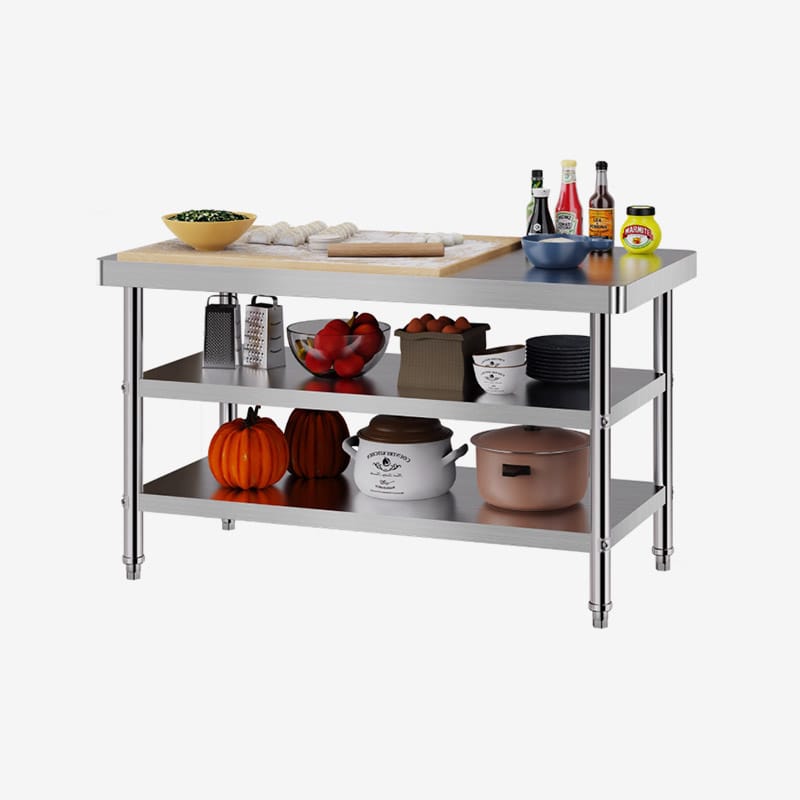
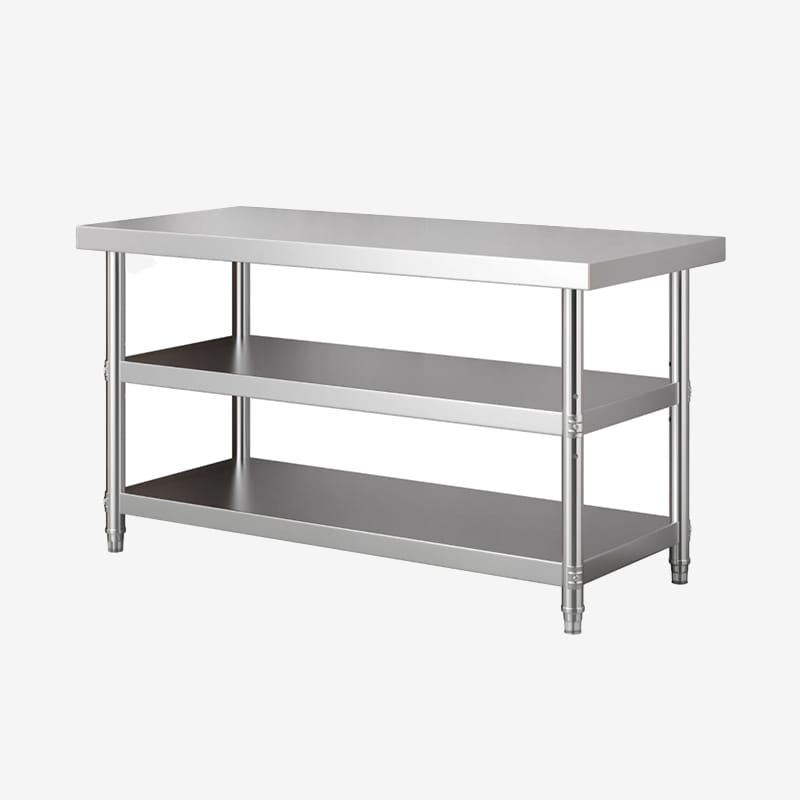
A heavy duty stainless steel work table is designed to withstand intensive daily use, heavy loads, and harsh environments that would destroy standard tables within months.
Key differences from standard work tables:
Thicker Gauge Steel: Heavy duty tables use 14-16 gauge stainless steel compared to 18-20 gauge in standard tables. Gauge numbers work inversely—14 gauge is nearly twice as thick as 18 gauge.
Reinforced Frame Construction: Heavy duty models feature reinforced legs, cross-bracing, and gusset plates that distribute weight across the entire structure rather than concentrating stress at weak points.
Higher Load Capacity: Standard tables typically support 100-150kg. Heavy duty tables handle 300kg to 800kg+ while maintaining structural integrity and surface flatness.
Superior Welding Quality: Heavy duty tables use continuous welds rather than spot welds, eliminating weak points where cracks typically start.
For commercial kitchens, food factories, and warehouses, heavy duty stainless steel work tables aren’t optional—they’re operational necessities.
Why Standard Work Tables Fail in High-Load Environments
Understanding why ordinary tables fail helps you appreciate why heavy duty alternatives are worth the investment.
Structural Bending and Warping
Standard tables use thin-gauge steel (18-20 gauge) that bends under sustained weight. Even if the table initially supports your equipment, continuous loading causes metal fatigue. Within 6-12 months, you’ll notice surface warping that makes food preparation difficult, uneven legs causing wobbling, and bowed shelves that can’t hold supplies properly.
This isn’t a quality issue—it’s a design limitation. Standard tables simply aren’t engineered for industrial workloads.
Wobbling and Instability
Nothing disrupts workflow faster than a table that shakes every time you set down equipment. Standard tables lack reinforced leg-to-tabletop connections, cross-bracing to prevent lateral movement, and adjustable leveling feet for uneven floors. In busy commercial kitchens or production facilities, this instability creates safety hazards and reduces worker efficiency.
Short Equipment Lifespan
A standard stainless steel table in a high-intensity environment typically lasts 1-2 years before requiring replacement. The costs add up quickly: initial purchase cost (repeated every 1-2 years), downtime during replacement, productivity loss during equipment failure, and potential safety incidents.
Heavy duty tables regularly last 10-15 years with proper maintenance.
Unsafe Working Conditions
When tables fail, they create hazards: hot equipment sliding off warped surfaces, heavy items toppling from unstable shelves, workers compensating for wobbling by adopting poor posture, and sharp edges from cracked welds.
Safety violations, worker injuries, and liability issues far exceed the cost difference between standard and heavy duty tables.
Key Features of Heavy Duty Stainless Steel Work Tables
Thickness and Material Grade
Understanding Gauge Numbers
Stainless steel thickness is measured in gauge—the lower the number, the thicker the steel.
| Gauge | Thickness (mm) | Typical Use | Load Capacity |
|---|---|---|---|
| 14 gauge | 1.98mm | Heavy duty industrial | 500kg+ |
| 16 gauge | 1.59mm | Heavy duty commercial | 300-500kg |
| 18 gauge | 1.27mm | Standard commercial | 150-200kg |
| 20 gauge | 0.95mm | Light duty residential | Under 100kg |
Material Grade Matters
- 304 Stainless Steel: Premium choice for food contact and wet environments. Contains 18-20% chromium and 8-10.5% nickel. Excellent corrosion resistance, easy to sanitize, and complies with food safety regulations.
- 201 Stainless Steel: Budget option with lower nickel content. Suitable for dry storage but not recommended for food prep surfaces.
For commercial kitchens and food processing, 304 stainless steel in 14-16 gauge is the industry standard.
Reinforced Legs and Bracing
Cross-Bracing: Horizontal bars connecting legs at multiple heights prevent lateral wobble and distribute weight across all four legs equally.
Gusset Plates: Triangular metal plates welded at leg-to-tabletop junctions. These eliminate stress concentration points where standard tables typically crack.
Adjustable Leveling Feet: Heavy-duty adjustable feet allow precise leveling on uneven floors while maintaining full weight-bearing contact.
Weight Capacity Explained
Manufacturers rate weight capacity in two ways:
Static Load Capacity: Maximum weight the table can support when stationary and evenly distributed.
Dynamic Load Capacity: Maximum weight during active use, including impacts from setting down heavy items. This is typically 30-40% lower than static capacity.
Real-World Capacity Ratings:
- Light Heavy Duty (300kg): Small restaurants, retail prep areas, light assembly work
- Medium Heavy Duty (500kg): Large restaurants, commercial bakeries, medium manufacturing
- Industrial Heavy Duty (800kg+): Food processing plants, heavy manufacturing, warehouse operations
Always choose a table rated for 20-30% more than your maximum expected load.
Use Cases Across Different Industries
Commercial Kitchens
In restaurants, hotels, and catering operations, prep tables endure constant abuse: heavy cutting and chopping impacts, hot pans placed directly on surfaces, frequent cleaning with harsh chemicals, and daily exposure to moisture, acids, and oils.
Heavy duty stainless steel prep tables provide stable platforms for vegetable preparation stations, butcher blocks, assembly lines for plating, and equipment staging areas.
Recommended specifications:
- 16 gauge 304 stainless steel minimum
- 300-500kg load capacity
- Backsplash and undershelf options
- Rounded edges for safety
Food Processing Plants
Food processing facilities operate under strict regulations requiring easy-to-sanitize surfaces, corrosion-resistant materials, and compliance with FDA/USDA standards.
Heavy duty tables support conveyor belt staging, packaging equipment, quality inspection stations, and bulk ingredient handling.
Recommended specifications:
- 14-16 gauge 304 stainless steel
- 500-800kg load capacity
- Optional casters for mobility
- Chemical-resistant finishes
Warehouses and Packing Stations
Warehouse environments demand tables that handle heavy inventory stacking, packaging equipment weight, constant movement and repositioning, and varied environmental conditions.
Stainless steel packing tables offer advantages over wood or plastic: won’t absorb moisture or odors, easy to clean between product changes, fire-resistant, and maintains appearance despite rough handling.
Recommended specifications:
- 16 gauge stainless steel
- 500kg load capacity
- Lower shelf for supplies
- Optional electrical outlets integration
Workshops and Manufacturing
Manufacturing facilities require tables that support heavy power tools, raw materials, vibration-resistant surfaces, and optional integrated storage systems.
Heavy duty work tables serve as assembly stations, tool mounting platforms, quality control workstations, and equipment repair benches.
Recommended specifications:
- 14 gauge stainless steel or steel with protective coating
- 800kg+ load capacity
- Customizable with tool holders and accessory rails
- Optional anti-static features
Case Study: Upgrading to Heavy Duty Work Tables
A mid-sized commercial kitchen serving 500 meals daily experienced recurring problems with their standard 18-gauge prep tables.
Before: Standard Work Tables
- Tables wobbled during food prep, slowing down operations
- Surface warping after 8 months caused uneven cutting surfaces
- Legs bent under weight of mixers and food processors
- Replaced tables every 18 months on average
- Workers complained about instability
After: Heavy Duty Tables (16-gauge, 500kg capacity)
- Rock-solid stability even under heavy equipment
- Perfectly flat surfaces after 3 years of continuous use
- Legs show no signs of bending or fatigue
- Estimated lifespan: 12-15 years
- Worker productivity increased 15%
Performance Comparison:
| Metric | Standard Tables | Heavy Duty Tables |
|---|---|---|
| Load stability | Low | High |
| Equipment failure | Frequent | Rare |
| Productivity | Medium | Higher (+15%) |
| Replacement cycle | 18 months | 12-15 years |
| Total 5-year cost | Higher | Lower |
ROI Analysis:
- Heavy duty tables cost 60% more initially
- Eliminated 3 replacement cycles over 5 years
- Break-even point: 14 months
- 5-year savings: 40% vs. standard tables
How to Choose the Right Heavy Duty Stainless Steel Work Tables
Step 1: Identify Load Requirements
Calculate the total weight your table will support: equipment weight, maximum ingredient/product weight, storage weight, and dynamic forces. Add 30% to account for impact when setting items down.
Example calculation:
- Stand mixer: 25kg
- Daily ingredient prep: 40kg
- Undershelf storage: 50kg
- Total static load: 115kg
- Recommended capacity: 300kg+ for heavy duty benefits
Step 2: Measure Available Space
Account for equipment overhang, worker movement around the table (minimum 80cm), door swing and drawer access, and cleaning access on all sides (15-20cm).
Step 3: Choose Storage Options
Undershelf: Easy access, visible storage. Ideal for frequently accessed items.
Cabinet Base: Enclosed storage with doors. Better for securing valuable equipment.
Drawer Units: Built-in drawers for utensils and small tools.
Combination: Mix of open shelves and enclosed storage. Most versatile option.
Step 4: Consider Mobility or Fixed Setup
Fixed Tables: Maximum stability for heavy equipment, lower cost, ideal for permanent setups.
Mobile Tables: Flexibility to reconfigure workspace, easy cleaning underneath, essential for shared-use facilities.
Hybrid Option: Tables with locking casters combine mobility with stationary stability.
Step 5: Check Compliance Standards
Food Service (NSF/ANSI Standard 2): Food-contact surfaces must be non-toxic and corrosion-resistant, smooth surfaces without crevices, easily cleanable design.
Healthcare (FDA guidelines): Non-porous surfaces, chemical-resistant, no sharp edges.
Manufacturing (OSHA requirements): Stable under load, appropriate height for ergonomic work, safe for intended use.
Comparison: Standard vs Heavy Duty Work Tables
| Feature | Standard Tables | Heavy Duty Tables |
|---|---|---|
| Steel gauge | 18-20 gauge | 14-16 gauge |
| Load capacity | 100-150kg | 300-800kg+ |
| Durability | Medium (1-2 years heavy use) | High (10-15 years) |
| Stability | Moderate (may wobble) | Excellent (rock-solid) |
| Frame construction | Basic welded joints | Reinforced with cross-bracing |
| Surface flatness | May warp over time | Maintains flatness |
| Safety features | Basic | Enhanced (rounded edges, gusset plates) |
| Initial cost | Lower | 40-60% higher |
| Long-term value | Lower (frequent replacement) | Higher (single investment) |
| Best for | Light duty, residential | Commercial, industrial |
Layout Planning for Heavy Duty Workstations
Proper table placement maximizes efficiency and safety.
Avoid Congestion
- Minimum 80cm clearance between tables for comfortable movement
- 120cm+ clearance in high-traffic areas
- Avoid creating bottlenecks near doors or equipment
Load Concentration Areas
- Place heaviest loads directly over legs or support braces
- Distribute weight evenly across the surface
- Avoid cantilevered loads that stress table edges
Match Equipment Workflow
Arrange tables to support your operational sequence: prep → cooking → plating for kitchens, or receiving → processing → packaging for warehouses.
Maintenance and Long-Term Performance
Daily Care
- Wipe surfaces with warm water and mild detergent after each use
- Avoid abrasive scrubbers that scratch stainless steel
- Dry thoroughly to prevent water spots
- Check for loose bolts or hardware
Monthly Maintenance
- Deep clean interior with food-safe degreaser
- Inspect door gaskets for wear or damage
- Check heating elements or burners for scale buildup
- Test safety features
Long-Term Performance
With proper maintenance, heavy duty tables deliver:
- 10-15 years in commercial kitchen environments
- 15-20 years in warehouse settings
- 15-25 years in light-duty applications
Cost vs ROI Analysis
Understanding Total Cost of Ownership
Standard Tables:
- Lower initial purchase price
- Higher replacement frequency (every 1-2 years)
- Productivity losses during equipment failure
- Potential safety incidents and liability
Heavy Duty Tables:
- Higher initial investment (40-60% more)
- Single purchase lasting 10-15 years
- Consistent performance without downtime
- Reduced safety risks
ROI Calculation
Scenario: Restaurant prep table, 5-year analysis
| Factor | Standard Table | Heavy Duty Table |
|---|---|---|
| Initial cost | Lower baseline | 60% higher |
| Lifespan | 18 months | 12+ years |
| 5-year replacements | 3 tables | 1 table |
| Productivity impact | -10% efficiency | +10% efficiency |
| True 5-year cost | Significantly higher | 30-40% lower |
Break-even point: 12-18 months through eliminated replacement costs, improved productivity, and reduced maintenance.
FAQ
What is considered a heavy duty stainless steel work table?
A heavy duty stainless steel work table typically features 14-16 gauge steel thickness, reinforced frame construction with cross-bracing and gusset plates, and load capacity of 300kg to 800kg or more. Unlike standard tables, heavy duty models maintain structural integrity under intensive daily use and harsh environments.
How much weight can heavy duty work tables hold?
Heavy duty work tables typically support 300-800kg of evenly distributed weight, depending on specifications. Light heavy duty models handle 300kg, medium heavy duty supports 500kg, and industrial-grade tables support 800kg or more. Always check manufacturer ratings and apply a 20-30% safety margin.
Are heavy duty tables necessary for commercial kitchens?
Yes, heavy duty tables are essential for commercial kitchens processing high volumes daily. Standard tables warp, wobble, and fail under commercial kitchen demands within 1-2 years. Heavy duty tables provide stability for food preparation, support heavy equipment, maintain hygiene standards, and last 10-15 years.
What thickness is best for heavy duty use?
For heavy duty applications, 14-16 gauge stainless steel provides optimal strength. 14 gauge (1.98mm) is ideal for industrial environments with maximum loads over 500kg. 16 gauge (1.59mm) suits most commercial kitchen and warehouse applications. Avoid 18-20 gauge for heavy duty use.
How long do heavy duty stainless steel tables last?
With proper maintenance, heavy duty tables last 10-15 years in commercial kitchens, 15-20 years in warehouse environments, and up to 25 years in light-duty applications. Compare this to standard tables lasting only 1-2 years under similar conditions.
Can heavy duty tables support commercial food equipment?
Yes, heavy duty tables are specifically designed to support commercial food equipment like stand mixers (20-30kg), food processors, slicers, and packaging machinery. Tables rated for 500kg+ capacity handle most commercial equipment safely.
What’s the difference between 304 and 316 stainless steel for work tables?
304 stainless steel is the industry standard for commercial kitchen work tables, offering excellent corrosion resistance and food safety compliance. 316 stainless steel contains additional molybdenum for superior corrosion resistance, ideal for coastal areas or medical facilities. For most applications, 304 provides optimal value.
Do I need NSF certification for commercial work tables?
NSF certification is required or strongly recommended for commercial food service operations in most jurisdictions. NSF/ANSI Standard 2 certification ensures tables meet food safety requirements. While certified tables cost more, they ensure compliance and prevent potential violations.
Conclusion
Heavy duty stainless steel work tables aren’t an expense—they’re an investment in operational efficiency, workplace safety, and long-term cost savings.
When standard tables fail every 1-2 years, disrupt operations with wobbling and warping, and create safety hazards, the true cost far exceeds the purchase price. Heavy duty tables solve these problems permanently, delivering 10-15 years of reliable service while improving productivity and protecting your workforce.
The choice is clear: invest in quality once, or pay for mediocrity repeatedly.
At Bafang, we manufacture a complete range of heavy duty stainless steel work tables designed for commercial kitchens, food processing plants, warehouses, and manufacturing facilities. With 16+ years of experience and a 30,000㎡ production facility, we offer both standard models and full customization to meet your exact requirements.
Ready to upgrade to heavy duty work tables?
Contact our technical team for personalized recommendations based on your specific needs. We provide free consultation, factory-direct pricing, and worldwide shipping.