In many commercial environments, efficiency is not only about speed—it is about adaptability. Whether you operate a restaurant, warehouse, workshop, or food processing facility, your workspace needs to handle multiple tasks without constant reconfiguration.
This is where stainless steel utility tables become essential. Unlike specialized equipment designed for a single purpose, these tables are built to support a wide range of functions. From food preparation to equipment storage, stainless steel utility tables provide a flexible and durable solution for businesses that require reliable work surfaces.
If your current setup feels cluttered or inefficient, upgrading to stainless steel utility tables can help you create a more organized and adaptable workspace.
You can explore different configurations and workspace solutions on the
https://bafangit.com/products-solutions/, where multiple utility table designs are available.
Table of Contents
Why Stainless Steel Utility Tables Are Widely Used Across Industries
One of the biggest advantages of stainless steel utility tables is their versatility. Unlike single-purpose equipment, these tables can be used in multiple environments without compromising performance.
They are commonly found in:
• Commercial kitchens
• Warehouses and storage facilities
• Laboratories and clean rooms
• Workshops and manufacturing areas
• Retail backrooms
The reason for this wide adoption is simple. Stainless steel utility tables combine durability, hygiene, and flexibility in a way that few other materials can match.
According to the OSHA workplace safety guidelines, work surfaces in commercial environments should be stable, durable, and easy to maintain. Stainless steel meets these criteria and performs well under heavy use.
Key Benefits of Stainless Steel Utility Tables
Understanding the core benefits helps you decide whether these tables fit your operational needs.
Multi-Purpose Functionality
Stainless steel utility tables can serve as workstations, storage platforms, or staging areas. This flexibility makes them ideal for dynamic environments.
Durability and Load Capacity
These tables are designed to handle heavy equipment, tools, and materials without bending or losing stability.
Easy Cleaning and Maintenance
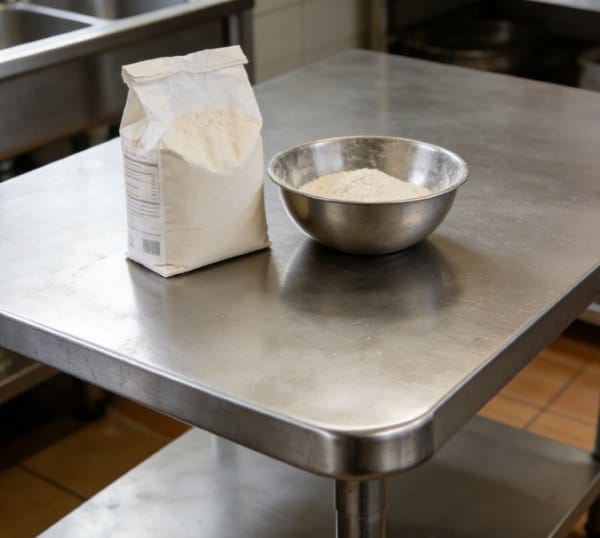
The smooth, non-porous surface allows for quick cleaning, making stainless steel utility tables suitable for both food and industrial use.
Space Optimization
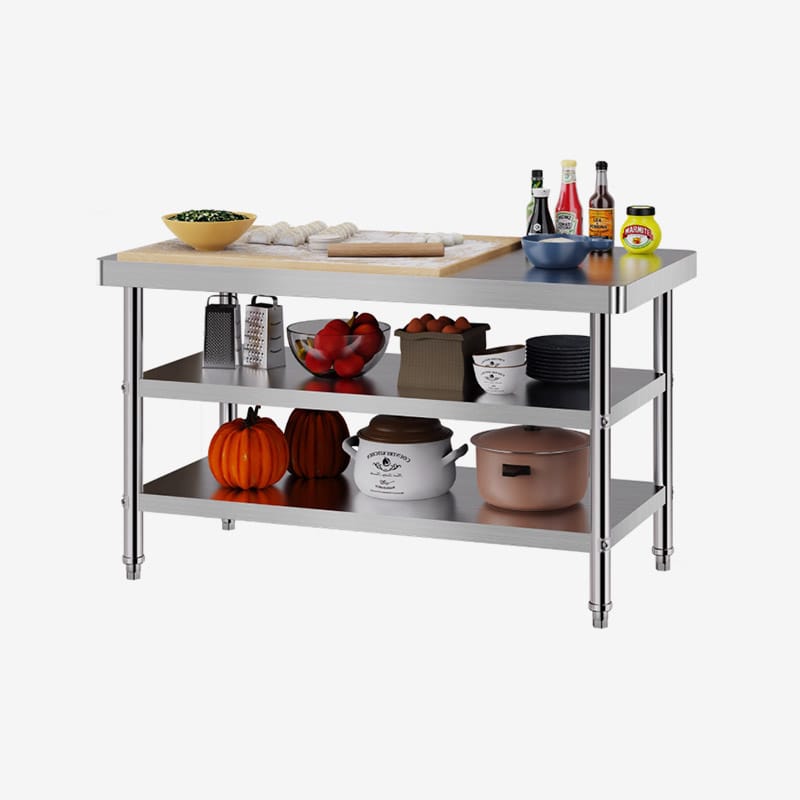
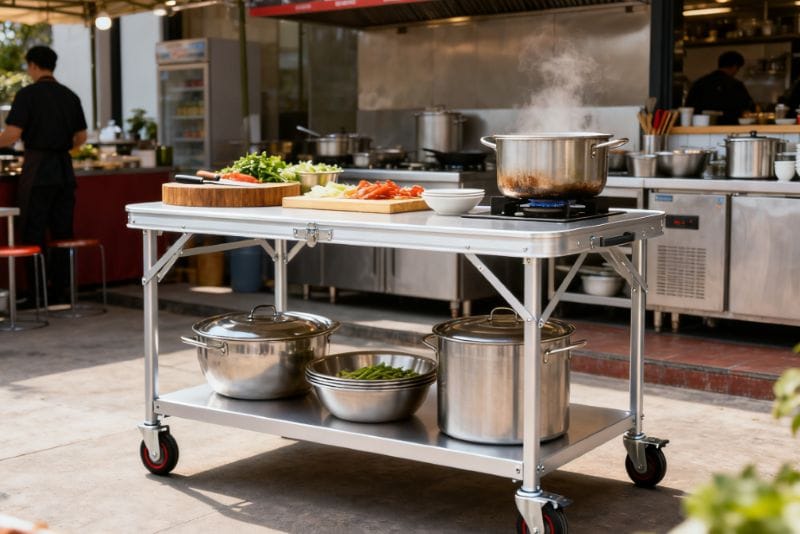
Utility tables often include undershelves or additional storage features, helping maximize available space.
Common Applications of Stainless Steel Utility Tables
The adaptability of stainless steel utility tables allows them to be used in many different ways.
Equipment Support Stations
In commercial kitchens and workshops, utility tables are often used to support equipment such as mixers, packaging machines, or tools.
Storage and Organization
Tables with undershelves provide convenient storage for frequently used items.
Mobile Workstations
Some stainless steel utility tables are designed with mobility in mind, allowing you to reposition them as needed.
Temporary Work Surfaces
During peak operations, utility tables can serve as additional workspace without requiring permanent installation.
Case Study: Improving Workspace Efficiency With Stainless Steel Utility Tables
A logistics warehouse struggled with disorganized packing stations and limited workspace.
Challenges
Packing materials were scattered
Work surfaces were inconsistent
Workflow was inefficient
Solution
The warehouse introduced stainless steel utility tables with undershelves and standardized dimensions.
Results
| Metric | Before | After |
|---|---|---|
| Packing speed | Slow | Faster |
| Organization | Poor | Structured |
| Workspace flexibility | Limited | Improved |
| Staff efficiency | Low | Higher |
This case demonstrates how stainless steel utility tables can improve organization and productivity in non-kitchen environments.
How to Choose the Right Stainless Steel Utility Tables
Selecting the right table depends on how you plan to use it.
Size and Dimensions
Choose dimensions that fit your available space while providing enough working area.
Weight Capacity
For heavy-duty applications, select reinforced stainless steel utility tables designed to support high loads.
Storage Features
Undershelves and multi-tier designs improve functionality and organization.
Mobility Options
If your workflow changes frequently, consider tables with wheels or modular designs.
You can review different options on the Bafang product catalog.
Comparing Stainless Steel Utility Tables With Other Work Surfaces
| Material | Durability | Hygiene | Flexibility |
|---|---|---|---|
| Wood | Medium | Low | Medium |
| Plastic | Low | Medium | Low |
| Stainless Steel | High | High | High |
This comparison highlights why stainless steel utility tables are often preferred in professional environments.
Layout and Placement Strategies
Proper placement improves efficiency.
Best practices include placing utility tables near high-use areas, maintaining clear pathways, using tables to separate workflows, and aligning tables with existing equipment.
In food-related environments, recommendations from the CDC food safety guidelines emphasize separating different types of tasks, which can be achieved using multiple tables.
Maintenance and Long-Term Care
Maintaining stainless steel utility tables ensures consistent performance.
Daily Maintenance
Clean surfaces regularly
Remove debris and spills immediately
Dry surfaces after cleaning
Periodic Checks
Inspect stability
Check for loose components
Clean storage areas
Long-Term Care
Avoid harsh chemicals
Repair damage early
Maintain regular cleaning schedules
Additional cleaning guidance can be found at FoodSafety.gov.
Cost and Value Analysis
Although stainless steel utility tables may have a higher upfront cost, they offer better long-term value due to durability and low maintenance.
| Factor | Basic Table | Stainless Steel Utility Tables |
|---|---|---|
| Lifespan | Shorter | Longer |
| Maintenance | High | Low |
| Versatility | Limited | High |
| Cost efficiency | Lower | Higher |
Investing in stainless steel utility tables helps reduce long-term operational costs.
FAQ
What are stainless steel utility tables used for?
They are used for multiple purposes, including workspace, storage, and equipment support in commercial environments.
Are stainless steel utility tables suitable for kitchens?
Yes. They are widely used in commercial kitchens due to their hygiene and durability.
How do I choose the right utility table?
Consider size, weight capacity, storage features, and intended use.
Can stainless steel utility tables support heavy equipment?
Yes. Many models are designed for heavy-duty applications.
How long do stainless steel utility tables last?
With proper maintenance, they can last many years in commercial environments.