Many foodservice problems do not start with recipes or staffing. They start with equipment that does not match the way a kitchen actually moves. A wet kitchen shelving can make the difference between a smooth service period and a workspace full of delays, extra carrying, and avoidable cleaning pressure. For dish areas, prep rooms, and humid kitchen spaces, the equipment decision should begin with the real problem: storage racks are exposed to moisture, splashes, and frequent cleaning.
This article looks at how to think about a wet kitchen shelving as part of a complete kitchen system. The goal is not to buy the largest or most visually impressive unit. The goal is to choose equipment that supports daily production, keeps movement predictable, and gives staff a cleaner way to work when the kitchen is under pressure.
The Operational Problem Buyers Often Miss
The first mistake is treating a wet kitchen shelving as a stand-alone purchase. In a real kitchen, every piece of equipment affects the next station. Storage affects preparation. Preparation affects cooking. Cooking affects washing, holding, and service. When the stainless steel shelving is selected without considering that chain, staff compensate with extra walking, temporary staging, and repeated handling.
A better approach is to observe the busiest service window before confirming the specification. Watch where staff slow down, where items wait, and where clean and dirty movement overlap. The right wet kitchen shelving should remove friction from that point in the workflow. It should not simply add another object to an already crowded room.
When the wet kitchen shelving is planned around that pressure point, the buying decision becomes more practical. The discussion moves away from generic size and toward the exact role the equipment must play during real service.
How the Equipment Should Fit the Room
Room fit is more than outer dimensions. A wet kitchen shelving needs working clearance, loading space, cleaning access, and a logical connection to nearby tables, sinks, shelves, carts, or cooking equipment. If staff cannot approach the unit comfortably, the specification may look correct on paper but fail during daily use.
For dish areas, prep rooms, and humid kitchen spaces, layout decisions should be made around the people who use the equipment repeatedly. The best placement shortens the route between related tasks and reduces unnecessary lifting. It also makes cleaning easier because staff can reach sides, corners, and contact surfaces without moving several other items first.
A wet kitchen shelving should also leave enough flexibility for seasonal menu changes, staffing changes, and higher service volume. Equipment that only fits one narrow routine can become a limitation as the business grows.
Why Stainless Steel Still Matters
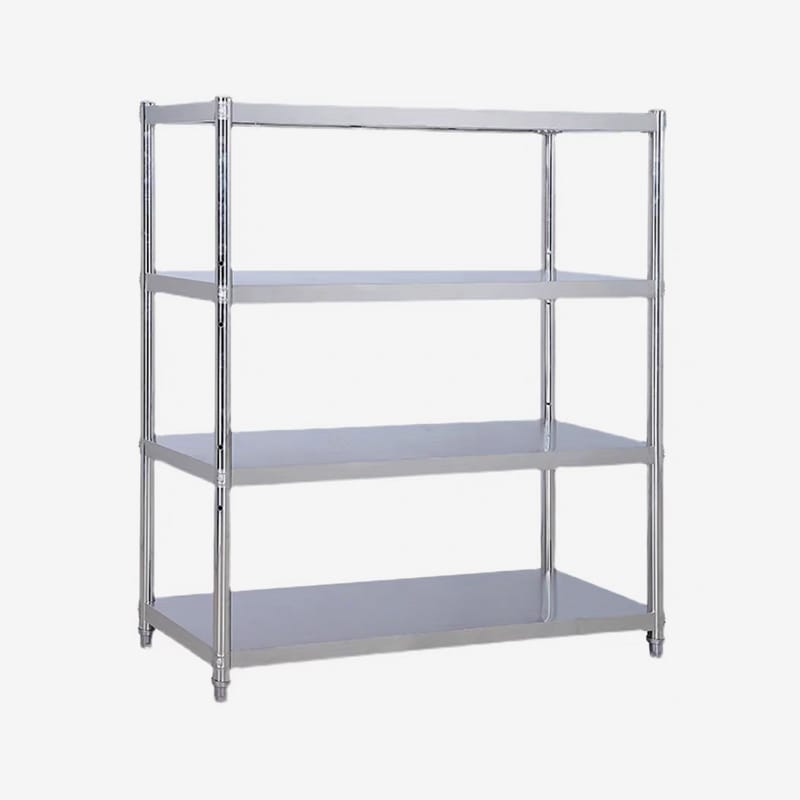
Professional kitchens use stainless steel because the material is durable, cleanable, and suitable for wet or high-contact environments. A wet kitchen shelving made with practical stainless steel construction can support frequent wiping, repeated loading, and long service cycles. The general material background is explained in the stainless steel overview, which describes why corrosion resistance is valuable in demanding settings.
Construction quality should still be reviewed carefully. Smooth edges, stable supports, accessible surfaces, and sensible joints all affect the way staff use and maintain the stainless steel shelving. Hygiene also depends on process, not material alone. Foodservice operators can compare their internal practices with broader sanitation principles such as the FDA Food Code, while local rules should guide final compliance decisions.
Operators should also think about what happens after the equipment has been in use for several months. The strongest setups are easy for new staff to understand without long explanations. They make the correct route obvious, leave enough room for inspection, and reduce the temptation to place temporary items on the nearest surface. This matters because small daily shortcuts often become the source of slower service, harder cleaning, and avoidable handling mistakes.

What Makes the Choice Worth It
A well-chosen wet kitchen shelving improves the kitchen in ways that are easy to feel during service. Staff spend less time looking for space, moving items twice, or working around poor placement. Managers get a station that is easier to explain, inspect, and maintain. The strongest result is storage that stays accessible and easier to maintain, which is exactly what buyers should expect from professional equipment.
The decision should also account for future use. Menus change, service volume changes, and staff turnover happens. Equipment that only solves today鈥檚 minimum requirement may become a restriction later. A wet kitchen shelving with the right size, access, and construction gives the kitchen more room to adapt without constantly changing the layout.
That is why buyers should evaluate the wet kitchen shelving as part of the whole operation. The equipment should support the food, the staff, the room, and the cleaning process at the same time.
Final Recommendation
Choose a wet kitchen shelving by studying the pressure points of the kitchen first. Confirm the workload, the route, the cleaning routine, and the equipment that sits beside it. Then compare models based on how well they support the actual operation. Bafang supplies stainless steel kitchen equipment for professional foodservice projects, and related equipment such as stainless steel bracket can help the wider kitchen system work as intended.
If the equipment supports the room, the workflow, and the staff using it every day, it becomes more than a purchase. It becomes part of the operating system of the kitchen. That is where a wet kitchen shelving can create real value for a foodservice business.
For decision makers, the final question is whether the wet kitchen shelving will still make sense after months of real use, not only on installation day.
A practical wet kitchen shelving should keep proving its value in normal routines, not only during the first week of operation.