Daftar isi
Perkenalan
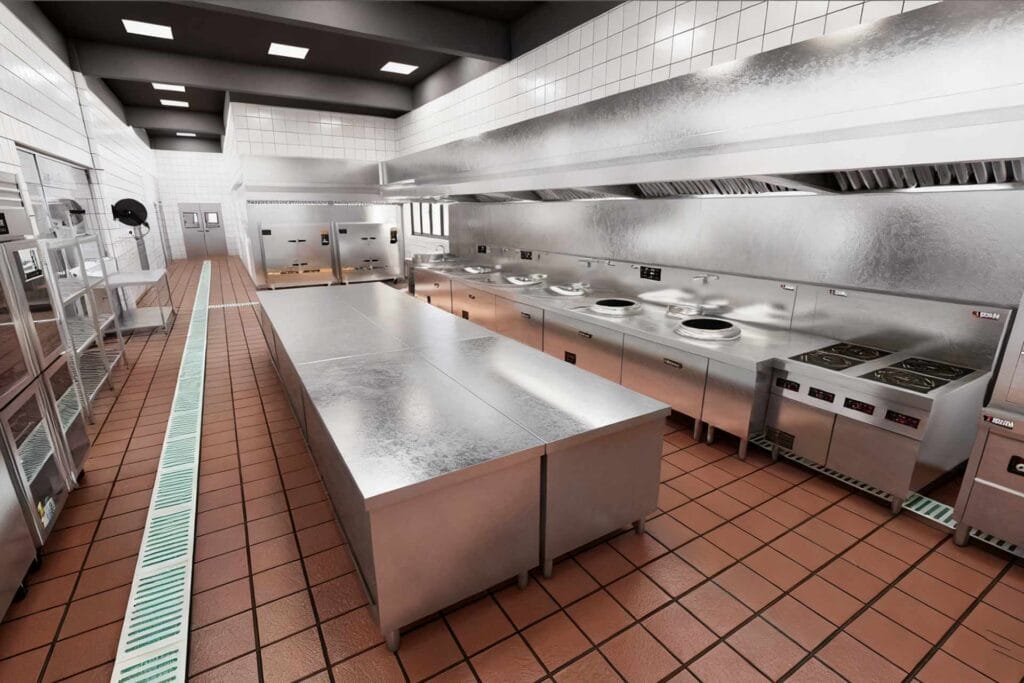
Memilih yang benar peralatan dapur stainless steel komersial tidak hanya tentang mengisi dapur dengan meja kerja, wastafel, rak, kapal uap, dan unit pendingin. Untuk restoran, hotel, kantin sekolah, supermarket, dan proyek katering, peralatan dapur secara langsung mempengaruhi keamanan pangan, efisiensi alur kerja, standar pembersihan, dan biaya operasi jangka panjang.
Dapur komersial yang terencana dengan baik harus tahan lama, mudah dibersihkan, hemat ruang, dan cocok untuk penggunaan sehari-hari frekuensi tinggi. Inilah sebabnya mengapa peralatan stainless steel tetap menjadi salah satu pilihan paling praktis untuk lingkungan foodservice profesional. Dari meja kerja stainless steel hingga wastafel komersial dan lemari pengukus beras, setiap produk harus dipilih sesuai dengan operasi dapur yang sebenarnya daripada penampilan saja.
Panduan ini menjelaskan cara memilih peralatan dapur stainless steel komersial dengan fokus pada kualitas bahan, perencanaan tata letak, kebersihan, penyesuaian, dan keandalan pemasok.
Mengapa Stainless Steel Lebih Disukai di Dapur Komersial
Dapur komersial menghadapi kelembaban konstan, panas, minyak, bahan kimia pembersih, sisa makanan, dan operasi tugas berat. Bahan biasa mungkin berkarat, berubah bentuk, menyerap noda, atau menjadi sulit dibersihkan setelah penggunaan jangka panjang.
Stainless steel banyak digunakan karena menawarkan keseimbangan yang kuat antara daya tahan, kebersihan, dan efisiensi pemeliharaan. Untuk bisnis foodservice, ini berarti lebih sedikit penggantian, pembersihan lebih mudah, dan kondisi kerja sehari-hari yang lebih baik.
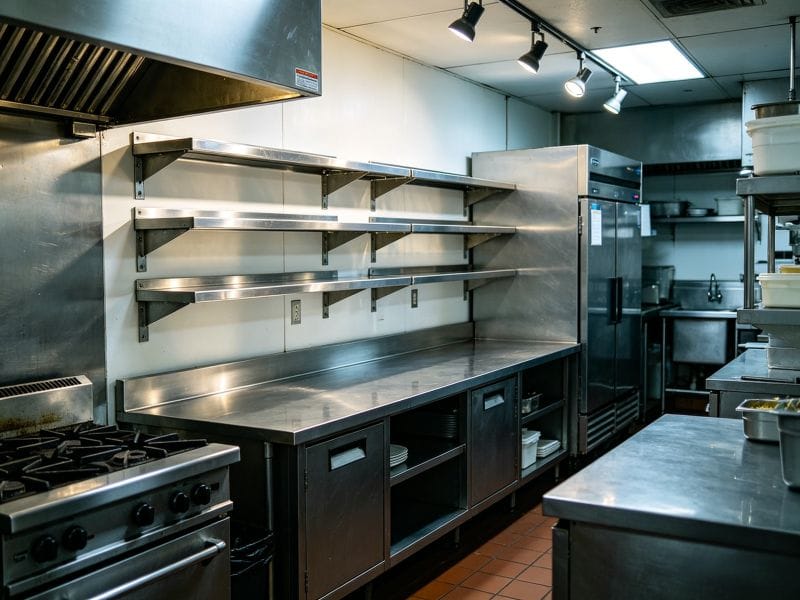
Peralatan dapur stainless steel berkualitas tinggi dapat mendukung area kerja yang berbeda, termasuk persiapan makanan, mencuci, memasak, mengukus, penyimpanan, pendinginan, dan melayani. Ketika peralatan dirancang dengan benar, ini membantu staf dapur bekerja lebih cepat dan mengurangi gerakan yang tidak perlu selama jam layanan yang sibuk.
Peralatan Utama Setiap Dapur Komersial Harus Pertimbangkan
Bisnis jasa makanan yang berbeda membutuhkan tata letak yang berbeda, tetapi kebanyakan dapur profesional membutuhkan beberapa kategori peralatan inti.
Meja Kerja Stainless Steel
Meja kerja stainless steel digunakan untuk persiapan makanan, penanganan bahan, pengemasan, dan penyimpanan sementara. Meja kerja komersial yang baik harus memiliki kapasitas menahan beban yang kuat, struktur yang stabil, tepi yang halus, dan permukaan yang mudah dibersihkan.
Untuk restoran dan dapur pusat, meja kerja dapat disesuaikan dengan rak bawah, backsplash, laci, atau ukuran yang berbeda agar sesuai dengan ruang yang tersedia. Jika meja digunakan di dekat dinding atau area basah, backsplash dapat membantu mencegah percikan dan meningkatkan efisiensi pembersihan.
Sink Stainless Steel Komersial
Wastafel sangat penting untuk mencuci sayuran, peralatan masak, peralatan, dan alat persiapan makanan. Tergantung pada skala operasi, dapur mungkin memerlukan wastafel mangkuk tunggal, wastafel mangkuk ganda, stasiun tiga wastafel, atau wastafel dengan papan pengeringan.
Wastafel dapur komersial harus cukup dalam untuk tugas mencuci sehari-hari, tahan terhadap korosi, dan mudah untuk menjaga sanitasi. Untuk dapur bervolume tinggi, desain wastafel multi-mangkuk dapat memisahkan proses pencucian, pembilasan, dan sanitasi dengan lebih efisien.
Rak Baja Tahan Karat
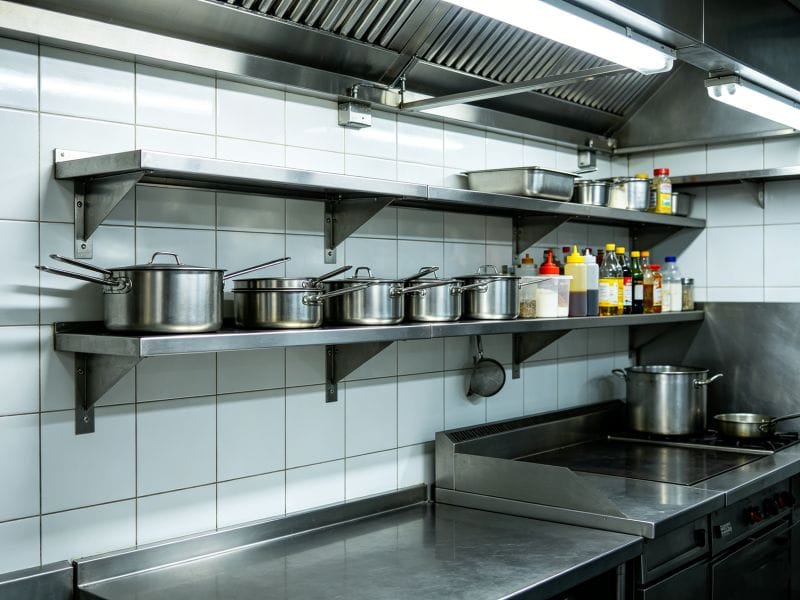
Penyimpanan mempengaruhi baik keamanan dapur dan alur kerja. Rak stainless steel membantu menjaga bahan, peralatan masak, wadah, dan alat terorganisir. Untuk penggunaan komersial, rak harus stabil, mudah dibersihkan, dan cukup kuat untuk membawa beban berat.
Rak stainless steel empat lapis atau lima lapis cocok untuk area penyimpanan kering, supermarket, gudang, dan ruang belakang rumah dapur. Kaki yang dapat disesuaikan dan struktur knock-down dapat membuat transportasi, pemasangan, dan perataan lebih mudah.
Lemari Pengukus Beras
Untuk restoran, sekolah, pabrik, hotel, dan kantin yang menyiapkan nasi atau makanan kukus dalam jumlah besar, lemari pengukus beras dapat meningkatkan efisiensi dan konsistensi memasak.
Ketika memilih steamer beras komersial, pembeli harus mempertimbangkan kapasitas baki, metode pemanasan, efisiensi energi, struktur stainless steel, kinerja penyegelan, dan kemudahan pembersihan. Steamer yang andal harus mendukung pemanasan yang stabil dan mengurangi kehilangan makanan selama penggunaan harian berulang.
Peralatan Pendingin Komersial
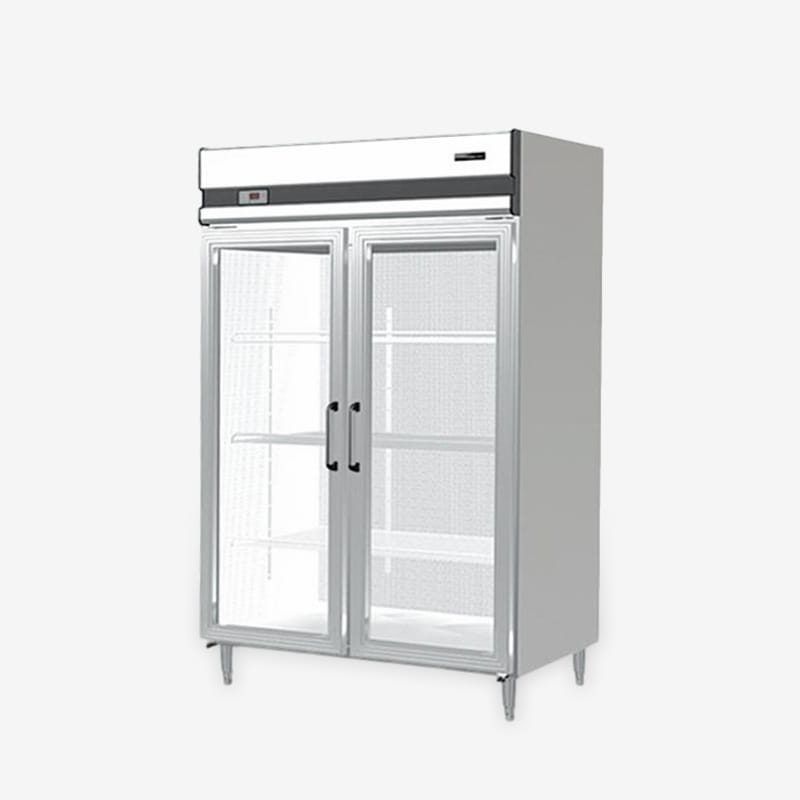
Peralatan pendingin sangat penting untuk kesegaran bahan dan keamanan pangan. Dapur komersial sering membutuhkan lemari es, freezer, meja kerja berpendingin, atau unit pendingin display tergantung pada kebutuhan penyimpanan.
Faktor pemilihan kunci termasuk stabilitas suhu, kinerja isolasi, kapasitas, kualitas kompresor, dan apakah peralatan sesuai dengan tata letak dapur. Untuk pembeli B2B, kinerja pendinginan yang stabil lebih penting daripada penampilan karena secara langsung mempengaruhi keamanan penyimpanan makanan.
Cara Memilih Grade Material yang Tepat
Tidak semua peralatan stainless steel melakukan hal yang sama. Ketebalan material, kelas, kualitas pengelasan, permukaan akhir, dan desain struktural semuanya mempengaruhi masa pakai.
Untuk lingkungan dapur komersial, pembeli harus memperhatikan:
Ketahanan korosi material
Kelancaran permukaan
Kekuatan pengelasan
Finishing tepi
Desain beban-bantalan
Kemudahan pembersihan
Ketahanan terhadap kelembaban dan bahan pembersih
Baja tahan karat yang lebih tebal umumnya lebih tahan lama untuk lingkungan tugas berat, tetapi ketebalan yang tepat juga tergantung pada aplikasinya. Meja kerja yang digunakan untuk persiapan ringan mungkin tidak memerlukan struktur yang sama dengan meja tugas berat yang membawa peralatan komersial.
Untuk area basah seperti wastafel dan zona pencucian, ketahanan korosi dan desain drainase harus diprioritaskan. Untuk rak penyimpanan, stabilitas dan kapasitas beban lebih penting.
Meja Pemilihan Peralatan Dapur Komersial
| Jenis Peralatan | Fungsi Utama | Poin Pemilihan Utama | Pengguna yang Cocok |
|---|---|---|---|
| Meja Kerja Baja Tahan Karat | Persiapan dan penanganan makanan | Kapasitas beban, ukuran, backsplash, undershelf | Restoran, hotel, dapur pusat |
| Wastafel Baja Tahan Karat | Mencuci dan membersihkan | Kedalaman mangkuk, drainase, ketahanan korosi | Restoran, kantin, dapur katering |
| Rak Baja Tahan Karat | Penyimpanan dan organisasi | Nomor lapisan, stabilitas, kaki disesuaikan | Dapur, gudang, supermarket |
| Kabinet Pengukus Nasi | Mengukus dalam jumlah besar | Kapasitas baki, efisiensi pemanasan, penyegelan | Sekolah, hotel, pabrik, restoran |
| Pendinginan Komersial | Penyimpanan dingin | Stabilitas suhu, kapasitas, isolasi | Bisnis jasa makanan, supermarket |
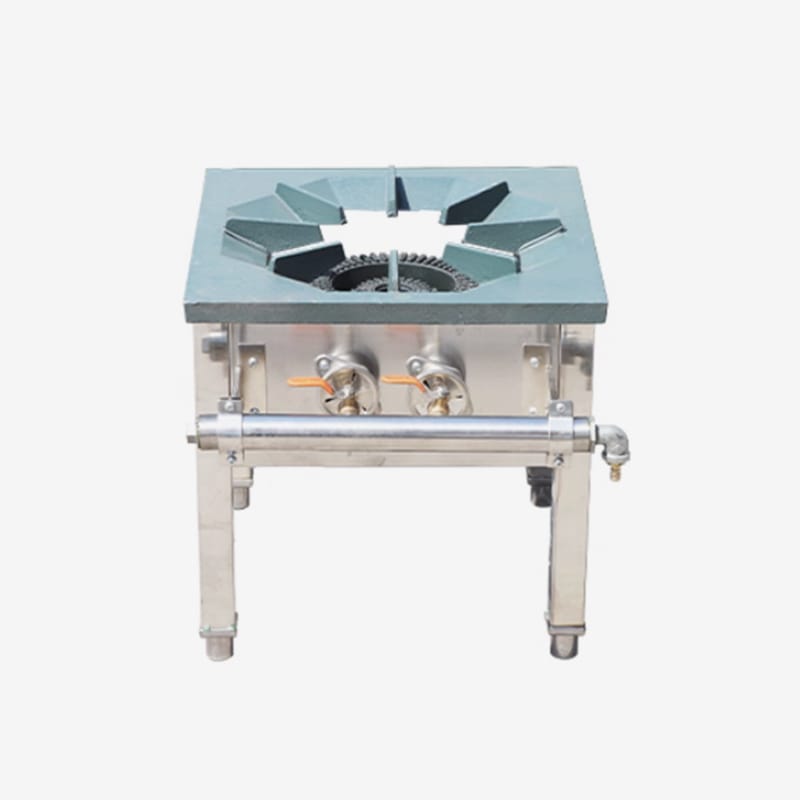
| Gas Range | Memasak dan memanaskan | Daya pembakar, keamanan, struktur | Restoran, dapur hotel, proyek katering |
Cocokkan Peralatan dengan Alur Kerja Dapur
Kesalahan umum dalam perencanaan dapur komersial adalah membeli peralatan satu per satu tanpa mempertimbangkan alur kerja yang lengkap. Dapur harus direncanakan di sekitar operasi yang sebenarnya.
Alur kerja yang khas dapat mencakup:
Menerima bahan
Penyimpanan dingin atau penyimpanan kering
Pencucian dan persiapan
Memasak atau mengukus
Kepemilikan sementara
Penyajian atau pengemasan
Pembersihan dan sanitasi
Setiap area harus terhubung secara logis. Misalnya, wastafel harus ditempatkan di dekat area persiapan, sementara rak harus dekat dengan alat dan bahan yang sering digunakan. Lemari pengukus beras harus diposisikan di mana staf dapat memuat dan membongkar baki dengan aman tanpa menghalangi lalu lintas.
Tata letak peralatan yang baik meningkatkan kecepatan dan mengurangi kesalahan selama jam sibuk. Ini juga membuat dapur lebih mudah dikelola, terutama untuk bisnis dengan banyak anggota staf yang bekerja pada saat yang sama.
Mengapa Kustomisasi Penting untuk Pembeli B2B
Peralatan dapur standar dapat bekerja untuk restoran kecil, tetapi proyek layanan makanan yang lebih besar sering membutuhkan solusi yang disesuaikan. Hotel, kantin sekolah, restoran rantai, supermarket, dan kontraktor dapur komersial biasanya memiliki persyaratan khusus untuk ukuran, tata letak, ketebalan material, dan fungsionalitas.
kustomisasi OEM/ODM dapat membantu pembeli memecahkan masalah praktis seperti:
Ruang dapur terbatas
Persyaratan penyimpanan khusus
Standar pasar yang berbeda
Kustomisasi logo merek
Kebutuhan pengadaan massal
Pencocokan peralatan berbasis proyek
Dimensi wastafel, rak, atau meja kerja khusus
Untuk distributor dan kontraktor proyek, penyesuaian juga meningkatkan daya saing produk di pasar lokal. Alih-alih menjual peralatan dapur generik, mereka dapat menawarkan produk yang lebih sesuai dengan kebutuhan pengguna akhir.
Apa yang Harus Diperiksa Sebelum Memilih Pemasok
Memilih pemasok yang tepat sama pentingnya dengan memilih produk yang tepat. Produsen peralatan dapur komersial yang andal harus memberikan kualitas yang stabil, komunikasi yang jelas, kemampuan produksi, dukungan penyesuaian, dan pengalaman ekspor.
Sebelum melakukan pemesanan, pembeli B2B harus mengevaluasi:
Kemampuan produksi pabrik
Cakupan kategori produk
Konsistensi bahan dan pengerjaan
Pengalaman kustomisasi
Proses pemeriksaan kualitas
Dukungan pengemasan dan pengiriman
Komunikasi purna jual
Kemampuan untuk mendukung pesanan massal
Bafang memposisikan dirinya sebagai produsen peralatan dapur stainless steel komersial dengan basis produksi 30.000m2 dan dukungan OEM/ODM, yang mencakup produk-produk seperti uap beras, wastafel stainless steel, meja kerja, rak, dan peralatan pendingin. Rangkaian produk ini cocok untuk pembeli yang mencari solusi dapur komersial satu atap.
Kesalahan Umum Saat Membeli Peralatan Dapur Komersial
Memilih Hanya Berdasarkan Harga
Peralatan berbiaya rendah mungkin tampak menarik pada awalnya, tetapi struktur yang lemah, pengelasan yang buruk, material yang tipis, atau kinerja yang tidak stabil dapat menciptakan biaya yang lebih tinggi nantinya. Untuk dapur komersial, biaya downtime dan penggantian seringkali lebih mahal daripada perbedaan pembelian awal.
Mengabaikan Ruang Dapur
Peralatan harus sesuai dengan situs yang sebenarnya. Meja kerja atau rak yang terlalu besar dapat menghalangi pergerakan, sementara wastafel atau kapal uap yang berukuran kecil dapat memperlambat operasi sehari-hari. Sebelum membeli, pembeli harus mengkonfirmasi dimensi, akses pintu, ruang instalasi, dan kebutuhan alur kerja.
Mengabaikan Persyaratan Pembersihan
Bisnis foodservice harus menjaga kebersihan setiap hari. Peralatan dengan tepi kasar, drainase yang buruk, sudut yang sulit dibersihkan, atau permukaan yang tidak stabil dapat meningkatkan waktu pembersihan dan risiko sanitasi.
Membeli dari Terlalu Banyak Pemasok
Menggunakan pemasok yang berbeda untuk setiap produk dapat menciptakan masalah dalam konsistensi gaya, koordinasi pengiriman, layanan purna jual, dan manajemen proyek. Pemasok satu atap dapat membuat pengadaan lebih mudah, terutama untuk proyek dapur baru.
Bagaimana Pembeli B2B Dapat Merencanakan Pembelian Peralatan Dapur Lengkap
Untuk restoran, hotel, sekolah, dan distributor, proses pembelian yang lebih baik harus dimulai dengan kebutuhan penggunaan yang sebenarnya.
Pertama, tentukan jenis bisnis dan kapasitas dapur. Dapur hotel, kantin sekolah, dan restoran kecil memiliki permintaan produksi yang berbeda.
Kedua, daftar peralatan yang diperlukan berdasarkan area kerja, termasuk persiapan, pencucian, penyimpanan, memasak, mengukus, pendinginan, dan penyajian.
Ketiga, konfirmasikan dimensi produk dan persyaratan penyesuaian. Ini membantu menghindari masalah pemasangan setelah pengiriman.
Keempat, mengevaluasi kemampuan manufaktur pemasok dan berbagai produk. Pemasok dengan cakupan produk yang luas dapat mendukung ekspansi di masa depan dengan lebih mudah.
Terakhir, minta detail produk yang jelas sebelum memesan, termasuk opsi bahan, ukuran, struktur, pengemasan, dan penyesuaian.
Kesimpulan
Peralatan dapur stainless steel komersial berperan langsung dalam efisiensi dapur, kebersihan, keamanan, dan kinerja pengoperasian jangka panjang. Apakah Anda memilih meja kerja stainless steel, wastafel, rak, lemari pengukus beras, atau peralatan pendingin, keputusan yang tepat harus didasarkan pada alur kerja dapur yang sebenarnya, kualitas bahan, struktur, dan keandalan pemasok.
Untuk pembeli B2B, produsen peralatan dapur komersial satu atap dapat menyederhanakan pengadaan dan mendukung kebutuhan proyek yang disesuaikan. Dengan memilih peralatan stainless steel yang tahan lama dan merencanakan tata letak dapur dengan hati-hati, restoran, hotel, sekolah, supermarket, dan bisnis katering dapat membangun operasi foodservice yang lebih efisien dan andal.
Tanya Jawab Umum
Apa bahan terbaik untuk peralatan dapur komersial?
Stainless steel adalah salah satu bahan yang paling praktis untuk peralatan dapur komersial karena tahan lama, higienis, tahan korosi, dan mudah dibersihkan.
Bagaimana cara memilih meja kerja stainless steel yang tepat?
Anda harus mempertimbangkan ukuran meja, kapasitas menahan beban, permukaan akhir, desain undershelf, persyaratan backsplash, dan apakah penyesuaian diperlukan untuk tata letak dapur Anda.
Apakah rak stainless steel cocok untuk dapur komersial?
Ya. Rak stainless steel banyak digunakan di dapur komersial karena menyediakan kapasitas penyimpanan yang kuat, tahan kelembaban, dan mudah dibersihkan.
Apa yang harus saya periksa sebelum membeli lemari pengukus beras komersial?
Anda harus memeriksa kapasitas baki, metode pemanasan, struktur stainless steel, kinerja penyegelan, efisiensi energi, dan apakah kabinet cocok untuk volume memasak harian Anda.
Mengapa pembeli B2B harus memilih peralatan dapur komersial yang disesuaikan?
Peralatan yang disesuaikan dapat lebih sesuai dengan ukuran proyek, tata letak dapur, kebutuhan pasar lokal, persyaratan merek, dan alur kerja operasional tertentu.