Jika ruang kerja Anda menangani alat berat, beban kerja tinggi, atau operasi harian yang berkelanjutan, tabel standar sering gagal lebih cepat dari yang diharapkan. Meja kerja stainless steel tugas berat dirancang untuk memberikan stabilitas yang lebih besar, kapasitas beban yang lebih tinggi, dan masa pakai yang lebih lama dalam menuntut lingkungan komersial dan industri.
Panduan ini menjelaskan bagaimana meja kerja stainless steel tugas berat meningkatkan alur kerja, keamanan, dan daya tahan, sekaligus membantu Anda memilih konfigurasi yang tepat untuk bisnis Anda.
Anda dapat menjelajahi solusi ruang kerja profesional di Platform peralatan stainless steel Bafang.
Daftar isi
Apa yang Membuat Meja Kerja Stainless Steel Tugas Berat Berbeda
Pada pandangan pertama, banyak meja stainless steel terlihat mirip. Namun, meja kerja stainless steel tugas berat dibangun berbeda dari tabel utilitas atau persiapan standar.
Perbedaan utamanya adalah kinerja struktural. Tabel-tabel ini direkayasa untuk menuntut beban kerja, peralatan yang lebih besar, dan penggunaan sehari-hari yang berkelanjutan.
Meja kerja stainless steel tugas berat biasanya meliputi:
• Permukaan stainless steel yang lebih tebal
• Kaki dan bingkai yang diperkuat
• Kapasitas berat yang lebih tinggi
• Cross-bracing untuk stabilitas
• Pengelasan dan sambungan kelas industri
Elemen desain ini memungkinkan meja tetap stabil bahkan di bawah beban tinggi atau benturan berulang.
Di banyak lingkungan komersial, meja kerja standar akhirnya membungkuk atau melonggarkan karena tidak pernah dirancang untuk penggunaan intensif. Meja kerja stainless steel tugas berat memecahkan masalah ini dengan memprioritaskan kekuatan dan daya tahan dari awal.
Mengapa Tabel Kerja Standar Sering Gagal di Lingkungan Beban Tinggi
Banyak bisnis awalnya membeli tabel berbiaya lebih rendah untuk mengurangi pengeluaran di muka. Namun, penghematan ini sering hilang dengan cepat di lingkungan yang menuntut.
Permukaan Flexing dan Ketidakstabilan
Ketika alat berat atau bahan ditempatkan di atas meja yang ringan, permukaannya mungkin melentur atau bergoyang. Ini mempengaruhi tugas presisi dan meningkatkan frustrasi di tempat kerja.
Kelemahan Bingkai
Kaki tipis dan struktur pendukung yang lemah berjuang di bawah beban terus menerus. Seiring waktu, sendi melonggarkan dan meja menjadi tidak stabil.
Umur Lebih Pendek
Bahan bermutu rendah lebih cepat aus, terutama di lingkungan yang terkena kelembaban, bahan kimia, atau gerakan konstan.
Peningkatan Biaya Pemeliharaan
Mengganti meja yang rusak atau memperbaiki kegagalan struktural menciptakan downtime dan biaya tenaga kerja yang tidak perlu.
Meja kerja stainless steel tugas berat dirancang khusus untuk menghindari masalah ini.

Fitur Utama yang Harus Anda Cari di Meja Kerja Stainless Steel Tugas Berat
Tidak semua tabel tugas berat sama. Memahami fitur yang paling penting membantu Anda memilih peralatan yang sesuai dengan kebutuhan operasional Anda.
Ketebalan dan Gauge Stainless Steel
Stainless steel yang lebih tebal memberikan kekuatan dan ketahanan benturan yang lebih besar.
| Steel Gauge | Penggunaan Umum |
|---|---|
| 18 Gauge | Penggunaan komersial ringan |
| 16 Gauge | Aplikasi tugas menengah |
| 14 Gauge | Penggunaan industri tugas berat |
Kebanyakan meja kerja stainless steel tugas berat menggunakan bahan yang lebih tebal untuk meningkatkan kekakuan struktural.
Kaki dan Bracing yang Diperkuat
Cross-bracing membantu mendistribusikan berat secara merata dan mencegah gerakan lateral. Kaki yang diperkuat meningkatkan kinerja bantalan beban dan stabilitas jangka panjang.
Kapasitas Beban Tinggi
Meja kerja stainless steel tugas berat dirancang untuk mendukung bobot yang jauh lebih besar daripada meja standar.
Aplikasi yang khas mungkin melibatkan:
• Mixer dapur industri
• Peralatan kemasan
• Wadah bahan berat
• Alat dan komponen mekanis
Permukaan Halus, Tidak Berpori
Stainless steel tetap ideal untuk lingkungan komersial karena tahan korosi dan memungkinkan pembersihan cepat.
Industri Yang Biasa Menggunakan Meja Kerja Stainless Steel Tugas Berat
Salah satu alasan meja kerja stainless steel tugas berat sangat populer adalah kemampuan beradaptasi mereka di seluruh industri.
Dapur Komersial
Restoran dan dapur katering menggunakan meja ini untuk mendukung peralatan persiapan berat dan penanganan bahan bervolume tinggi.
Fasilitas Pengolahan Makanan
Lingkungan manufaktur makanan bergantung pada meja kerja stainless steel industri untuk sanitasi dan daya tahan.
Gudang dan Stasiun Pengepakan
Meja kerja tugas berat menyediakan permukaan yang stabil untuk operasi pengemasan, penyortiran, dan pementasan.
Workshop Manufaktur
Bengkel menggunakan meja baja tahan karat yang diperkuat untuk tugas perakitan dan dukungan alat.
Laboratorium dan Ruang Teknis
Beberapa lingkungan teknis membutuhkan permukaan kerja yang dapat dibersihkan dan tahan korosi yang secara struktural tetap stabil dari waktu ke waktu.
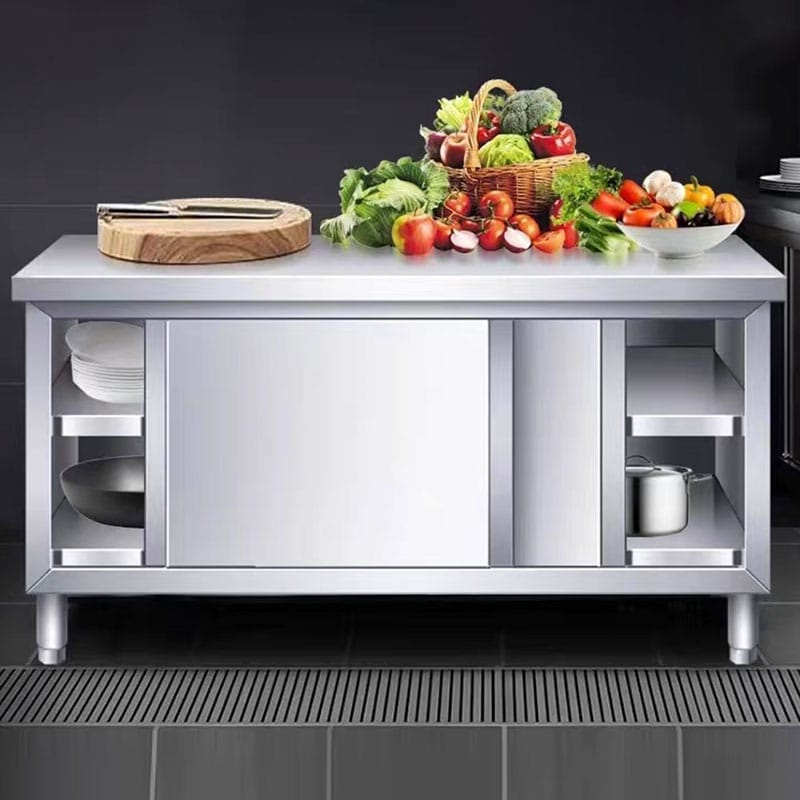
Studi Kasus: Mengganti Tabel Standar di Fasilitas Pengolahan Makanan
Operasi pengolahan makanan skala menengah berulang kali mengalami masalah dengan stasiun kerja yang ringan.
Masalah Diidentifikasi
Meja ditekuk di bawah wadah bahan berat
Getaran peralatan mengurangi presisi
Membersihkan sekitar sendi yang rusak menjadi sulit
Strategi Peningkatan
Fasilitas ini menggantikan semua stasiun kerja standar dengan meja kerja baja tahan karat tugas berat yang dilengkapi rangka yang diperkuat dan permukaan yang lebih tebal.
Hasil Setelah Implementasi
| Metrik | Sebelum Upgrade | Setelah Upgrade |
|---|---|---|
| Stabilitas tabel | Tidak konsisten | Stabil |
| Dukungan peralatan | Terbatas | Dapat diandalkan |
| Efisiensi pembersihan | Sedang | Ditingkatkan |
| Frekuensi penggantian | Tinggi | Berkurang |
Perusahaan melaporkan lebih sedikit gangguan alur kerja dan biaya pemeliharaan jangka panjang yang lebih rendah.
Cara Memilih Meja Kerja Stainless Steel Tugas Berat yang Tepat
Memilih yang kanan meja kerja membutuhkan evaluasi lingkungan operasional Anda dengan hati-hati.
Pahami Persyaratan Beban Anda
Anda harus menghitung perkiraan berat:
• Peralatan
• Kontainer
• Bahan
• Beban operasional harian
Ini membantu menentukan kekuatan rangka dan ketebalan baja yang dibutuhkan.
Evaluasi Ruang yang Tersedia
Meja kerja yang terlalu besar dapat mengganggu jalur pergerakan, sementara tabel yang terlalu kecil mengurangi efisiensi.
Ukur ruang kerja Anda yang tersedia sebelum memilih dimensi.
Putuskan Antara Konfigurasi Tetap atau Seluler
Beberapa meja kerja stainless steel tugas berat termasuk mengunci kastor untuk mobilitas. Yang lain dirancang sebagai stasiun kerja tetap untuk stabilitas maksimum.
Pertimbangkan Integrasi Penyimpanan
Rak bawah dan tingkat penyimpanan yang lebih rendah meningkatkan fungsionalitas tanpa memerlukan furnitur tambahan.
Membandingkan Meja Kerja Stainless Steel Standar dan Tugas Berat
| Fitur | Tabel Standar | Meja Kerja Stainless Steel Tugas Berat |
|---|---|---|
| Kapasitas Muat | Sedang | Tinggi |
| Kekuatan Bingkai | Dasar | Diperkuat |
| Stabilitas | Sedang | Bagus sekali |
| Umur | Singkat | Lebih lama |
| Penggunaan Industri | Terbatas | Ideal |
Perbandingan ini menjelaskan mengapa model tugas berat sering disukai di lingkungan yang menuntut.
Strategi Tata Letak Ruang Kerja untuk Stasiun Kerja Tugas Berat
Penempatan meja secara signifikan mempengaruhi produktivitas dan keselamatan.
Praktik terbaik meliputi:
• Meja posisi dekat peralatan penggunaan tinggi
• Menjaga jalan setapak tetap jelas
• Memisahkan zona beban berat dari area lalu lintas
• Menyelaraskan tabel dengan arah alur kerja
Perencanaan tata letak yang efisien membantu memaksimalkan nilai meja kerja stainless steel tugas berat.

Tips Pemeliharaan untuk Kinerja Jangka Panjang
Meskipun baja tahan karat sangat tahan lama, perawatan yang tepat memperpanjang umur dan mempertahankan penampilan.
Pemeliharaan Harian
Lap permukaan secara teratur
Hapus residu kimia segera
Keringkan permukaan setelah dibersihkan
Inspeksi Mingguan
Periksa sambungan struktural
Periksa bracing dan dukungan
Pastikan kaki tetap rata
Perawatan Jangka Panjang
Hindari alat pembersih abrasif
Perbaiki kerusakan permukaan lebih awal
Pantau distribusi berat dari waktu ke waktu
Biaya vs Nilai Jangka Panjang
Meja kerja stainless steel tugas berat sering kali lebih mahal pada awalnya daripada alternatif ringan. Namun, fokus hanya pada harga pembelian bisa menyesatkan.
| Faktor | Tabel Standar | Tabel Tugas Berat |
|---|---|---|
| Biaya Awal | Lebih rendah | Lebih tinggi |
| Daya tahan | Sedang | Bagus sekali |
| Frekuensi Penggantian | Lebih tinggi | Lebih rendah |
| Biaya Pemeliharaan | Lebih tinggi | Lebih rendah |
| Stabilitas Operasional | Sedang | Kuat |
Seiring waktu, meja kerja stainless steel tugas berat sering memberikan laba atas investasi yang lebih baik karena mengurangi waktu henti, perbaikan, dan kebutuhan penggantian.
Tanya Jawab Umum
Apa yang dianggap sebagai meja kerja stainless steel tugas berat?
Meja kerja stainless steel tugas berat adalah meja yang diperkuat yang dirancang untuk mendukung beban tinggi dan penggunaan komersial atau industri yang berkelanjutan.
Berapa banyak berat yang dapat didukung meja kerja stainless steel tugas berat?
Kapasitasnya bervariasi menurut desain, tetapi banyak model direkayasa untuk mendukung alat berat dan beban kerja industri dengan aman.
Apakah meja kerja tugas berat diperlukan untuk dapur komersial?
Dapur bervolume tinggi sering mendapat manfaat dari meja tugas berat karena memberikan stabilitas dan daya tahan yang lebih baik dalam penggunaan konstan.
Ketebalan baja tahan karat apa yang terbaik untuk aplikasi tugas berat?
Pengukur yang lebih tebal, seperti baja tahan karat ukuran 14, biasanya lebih disukai untuk lingkungan yang menuntut.
Berapa lama meja kerja stainless steel tugas berat biasanya bertahan?
Dengan perawatan yang tepat, mereka dapat tetap berfungsi selama bertahun-tahun dalam pengaturan komersial dan industri.