If your workspace handles heavy equipment, high workloads, or continuous daily operations, standard tables often fail faster than expected. Heavy duty stainless steel work tables are designed to provide greater stability, higher load capacity, and longer service life in demanding commercial and industrial environments.
This guide explains how heavy duty stainless steel work tables improve workflow, safety, and durability, while helping you choose the right configuration for your business.
You can explore professional workspace solutions on the Bafang stainless steel equipment platform.
Table of Contents
What Makes Heavy Duty Stainless Steel Work Tables Different
At first glance, many stainless steel tables look similar. However, heavy duty stainless steel work tables are built differently from standard utility or prep tables.
The main difference is structural performance. These tables are engineered for demanding workloads, larger equipment, and continuous daily use.
Heavy duty stainless steel work tables typically include:
• Thicker stainless steel surfaces
• Reinforced legs and frames
• Higher weight capacities
• Cross-bracing for stability
• Industrial-grade welding and joints
These design elements allow the table to remain stable even under high loads or repeated impact.
In many commercial environments, standard work tables eventually bend or loosen because they were never designed for intensive use. Heavy duty stainless steel work tables solve this problem by prioritizing strength and durability from the beginning.
Why Standard Work Tables Often Fail in High-Load Environments
Many businesses initially purchase lower-cost tables to reduce upfront expenses. However, these savings often disappear quickly in demanding environments.
Surface Flexing and Instability
When heavy equipment or materials are placed on lightweight tables, the surface may flex or wobble. This affects precision tasks and increases workplace frustration.
Frame Weakness
Thin legs and weak support structures struggle under continuous weight. Over time, joints loosen and tables become unstable.
Shorter Lifespan
Lower-grade materials wear out faster, especially in environments exposed to moisture, chemicals, or constant movement.
Increased Maintenance Costs
Replacing damaged tables or repairing structural failures creates unnecessary downtime and labor costs.
Heavy duty stainless steel work tables are designed specifically to avoid these issues.

Key Features You Should Look for in Heavy Duty Stainless Steel Work Tables
Not all heavy duty tables are equal. Understanding the most important features helps you choose equipment that matches your operational needs.
Stainless Steel Thickness and Gauge
Thicker stainless steel provides greater strength and impact resistance.
| Steel Gauge | Typical Use |
|---|---|
| 18 Gauge | Light commercial use |
| 16 Gauge | Medium-duty applications |
| 14 Gauge | Heavy-duty industrial use |
Most heavy duty stainless steel work tables use thicker materials to improve structural rigidity.
Reinforced Legs and Bracing
Cross-bracing helps distribute weight evenly and prevents lateral movement. Reinforced legs improve load-bearing performance and long-term stability.
High Load Capacity
Heavy duty stainless steel work tables are designed to support significantly more weight than standard tables.
Typical applications may involve:
• Industrial kitchen mixers
• Packaging equipment
• Heavy ingredient containers
• Mechanical tools and components
Smooth, Non-Porous Surface
Stainless steel remains ideal for commercial environments because it resists corrosion and allows fast cleaning.
Industries That Commonly Use Heavy Duty Stainless Steel Work Tables
One reason heavy duty stainless steel work tables are so popular is their adaptability across industries.
Commercial Kitchens
Restaurants and catering kitchens use these tables to support heavy prep equipment and high-volume ingredient handling.
Food Processing Facilities
Food manufacturing environments rely on industrial stainless steel work tables for sanitation and durability.
Warehouses and Packing Stations
Heavy duty work tables provide stable surfaces for packaging, sorting, and staging operations.
Manufacturing Workshops
Workshops use reinforced stainless steel tables for assembly tasks and tool support.
Laboratories and Technical Spaces
Some technical environments require cleanable, corrosion-resistant work surfaces that remain structurally stable over time.
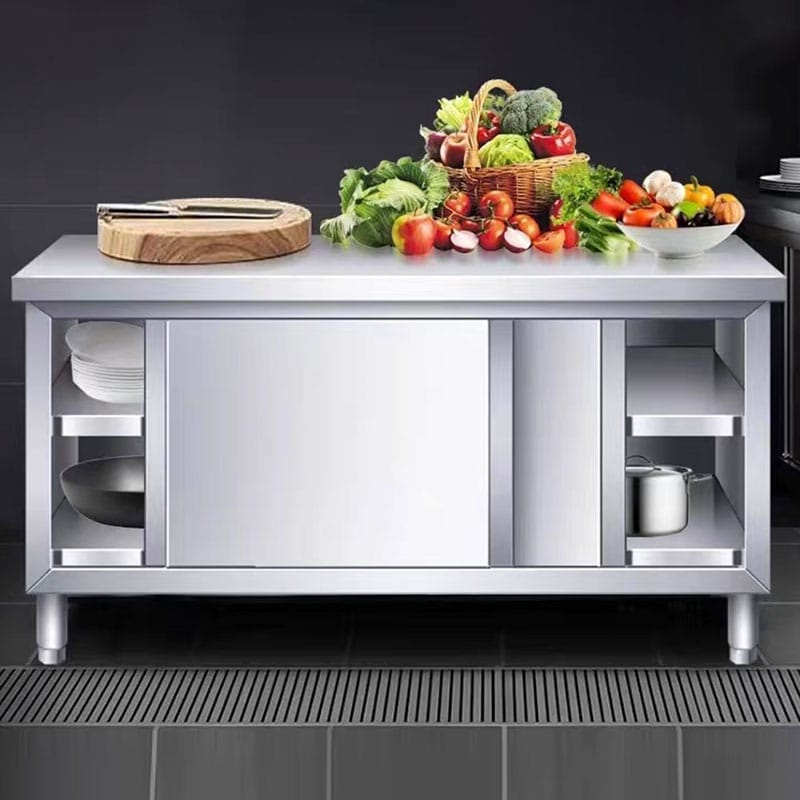
Case Study: Replacing Standard Tables in a Food Processing Facility
A medium-sized food processing operation experienced repeated problems with lightweight workstations.
Problems Identified
Tables bent under heavy ingredient containers
Equipment vibration reduced precision
Cleaning around damaged joints became difficult
Upgrade Strategy
The facility replaced all standard workstations with heavy duty stainless steel work tables featuring reinforced frames and thicker surfaces.
Results After Implementation
| Metric | Before Upgrade | After Upgrade |
|---|---|---|
| Table stability | Inconsistent | Stable |
| Equipment support | Limited | Reliable |
| Cleaning efficiency | Moderate | Improved |
| Replacement frequency | High | Reduced |
The company reported fewer workflow interruptions and lower long-term maintenance costs.
How to Choose the Right Heavy Duty Stainless Steel Work Tables
Selecting the right work table requires evaluating your operational environment carefully.
Understand Your Load Requirements
You should calculate the approximate weight of:
• Equipment
• Containers
• Materials
• Daily operational loads
This helps determine the required frame strength and steel thickness.
Evaluate Available Space
Oversized work tables can disrupt movement pathways, while undersized tables reduce efficiency.
Measure your available workspace before selecting dimensions.
Decide Between Fixed or Mobile Configurations
Some heavy duty stainless steel work tables include locking casters for mobility. Others are designed as fixed workstations for maximum stability.
Consider Storage Integration
Undershelves and lower storage tiers increase functionality without requiring additional furniture.
Comparing Standard and Heavy Duty Stainless Steel Work Tables
| Feature | Standard Tables | Heavy Duty Stainless Steel Work Tables |
|---|---|---|
| Load Capacity | Moderate | High |
| Frame Strength | Basic | Reinforced |
| Stability | Medium | Excellent |
| Lifespan | Shorter | Longer |
| Industrial Use | Limited | Ideal |
This comparison explains why heavy duty models are often preferred in demanding environments.
Workspace Layout Strategies for Heavy Duty Workstations
Table placement significantly affects productivity and safety.
Best practices include:
• Positioning tables near high-use equipment
• Keeping walkways clear
• Separating heavy-load zones from traffic areas
• Aligning tables with workflow direction
Efficient layout planning helps maximize the value of heavy duty stainless steel work tables.

Maintenance Tips for Long-Term Performance
Although stainless steel is highly durable, proper maintenance extends lifespan and preserves appearance.
Daily Maintenance
Wipe surfaces regularly
Remove chemical residue promptly
Dry surfaces after cleaning
Weekly Inspection
Check structural joints
Inspect bracing and supports
Ensure legs remain level
Long-Term Care
Avoid abrasive cleaning tools
Repair surface damage early
Monitor weight distribution over time
Cost vs Long-Term Value
Heavy duty stainless steel work tables often cost more initially than lightweight alternatives. However, focusing only on purchase price can be misleading.
| Factor | Standard Tables | Heavy Duty Tables |
|---|---|---|
| Initial Cost | Lower | Higher |
| Durability | Medium | Excellent |
| Replacement Frequency | Higher | Lower |
| Maintenance Costs | Higher | Lower |
| Operational Stability | Moderate | Strong |
Over time, heavy duty stainless steel work tables often provide better return on investment because they reduce downtime, repairs, and replacement needs.
FAQ
What is considered a heavy duty stainless steel work table?
Heavy duty stainless steel work tables are reinforced tables designed to support high loads and continuous commercial or industrial use.
How much weight can heavy duty stainless steel work tables support?
The capacity varies by design, but many models are engineered to support heavy equipment and industrial workloads safely.
Are heavy duty work tables necessary for commercial kitchens?
High-volume kitchens often benefit from heavy duty tables because they provide better stability and durability under constant use.
What stainless steel thickness is best for heavy-duty applications?
Thicker gauges, such as 14-gauge stainless steel, are commonly preferred for demanding environments.
How long do heavy duty stainless steel work tables typically last?
With proper maintenance, they can remain functional for many years in commercial and industrial settings.