Table of Contents
Introduction
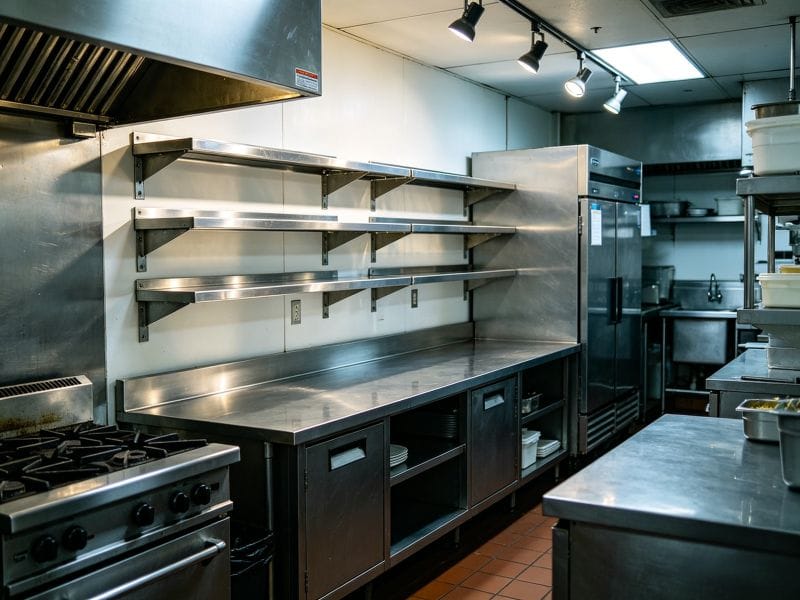
Choosing the right storage solution is a key decision in any commercial kitchen. While wall mounted stainless steel shelves are widely used for their space-saving and hygienic advantages, not all shelves are the same. Different types are designed for different workflows, storage needs, and kitchen layouts.
Understanding the types of wall mounted stainless steel shelves helps you make smarter purchasing decisions. The right shelf can improve efficiency, enhance organization, and support food safety compliance. The wrong choice, however, can lead to wasted space, workflow disruptions, and unnecessary costs.
In this guide, we break down the most common types of wall mounted stainless steel shelves, their features, applications, and how to choose the best option for your kitchen.


Types of Wall Mounted Stainless Steel Shelves
In a commercial kitchen, every detail affects performance. Storage is not just about where items are placed, but how easily they can be accessed, cleaned, and managed.
Different kitchen zones require different shelving solutions. For example, prep areas need quick access, while storage areas require higher load capacity. Dishwashing zones need moisture-resistant designs, and service areas benefit from efficient item flow.
By understanding the types of wall mounted stainless steel shelves, you can match each shelf type to its ideal use case and significantly improve kitchen workflow.
Single-Tier Wall Mounted Stainless Steel Shelves
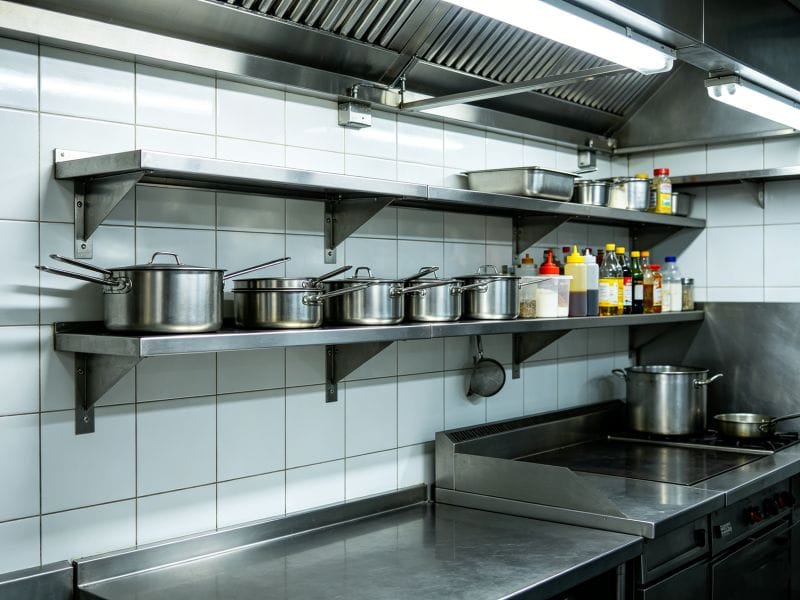
Single-tier shelves are the most basic and widely used type. They consist of one flat surface mounted securely to the wall.
These shelves are ideal for storing frequently used items such as spices, utensils, containers, and small kitchen tools. Because they are installed at eye level or just above work surfaces, they provide quick and easy access during food preparation.
They are commonly used above prep tables, sinks, and cooking stations. Their simple design makes them easy to clean and maintain, which is important for hygiene-focused environments.
Double-Tier and Multi-Tier Shelves
Double-tier and multi-tier shelves offer additional vertical storage without taking up extra wall space. They are perfect for kitchens with high storage demands or limited floor space.
These shelves allow you to organize items by category or frequency of use. For example, commonly used ingredients can be placed on the lower shelf, while less frequently used items are stored on the upper level.
Multi-tier shelves are especially useful in busy kitchens where maximizing storage capacity is essential for efficiency.
Slanted (Inclined) Stainless Steel Shelves
Slanted shelves are designed at an angle to improve visibility and accessibility. This design makes it easier to see and grab items quickly, which is particularly useful during peak service hours.
They are commonly used for storing plates, food containers, or packaged ingredients. In fast-paced kitchens, this design reduces the time spent searching for items and helps maintain workflow efficiency.
Slanted shelves are also beneficial in display or service areas where visibility is important.
Pass-Through Wall Mounted Shelves
Pass-through shelves are installed between two working areas, allowing items to be transferred easily from one side to the other. This type of shelf is often used between prep areas and service stations.
They improve communication and efficiency by reducing unnecessary movement. Staff can place prepared dishes or ingredients on the shelf for others to access without entering another workspace.
This type is especially popular in large commercial kitchens, hotels, and catering operations.
Enclosed Wall Mounted Stainless Steel Shelves
Enclosed shelves feature side panels or full enclosures to protect stored items from dust, grease, and contamination.
They are ideal for storing sensitive items such as ingredients, clean utensils, or packaged goods that need additional protection. In environments with high levels of grease or airborne particles, enclosed shelves help maintain cleanliness.
Although they offer less accessibility than open shelves, they provide better protection and organization.
Adjustable Wall Mounted Shelves
Adjustable shelves allow users to change the height or position of shelving levels based on storage needs. This flexibility is particularly useful in kitchens where inventory and equipment change frequently.
Instead of replacing shelves when requirements change, adjustable systems allow you to adapt quickly. This makes them a cost-effective and future-proof solution.
Comparison of Different Shelf Types
| Shelf Type | Accessibility | Storage Capacity | Best Use Case |
|---|---|---|---|
| Single-Tier | Very High | Low | Prep areas, daily tools |
| Double/Multi-Tier | High | High | High-volume kitchens |
| Slanted Shelves | Very High | Medium | Fast access items |
| Pass-Through | High | Medium | Workflow efficiency |
| Enclosed Shelves | Medium | Medium | Protected storage |
| Adjustable Shelves | High | Flexible | Dynamic kitchens |
This comparison helps identify which type of wall mounted stainless steel shelves fits your operational needs.
Material and Build Quality Considerations
Not all stainless steel shelves are manufactured to the same standard. High-quality shelves typically use food-grade stainless steel such as 304, which offers excellent corrosion resistance and durability.
Thickness (gauge) is another important factor. Thicker stainless steel provides better load capacity and stability, especially for heavy-duty use.
Welding quality, edge finishing, and bracket strength also impact performance. Poor construction can lead to instability and safety risks over time.
Choosing a reliable manufacturer ensures that your shelving system meets commercial kitchen standards.
How to Choose the Type of Wall-Mounted Stainless Steel Shelf?
Selecting the right type of wall mounted stainless steel shelves depends on several factors.
Consider your kitchen layout and available wall space. Identify which areas need quick access versus long-term storage.
Think about what items you will store and how often they are used. High-frequency items should be placed on easily accessible shelves.
Evaluate load requirements to ensure shelves can safely support the intended weight.
If your kitchen is growing or changing, consider adjustable shelving systems for flexibility.
Working with an experienced supplier allows you to customize shelf types, sizes, and configurations to match your exact needs.
Real-World Applications
In restaurant kitchens, single-tier and double-tier shelves are commonly used above prep stations to keep ingredients within reach.
In hotel kitchens, multi-tier and pass-through shelves help manage large volumes of food preparation efficiently.
In cloud kitchens, adjustable and space-saving designs maximize limited space and support fast operations.
In food processing environments, enclosed shelves help maintain strict hygiene standards.
Conclusion
Understanding the types of wall mounted stainless steel shelves is essential for building an efficient and organized commercial kitchen. Each type serves a specific purpose, from maximizing storage capacity to improving workflow and maintaining hygiene.
By selecting the right combination of shelf types, you can create a storage system that supports your kitchen’s daily operations and long-term growth. Investing in high-quality stainless steel shelving ensures durability, safety, and performance in even the most demanding environments.
FAQ
What is the most common type of wall mounted stainless steel shelf?
Single-tier shelves are the most widely used due to their simplicity, accessibility, and ease of installation in commercial kitchens.
Which shelf type is best for small kitchens?
Double-tier or adjustable shelves are ideal for maximizing limited wall space while maintaining easy access to frequently used items.
Are enclosed shelves necessary?
Enclosed shelves are recommended in environments where additional protection from dust, grease, or contamination is required.
Can wall mounted shelves hold heavy items?
Yes, heavy-duty wall mounted stainless steel shelves can support significant weight when properly installed with strong brackets and anchors.
How do I choose the right shelf type?
You should consider your kitchen layout, storage needs, frequency of use, and load requirements before selecting the appropriate shelf type.