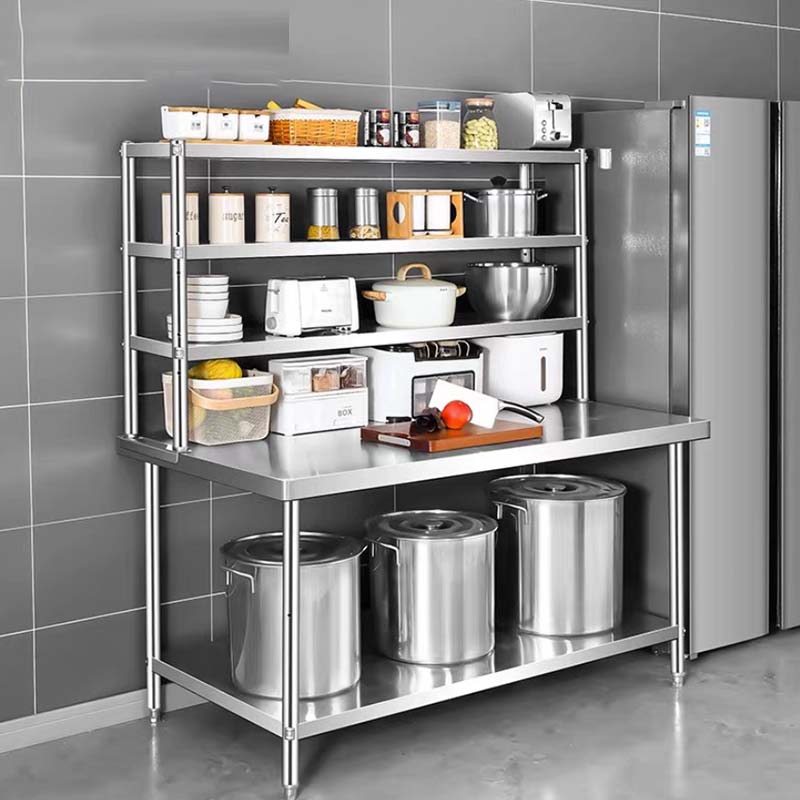
When you operate a professional kitchen, efficiency is not something you improve once and forget. It is something you manage every single day through layout decisions, equipment choices, and workflow design. One of the most overlooked yet most influential pieces of equipment in this system is the workbench, especially stainless steel workbenches with storage.
If your kitchen relies on scattered shelving, overloaded prep tables, or staff constantly walking back and forth to retrieve tools and ingredients, your operation is paying a hidden cost in time, labor, and consistency. A stainless steel workbench with integrated storage transforms a simple surface into a structured, task-oriented workstation that supports speed, cleanliness, and predictability.
This article helps you understand how storage-integrated stainless steel workbenches are used in modern professional kitchens, why they have become a standard rather than an upgrade, and how you can select, configure, and maintain the right solution for your operation.
The Shift From Simple Tables to Storage-Centered Workstations
Traditional workbenches were designed as flat surfaces first and storage second. In today’s kitchens, that logic no longer holds. Space is limited, labor is expensive, and hygiene standards are higher than ever. Storage-centered workbenches respond directly to these realities.
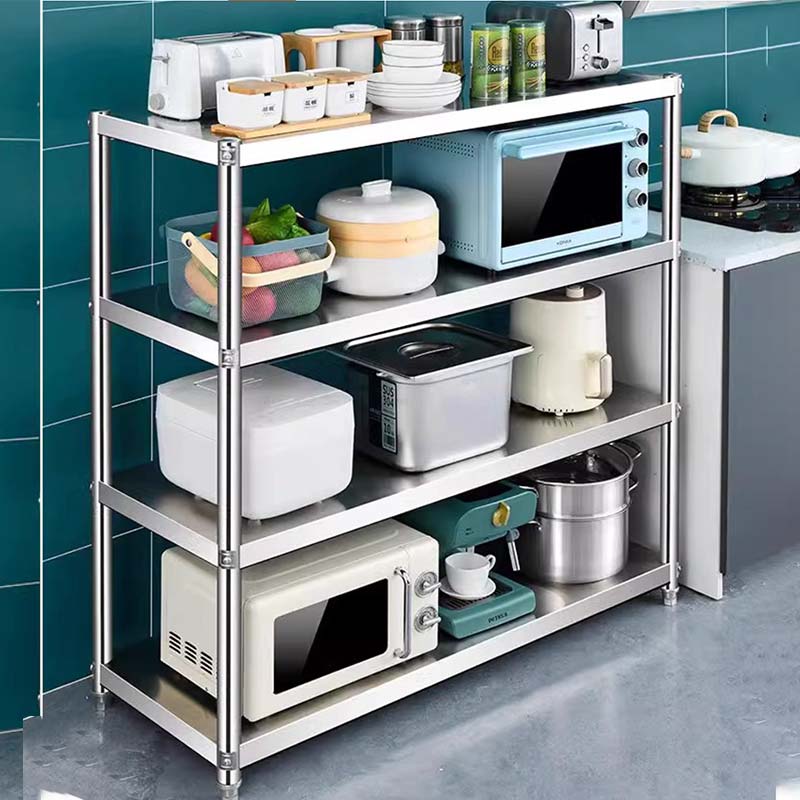
When storage is built into the workstation itself, you reduce unnecessary movement. Ingredients, tools, containers, and utensils remain within arm’s reach. Instead of leaving the station repeatedly, your staff stays focused on the task at hand.
You should think of stainless steel workbenches with storage as compact production cells. Each one supports a specific workflow rather than serving as a general-purpose table.
Why Stainless Steel Is the Preferred Material for Storage Workbenches
Material choice becomes even more critical when storage is involved. Stainless steel remains the preferred option in professional kitchens for reasons that are practical rather than aesthetic.
Hygiene and Food Safety Advantages
Stainless steel is non-porous. It does not absorb moisture, oils, or food residue. This makes it easier to sanitize and significantly reduces the risk of bacterial buildup, especially in undershelves, drawers, and cabinet interiors.
When storage is integrated under the work surface, cleaning access matters. Stainless steel allows frequent cleaning without degrading the surface or compromising hygiene standards.
Structural Strength Under Load
Storage workbenches must support more than countertop activity. Shelves and cabinets are often loaded with heavy ingredients, cookware, or equipment. Stainless steel frames maintain rigidity and alignment even under consistent weight.
This structural reliability is critical in high-volume kitchens where storage loads fluctuate throughout the day.
Durability in Real Kitchen Conditions
Professional kitchens are not gentle environments. Trays are dropped, carts collide with frames, and cleaning chemicals are used daily. Stainless steel resists corrosion, warping, and chemical damage far better than alternative materials.
Common Types of Stainless Steel Workbenches With Storage
Not all storage workbenches are designed for the same tasks. Choosing the right configuration depends on how your kitchen actually operates.
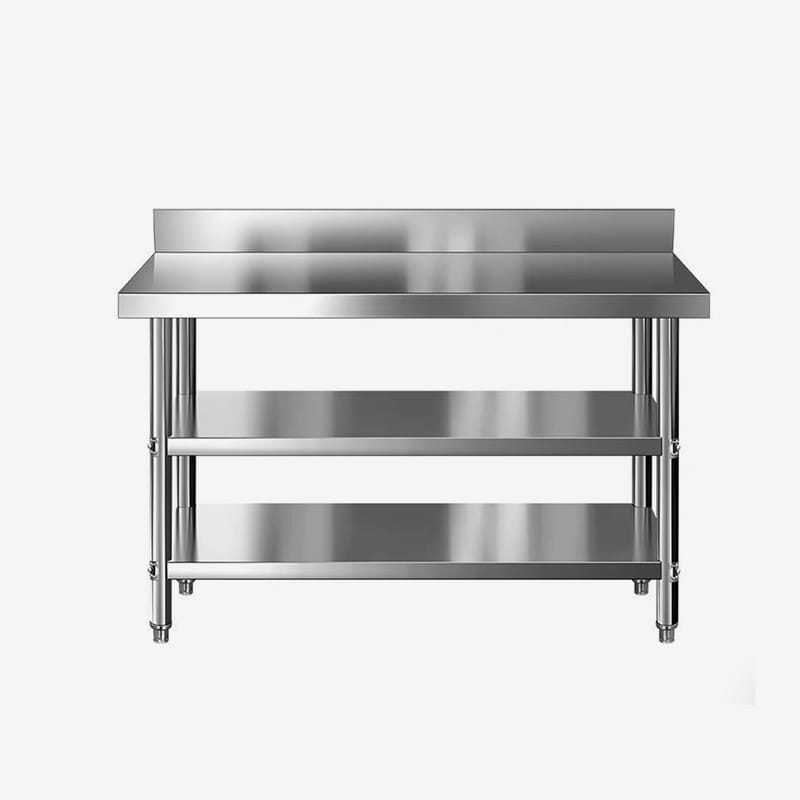
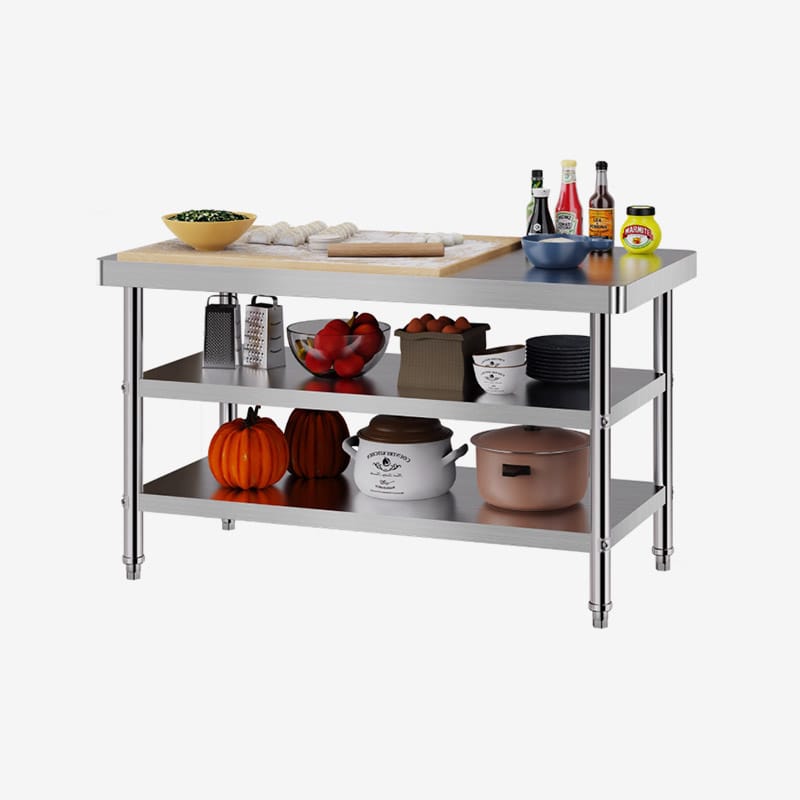
Open Undershelf Workbenches
Open undershelf workbenches are the most widely used configuration. They provide immediate visual access and fast retrieval of items.
They are well-suited for high-volume prep areas, bakeries, and commissary kitchens where speed and frequent cleaning are priorities. Because there are no doors or drawers, cleaning is faster, and airflow helps reduce moisture accumulation.
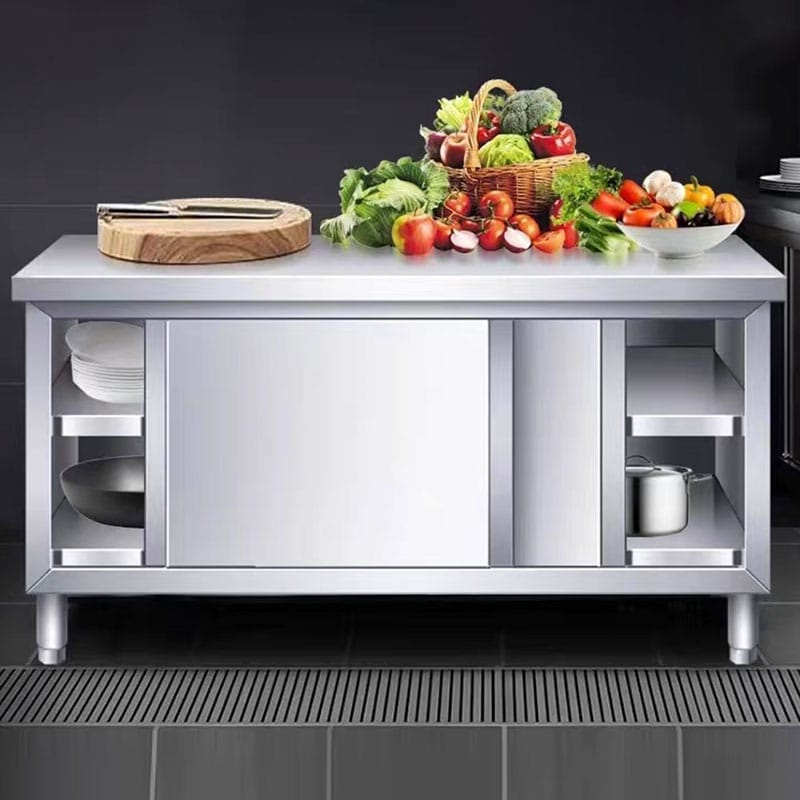
Enclosed Cabinet Workbenches
Cabinet-style storage protects contents from splashes, dust, and ambient contaminants. This makes them suitable for cold kitchens, allergen-sensitive environments, and finishing or packaging stations.
While access is slightly slower than open shelves, cabinets improve organization and provide a cleaner visual appearance.
Drawer-Based Storage Workbenches
Drawer systems are ideal for tool-heavy tasks where organization and repeatability matter. Utensils, tools, and small containers stay in defined locations, reducing clutter on the work surface.
Drawer-based storage is commonly used in assembly stations and precision prep areas where consistency is important.
How Storage-Integrated Workbenches Improve Workflow Efficiency
The real value of storage workbenches becomes clear when you examine daily movement patterns inside a kitchen.
Every step that does not contribute directly to production is a cost. Storage-integrated workbenches reduce these non-productive movements by keeping necessary items close to where work happens.
Reduced Prep Time
When ingredients and tools are stored directly beneath the work surface, prep becomes continuous rather than interrupted. Over the course of a full shift, these small time savings add up to measurable efficiency gains.
Lower Cross-Contamination Risk
Dedicated storage at each workstation reduces tool sharing between stations. This lowers the risk of cross-contamination and simplifies hygiene management.
Improved Ergonomics and Staff Comfort
Repeated bending, reaching, and walking increase fatigue and injury risk. Storage workbenches designed with proper shelf height and layout reduce physical strain and support safer working postures.
Case Scenario: Improving Output in a High-Volume Prep Kitchen
Consider a mid-sized food preparation facility producing ready-to-cook meals. Before upgrading, the kitchen used flat tables combined with wall-mounted shelving.
Staff frequently left their stations to retrieve tools and ingredients. Prep surfaces became cluttered, and end-of-day cleaning required moving equipment and containers.
Changes Implemented
The facility introduced stainless steel workbenches with integrated storage, including dual undershelves and drawer units for frequently used tools. The workbenches were positioned so that each prep task had its own dedicated station.
Results Observed
Prep time per batch was reduced by approximately 20 percent. Staff movement decreased noticeably, cleaning became faster, and tool loss dropped significantly. The workflow became more predictable and easier to manage.
The improvement did not come from new machinery but from better organization at the workstation level.
Choosing the Right Storage Configuration for Your Operation
Selecting the right workbench starts with understanding your tasks, not your available space.
Key Questions to Ask
What items need to be accessed most frequently
Are these items sensitive to contamination
How often is the station cleaned
Is speed or protection more important
Will storage needs increase over time
Answering these questions helps narrow down the appropriate storage configuration.
Matching Storage Types to Common Tasks
| Task Type | Recommended Storage |
|---|---|
| Dough preparation | Open undershelves |
| Tool-heavy assembly | Drawer systems |
| Ingredient staging | Enclosed cabinets |
| Packaging and finishing | Combination storage |
Material Thickness and Structural Design Considerations
Storage adds weight. That weight must be supported consistently over years of use.
Frame and Surface Thickness
Thicker stainless steel improves load distribution and reduces vibration. For storage-heavy applications, structural rigidity is as important as surface quality.
Weld Quality and Joint Design
Poor welds fail first under load. High-quality joints maintain alignment and prevent shelf sagging over time. This directly affects both safety and usability.
Cleaning and Maintenance Best Practices
Storage workbenches simplify organization but require disciplined cleaning routines.
Daily Cleaning
Wipe all surfaces, including undershelves and drawer fronts
Remove debris from corners and joints
Dry surfaces thoroughly to prevent water spotting
Weekly Cleaning
Empty shelves and drawers
Clean interior surfaces
Inspect for loose components or alignment issues
Long-Term Maintenance
Check load distribution periodically
Adjust leveling feet if needed
Replace worn drawer slides or hardware promptly
Consistent maintenance preserves both hygiene and structural integrity.
Evaluating Cost Efficiency Over Time
While storage workbenches may have a higher initial cost than basic tables, their long-term value is often greater.
| Factor | Basic Table | Storage Workbench |
|---|---|---|
| Initial investment | Lower | Higher |
| Labor efficiency | Limited | High |
| Organization | Poor | Excellent |
| Cleaning time | Longer | Shorter |
| Replacement cycle | Shorter | Longer |
When labor efficiency and reduced downtime are considered, storage-integrated workbenches often deliver better overall value.

Planning Workbench Placement for Maximum Impact
Placement determines whether storage improves or hinders workflow.
Best practices include placing storage workbenches where tasks are repetitive, avoiding obstruction of aisles or equipment access, aligning storage height with task frequency, and keeping heavy items stored low for safety.
FAQ
What makes stainless steel workbenches with storage better than standard tables?
They reduce unnecessary movement, improve organization, and support hygiene by keeping tools and ingredients close to the work surface.
Are enclosed cabinets always better than open shelves?
No. Open shelves offer faster access and easier cleaning, while cabinets provide better protection. The right choice depends on the task.
How much weight can storage workbenches handle?
This depends on frame design and material thickness, but well-constructed stainless steel benches are suitable for heavy daily loads.
Do storage workbenches increase cleaning complexity?
No. In many cases, they reduce cleaning time by eliminating separate shelving units.
Are storage workbenches suitable for small kitchens?
Yes. Smaller kitchens often benefit more because integrated storage reduces the need for additional furniture.
How long should a stainless steel storage workbench last?
With proper maintenance, it can remain functional and structurally sound for well over a decade.