Table of Contents
Introduction
If you run a professional kitchen, you know how important a good commercial kitchen workbench is. It’s where most of your prep happens — chopping, mixing, plating, and sometimes even holding equipment. Choosing the right material for your workbench isn’t just about looks. It affects how efficiently your kitchen runs, how easy it is to clean, and how long your workbench lasts.
Stainless steel is the most common choice, but wood, plastic, and aluminum can work too — depending on your needs. This guide will walk you through the pros and cons of each material, share real-world examples, and give you tips on picking the best option for your kitchen.
Why Material Matters
The material you choose will affect your kitchen in many ways. High-traffic kitchens deal with heavy equipment, constant cleaning, and lots of food prep. The wrong material can warp, trap bacteria, or require frequent repairs. You need to think about hygiene, durability, ease of cleaning, staff comfort, and cost.
Stainless Steel Workbenches
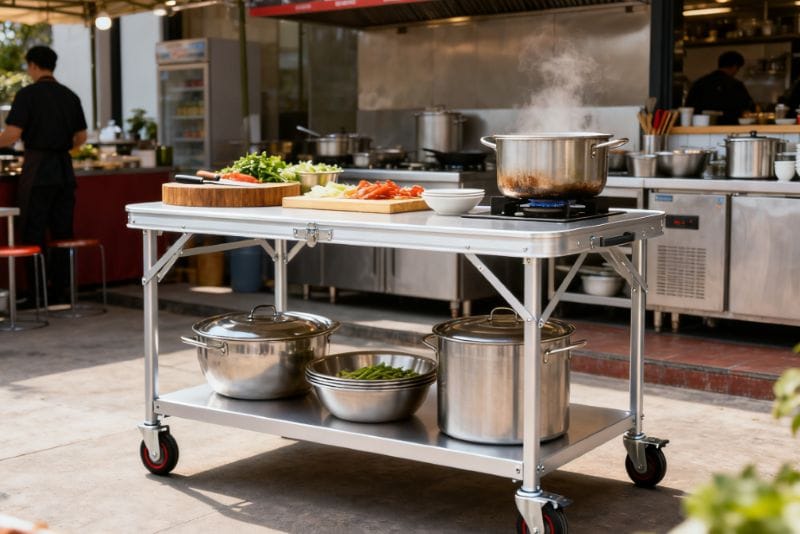
Stainless steel is the top choice for most commercial kitchens. Here’s why:
- Durable: It can handle heavy pots, pans, and prep work without bending or cracking.
- Hygienic: Non-porous surfaces are easy to clean and won’t harbor bacteria. It meets NSF and FDA standards.
- Resistant to heat and corrosion: It doesn’t rust and handles hot pans and acidic foods well (Action Stainless).
The downsides are higher cost, heavier weight, and more noise when handling equipment. Stainless steel is best for high-volume kitchens like restaurants, hotels, and catering businesses.
Wood Workbenches
Wood is often used in bakeries and pastry kitchens. It’s softer, which is great for rolling dough and working with delicate pastries. It also gives a warm, natural look.
But wood can absorb moisture and food particles, which makes bacteria more likely to grow. It also needs regular sanding, sealing, and oiling to stay in good shape. Wood works well for specialty prep areas but isn’t ideal as the main workbench in busy kitchens.
Plastic / HDPE Workbenches
Plastic or HDPE workbenches are lightweight and easy to move. They are affordable and resist stains better than wood.
The limitations are lower durability, scratches, and sensitivity to heat. They also may retain food odors. Plastic benches are perfect for secondary prep stations, mobile catering setups, or temporary kitchens.
Aluminum Workbenches
Aluminum benches are light and don’t rust, which is useful for mobile or temporary setups.
However, aluminum can dent or scratch more easily, doesn’t handle heat as well as stainless steel, and can’t hold as much weight. Use aluminum for mobile kitchens or outdoor catering stations rather than as your main workbench.
Comparison Table of Commercial Kitchen Workbench Materials
| Material | Durability | Hygiene | Heat/Corrosion Resistance | Maintenance | Best Use |
|---|---|---|---|---|---|
| Stainless Steel | Very High | Very High | Very High | Low | Main kitchens, high-volume prep |
| Wood | Medium | Medium | Low | High | Bakeries, pastry prep |
| Plastic/HDPE | Medium | Medium | Medium | Medium | Secondary stations, mobile setups |
| Aluminum | Medium | Medium | Medium | Medium | Mobile/temporary kitchens |

Key Things to Consider
When choosing a material, think about these factors:
- Hygiene: Non-porous surfaces like stainless steel are easiest to clean and safest for food prep.
- Durability and load: How much weight and daily use will the bench handle? Stainless steel usually lasts the longest.
- Maintenance and cost: Wood or plastic may cost less upfront but need more upkeep. Stainless steel costs more initially but saves money over time.
- Workflow and comfort: Adjustable or mobile benches help your staff work faster and reduce fatigue.
- Special needs: Wood is great for dough, plastic for lightweight tasks, and aluminum for mobility.
Real Examples
A busy 200-seat restaurant switched all prep stations to 304 stainless steel. Cleaning time dropped 40%, and benches lasted over 15 years. A bakery uses maple wood tables for dough prep and stainless steel for other prep, balancing hygiene and dough handling. A catering company uses portable HDPE benches for outdoor events, which last 3–4 years before replacement. These examples show how material choice affects efficiency, maintenance, and lifespan.
Conclusion
While wood, plastic, and aluminum have their uses, stainless steel is the safest bet for most commercial kitchens. It’s durable, hygienic, heat- and corrosion-resistant, and cost-effective in the long run. Choosing the right material depends on your kitchen’s tasks, budget, and workflow, but for most high-volume kitchens, stainless steel provides the best combination of performance, safety, and value.
FAQ
Why is stainless steel the top choice?
It’s durable, non-porous, and resistant to corrosion and heat, making it perfect for busy kitchens (Action Stainless).
Can I use wood workbenches safely?
Yes, in low-moisture areas like pastry prep, but they require regular sealing and maintenance.
When should I pick plastic or HDPE?
Use them for secondary stations, mobile setups, or temporary prep areas. They’re light and easy to move.
Is aluminum a good alternative?
It’s light and doesn’t rust but is less durable and heat-resistant than stainless steel. Use it mainly for mobile or temporary kitchens.
How do I choose the best material?
Think about hygiene, durability, maintenance, cost, workflow, and tasks. Stainless steel is usually the best for main prep areas, while other materials serve niche purposes.