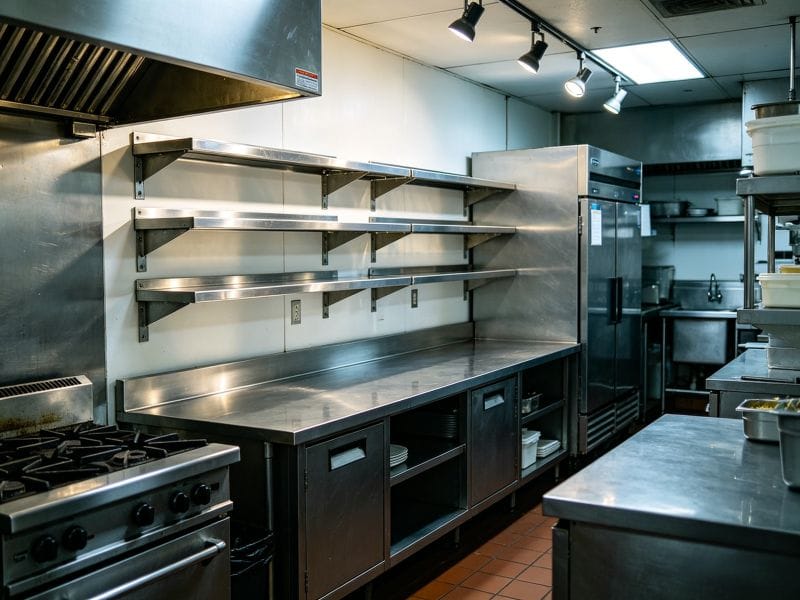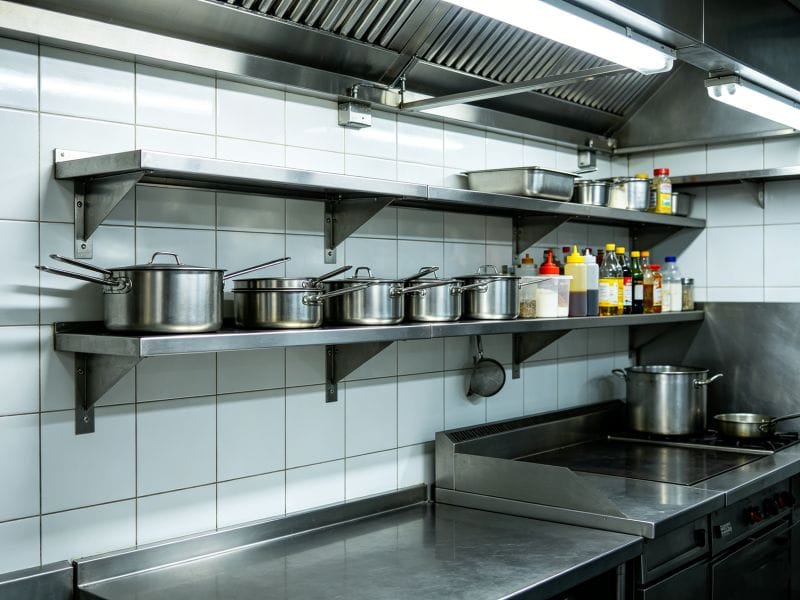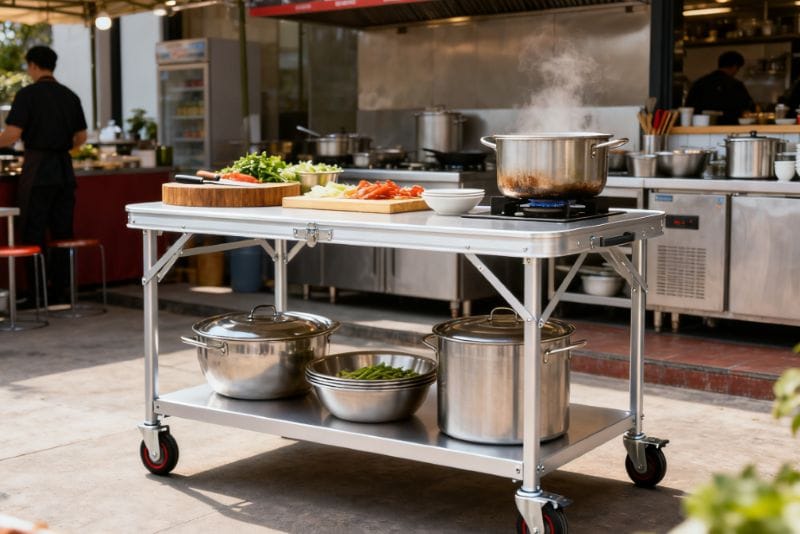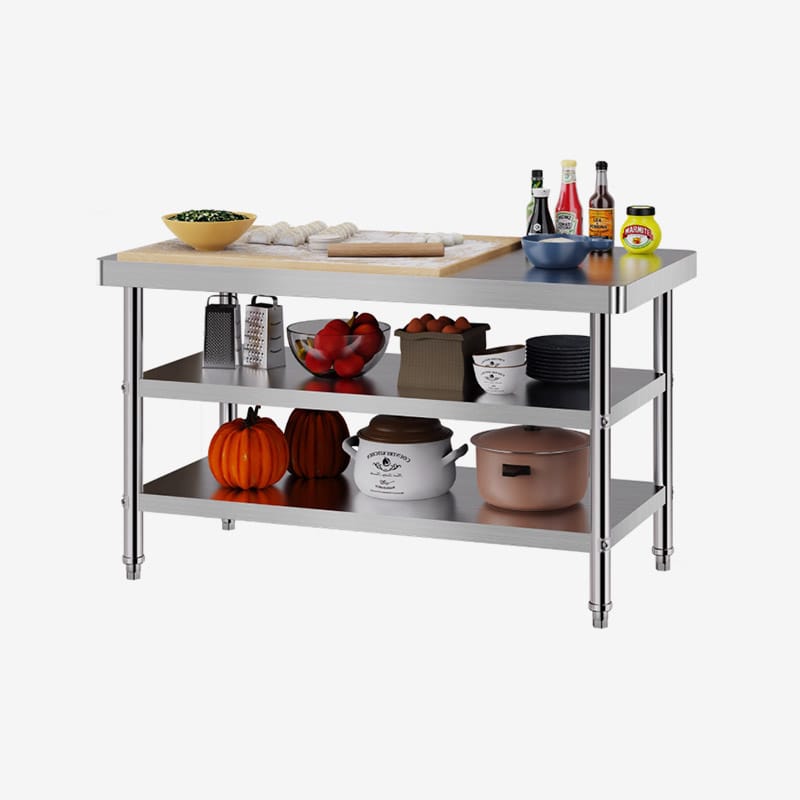
In a commercial kitchen, preparation is where efficiency is either built or lost. Every ingredient must be cleaned, cut, portioned, and organized before it reaches the cooking stage. If your preparation process is slow or disorganized, your entire operation will feel the impact.
This is where stainless steel prep tables become essential. These tables are not just flat surfaces. They function as the operational core of your kitchen, supporting workflow, hygiene, and speed at every stage of food preparation.
Whether you operate a restaurant, catering business, hotel kitchen, or food production facility, choosing the right stainless steel prep tables can significantly improve your productivity and consistency.
Table of Contents
Why Stainless Steel Prep Tables Dominate Commercial Kitchens
In modern commercial kitchens, stainless steel prep tables have replaced most traditional materials. This shift is driven by strict hygiene standards, durability requirements, and the need for efficient workflows.
Unlike wooden or plastic surfaces, stainless steel prep tables do not absorb liquids or bacteria. This makes them ideal for food preparation environments where cleanliness is critical.
According to the FDA food safety standards, food contact surfaces must be easy to clean, corrosion-resistant, and non-absorbent. Stainless steel meets all of these requirements.
As a result, stainless steel prep tables are widely used as restaurant prep tables, food prep tables, and commercial prep stations across the industry.
Expanding Use Cases: Where Stainless Steel Prep Tables Are Used
The versatility of stainless steel prep tables allows them to be used across multiple food service environments.
Restaurant Kitchens
In restaurants, prep tables are used for ingredient preparation, plating, and staging. They are often positioned near cooking equipment to reduce movement.
Catering and Central Kitchens
Large-scale operations use heavy duty prep tables to handle high-volume ingredient preparation.
Bakeries and Pastry Kitchens
Prep tables provide stable surfaces for dough preparation and pastry work.
Food Processing Facilities
In industrial settings, stainless steel prep tables are used as part of assembly lines and food handling systems.
Core Benefits of Stainless Steel Prep Tables
Understanding the benefits helps you make better purchasing decisions.
Hygiene and Food Safety
Stainless steel prep tables provide a non-porous surface that prevents bacterial growth. This makes cleaning faster and more effective.
Durability for High-Volume Use
Heavy duty stainless steel prep tables can handle constant use without damage. They support heavy kitchen equipment and large ingredient loads.
Flexibility Across Tasks
From chopping vegetables to assembling dishes, prep tables support a wide range of tasks in one workspace.
Long-Term Cost Efficiency
Although initial costs may be higher, stainless steel prep tables reduce maintenance and replacement expenses over time.
Types of Stainless Steel Prep Tables You Should Know
Different kitchens require different configurations. Choosing the right type ensures optimal performance.
Standard Flat Prep Tables
Used for general food preparation tasks, these tables provide a clean and simple work surface.
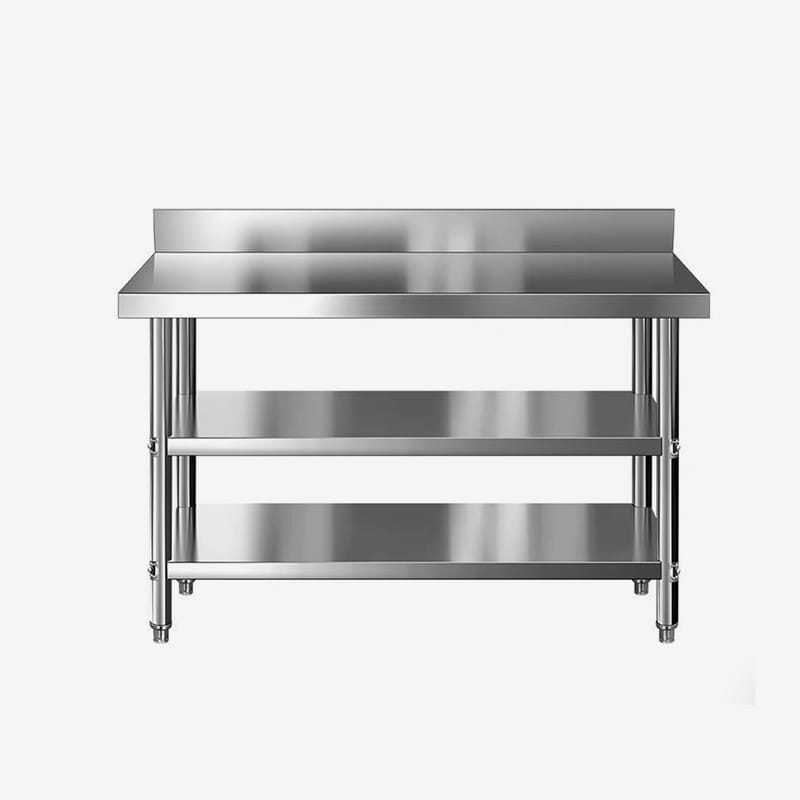
Prep Tables With Undershelves
These models add storage space below the surface, making them ideal for busy kitchens.
Cabinet Style Prep Tables
Enclosed storage helps keep supplies clean and organized.
Heavy Duty Stainless Steel Prep Tables
Designed for demanding environments, these tables feature reinforced frames and thicker surfaces.
You can explore multiple configurations on the Bafang product catalog.
Case Study: Upgrading to Stainless Steel Prep Tables in a High-Volume Kitchen
A high-volume restaurant kitchen struggled with inefficient preparation workflows and limited workspace.
Challenges
Shared prep areas caused delays
Surfaces were difficult to clean
Storage was disorganized
Implementation
The kitchen installed multiple stainless steel prep tables, including heavy duty prep tables and units with undershelves.
Results
| Metric | Before | After |
|---|---|---|
| Prep speed | Slow | Faster |
| Organization | Poor | Structured |
| Cleaning efficiency | Low | High |
| Staff productivity | Inconsistent | Improved |
The upgrade demonstrated how stainless steel prep tables improve both efficiency and organization.
How to Choose the Right Stainless Steel Prep Tables
Selecting the right prep table requires evaluating your kitchen’s specific needs.
Size and Dimensions
Choose table sizes that fit your kitchen layout while providing sufficient workspace.
Load Capacity
Heavy duty prep tables are necessary for kitchens handling large volumes or heavy equipment.
Storage Features
Tables with undershelves or cabinets help maximize space efficiency.
Compliance Standards
Look for NSF stainless steel tables that meet food safety requirements.

Layout Strategy: Designing Around Prep Tables
Kitchen layout plays a critical role in efficiency.
Best practices include positioning prep tables near ingredient storage, aligning tables with cooking stations, maintaining clear pathways, and separating raw and cooked food areas.
The CDC food safety guidelines recommend separating preparation zones, which can be achieved using multiple prep tables.
Maintenance and Cleaning Best Practices
Proper maintenance ensures long-term performance.
Daily Routine
Clean and sanitize surfaces regularly
Remove food residue immediately
Dry surfaces to prevent staining
Weekly Checks
Inspect table stability
Clean undershelves thoroughly
Check for damage
Long-Term Care
Avoid abrasive cleaning tools
Repair scratches early
Maintain consistent cleaning schedules
Comparing Stainless Steel Prep Tables With Other Materials
| Material | Hygiene | Durability | Maintenance |
|---|---|---|---|
| Wood | Low | Medium | High |
| Plastic | Medium | Low | Medium |
| Stainless Steel | High | High | Low |
This comparison highlights why stainless steel prep tables are the preferred choice.
Cost Analysis and ROI
Investing in stainless steel prep tables provides long-term benefits.
Reduced maintenance costs, improved workflow efficiency, and longer lifespan contribute to better return on investment.
FAQ
What are stainless steel prep tables used for?
They are used for food preparation tasks such as cutting, trimming, and organizing ingredients.
Are stainless steel prep tables required in commercial kitchens?
They are not always mandatory, but they are strongly recommended due to hygiene and durability benefits.
What is the difference between prep tables and work tables?
Prep tables are designed specifically for food preparation, while work tables may serve multiple purposes.
How do stainless steel prep tables improve efficiency?
They provide organized workspaces that reduce movement and improve workflow.
How long do stainless steel prep tables last?
With proper care, they can last many years in commercial environments.
Are heavy duty prep tables necessary?
They are recommended for high-volume kitchens or when supporting heavy equipment.
Final Thoughts
Stainless steel prep tables are one of the most important investments in any commercial kitchen. They support hygiene, improve workflow, and increase efficiency.
By choosing the right configuration and placing prep tables strategically, you can create a kitchen environment that operates smoothly and consistently.
If you are planning to upgrade your kitchen, stainless steel prep tables are one of the most practical and impactful improvements you can make.