Table of Contents
When you run or manage a bakery, consistency is not a goal you reach once. It is something you defend every day against time pressure, ingredient variability, space limitations, and human fatigue. While ovens, mixers, and proofers often receive the most attention, one of the most decisive elements in bakery performance is far less complex: the stainless steel bakery workbench.
Every dough batch is mixed, portioned, shaped, rested, and finished on a work surface. If that surface is unstable, difficult to clean, poorly sized, or not designed for bakery-specific tasks, it introduces friction into every step of your process. Over time, that friction turns into inconsistent products, slower output, and higher labor costs.
This article helps you understand how stainless steel bakery workbenches are used in professional baking environments, what differentiates them from generic prep tables, and how you can choose configurations that actively support speed, hygiene, and repeatable quality.
Why Bakeries Have Unique Workbench Requirements
A bakery is not just another kitchen. Dough behaves differently than cooked food, and baking workflows impose specific physical and environmental demands on work surfaces.
Dough Handling Requires Stability and Surface Integrity
Unlike cooked ingredients, dough is elastic, sticky, and sensitive to temperature. When you knead, laminate, or portion dough, even small vibrations or surface flex can affect results. A bakery workbench must remain rigid under force and repeated impact.
Stainless steel provides the structural stability needed to handle high-pressure dough work without warping or loosening over time.
Hygiene Standards Are Higher Than They Appear
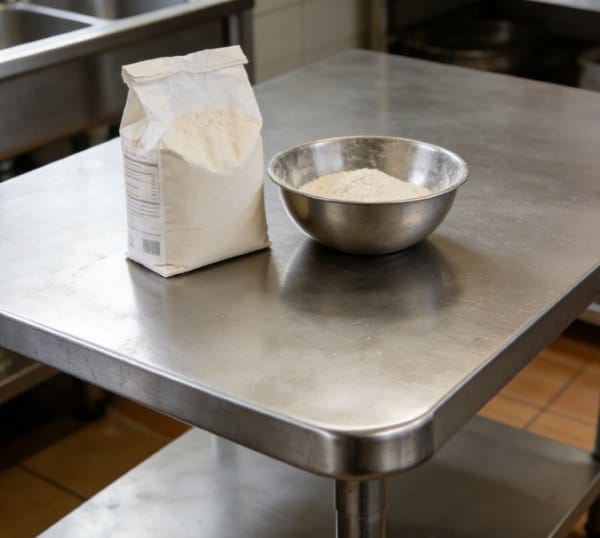
Flour dust settles everywhere. Sugar, fats, and moisture accumulate in corners and joints. Bakery environments require surfaces that can be cleaned frequently without absorbing residue or developing micro-cracks.
Stainless steel’s non-porous nature makes it particularly suited to bakeries where dry and wet processes coexist.
Workflow Is Linear and Repetitive
Baking relies on repeatable steps. Mixing leads to resting, resting leads to shaping, shaping leads to baking. Workbenches must support this linear flow rather than disrupt it.
When surfaces are poorly sized or positioned, staff compensate with awkward movements that slow down production and increase fatigue.
What Defines a True Stainless Steel Bakery Workbench
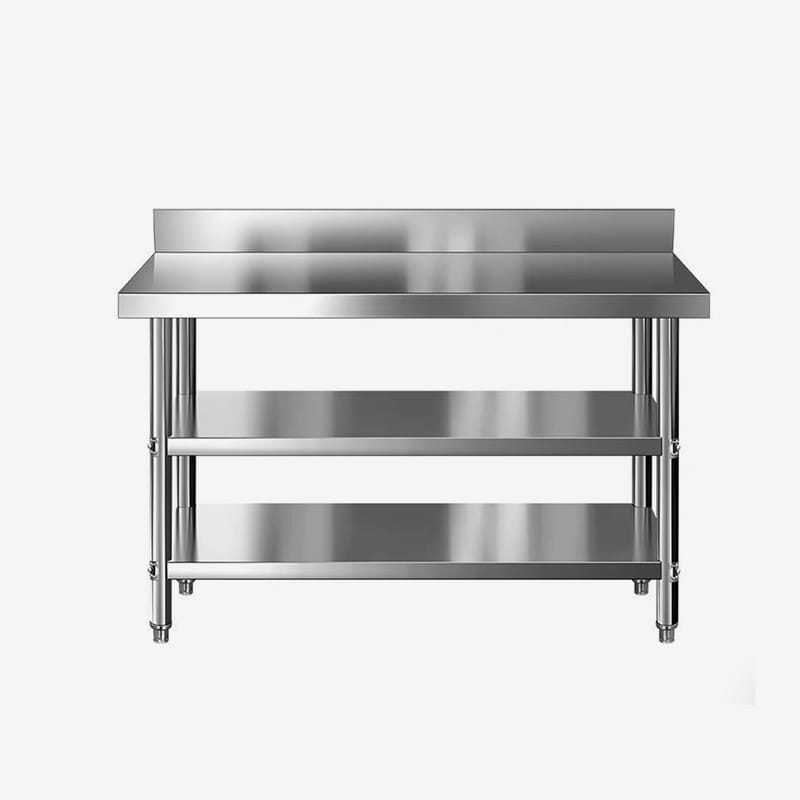
Not every stainless steel table is suitable for bakery use. Bakery workbenches are distinguished by several functional characteristics.
Reinforced Frames for Heavy Dough Work
Dough mixing and shaping apply downward and lateral force. Bakery workbenches typically use reinforced legs, cross-bracing, and thicker surfaces to maintain rigidity.
This matters most in high-output bakeries where benches are used continuously throughout the day.
Optimized Surface Dimensions
Bakery tasks often require larger uninterrupted surfaces. Laminating dough, rolling pastry sheets, or shaping loaves demands space.
A bakery workbench should offer sufficient depth and width to allow full arm movement without forcing staff to reposition dough mid-task.
Easy-to-Clean Edges and Joints
Sharp internal corners trap flour and moisture. Well-designed bakery workbenches use smooth welds and rounded edges to simplify cleaning and reduce contamination risk.
Stainless Steel vs Alternative Bakery Workbench Materials
Some bakeries consider wood, composite, or coated surfaces. Each has trade-offs, but stainless steel remains dominant in professional environments.
Stainless Steel Advantages
Resists moisture and temperature fluctuations
Does not absorb oils or odors
Supports frequent sanitation
Maintains structural integrity over time
Limitations to Consider
Stainless steel can feel colder to the touch, which may affect dough temperature if not managed properly. Many bakeries address this through workflow timing or by using removable mats when necessary.
Overall, the benefits in hygiene, durability, and compliance outweigh these considerations in most commercial settings.
Common Bakery Applications for Stainless Steel Workbenches
Different bakery tasks place different demands on work surfaces. Understanding these helps you match bench design to real-world use.
Dough Preparation and Portioning
This stage involves high physical force and frequent contact with raw ingredients. Stability and surface cleanliness are critical.
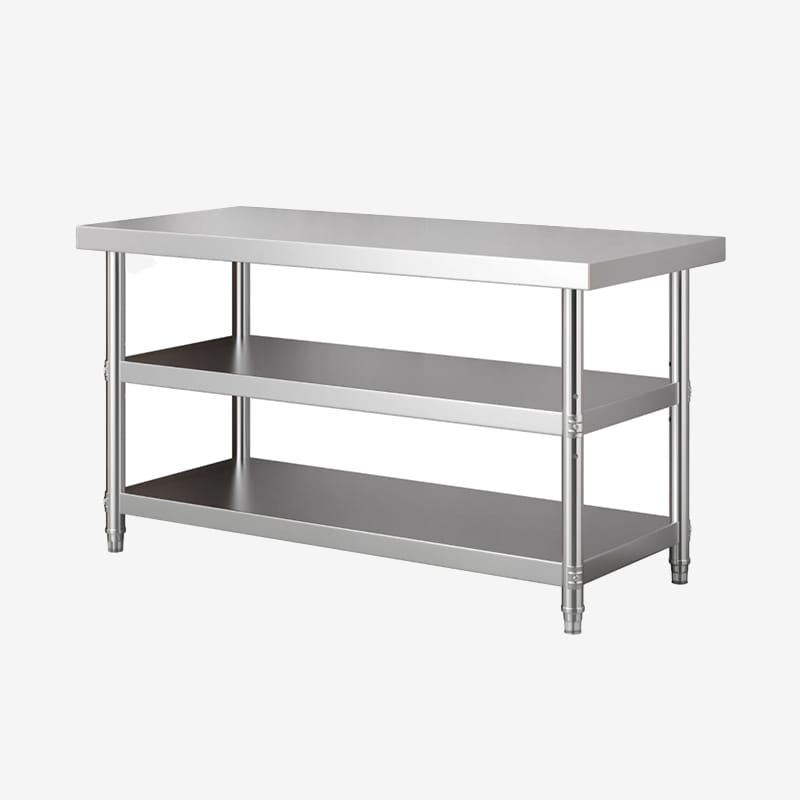
A stainless steel bakery workbench with reinforced legs and ample surface area supports consistent portioning and shaping.
Pastry and Lamination Work
Laminated dough requires precise handling. Uneven surfaces or vibrations can damage layers.
Flat, rigid stainless steel surfaces help maintain dough structure during rolling and folding.
Cooling and Staging
After baking, products often rest or are staged for packaging. Stainless steel surfaces cool quickly and are easy to sanitize between batches.
Case Example: Streamlining Production in a Mid-Sized Bakery
Consider a regional bakery producing bread and pastries for retail distribution. The operation relied on mixed work surfaces, including wood-topped tables and older prep stations.
Challenges Identified
Inconsistent dough handling between stations
Longer cleaning times at shift end
Difficulty maintaining hygiene during peak production
Changes Implemented
The bakery standardized workstations using stainless steel bakery workbenches with reinforced frames and uniform dimensions. Each stage of production received a dedicated bench.
Results Observed
Product consistency improved across shifts
Cleaning time was reduced significantly
Staff reported less fatigue during long shaping sessions
The upgrade did not change recipes or equipment, yet output became more predictable.
Selecting the Right Bakery Workbench Configuration
Choosing the right bench requires aligning design with task frequency and intensity.
Key Selection Criteria
Surface size relative to dough batch volume
Frame rigidity and leg spacing
Ease of cleaning and sanitation
Compatibility with surrounding equipment
Typical Bakery Workbench Configurations
| Bakery Task | Recommended Workbench Type |
|---|---|
| Dough mixing support | Heavy-duty stainless steel bench |
| Pastry lamination | Wide-surface workbench |
| Portioning and shaping | Standard-depth reinforced bench |
| Cooling and staging | Open-surface stainless bench |
Ergonomics and Staff Efficiency in Bakery Environments
Bakeries are physically demanding workplaces. Poorly designed workbenches increase strain and injury risk.
Proper Working Height
Bench height should align with the task. Shaping and kneading often require a slightly lower surface than fine pastry work.
Adjustable feet allow minor height corrections to suit different staff members.
Reduced Reach and Repositioning
Adequate surface space minimizes the need to reposition dough or tools mid-task, reducing wasted motion and errors.
Cleaning and Maintenance in Flour-Heavy Environments
Flour behaves differently from liquid spills. It accumulates and compacts over time.
Daily Cleaning Practices
Dry wipe surfaces before wet cleaning
Clean joints and corners thoroughly
Sanitize surfaces after each production stage
Long-Term Maintenance
Inspect welds and joints regularly
Ensure legs remain level under load
Address surface scratches promptly
Stainless steel tolerates frequent cleaning without degradation when maintained correctly.
Compliance and Food Safety Considerations
Many food safety standards favor stainless steel surfaces due to their cleanability and resistance to contamination.
Using stainless steel bakery workbenches helps align operations with inspection expectations and internal quality controls.
Cost Efficiency Over the Lifecycle
While stainless steel bakery workbenches represent a higher upfront investment than basic tables, their lifecycle cost is often lower.
| Factor | Basic Table | Stainless Bakery Workbench |
|---|---|---|
| Durability | Moderate | High |
| Cleaning effort | High | Lower |
| Hygiene control | Limited | Strong |
| Replacement frequency | Higher | Lower |
Over time, reduced downtime and improved efficiency offset initial costs.
FAQ
Why are stainless steel bakery workbenches preferred in commercial bakeries?
They provide stability, hygiene, and durability suited to dough handling and frequent cleaning.
Do stainless steel surfaces affect dough temperature?
They can, but proper workflow timing and environmental control minimize impact.
Are bakery workbenches different from standard kitchen prep tables?
Yes. Bakery workbenches are typically more rigid, larger, and designed for repetitive dough work.
How often should bakery workbenches be cleaned?
Surfaces should be cleaned between production stages and thoroughly sanitized daily.
Can stainless steel benches support heavy dough loads?
Properly designed benches are built to handle continuous heavy use.
What is the expected lifespan of a stainless steel bakery workbench?
With proper maintenance, it can last well over ten years in commercial use.