Table of Contents
Introduction
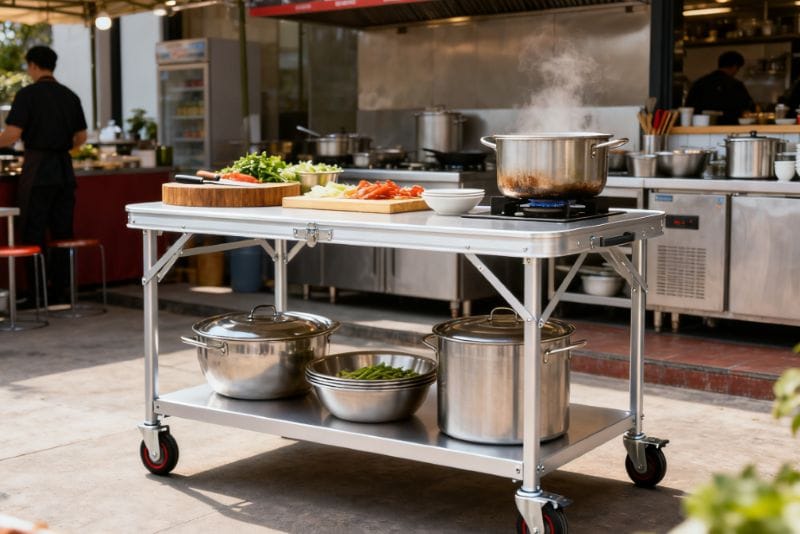
In any professional kitchen, the workbench is one of the most important pieces of equipment you’ll ever invest in. It serves as the main stage for food preparation, plating, storing tools, placing equipment, and keeping workflow moving. A well-constructed heavy-duty commercial kitchen workbench can dramatically improve efficiency, increase hygiene, reduce maintenance issues, and enhance staff comfort.
Today’s high-volume kitchens need workbenches that can keep up with constant chopping, mixing, heat exposure, moisture, equipment weight, and busy traffic. Choosing the right heavy-duty workbench isn’t just about durability—it directly affects food safety, operational flow, staffing efficiency, and long-term ROI. This guide breaks down everything you need to know: materials, load capacity, hygiene considerations, maintenance, costs, and real-world usage.
Why Heavy-Duty Workbenches Matter
A typical commercial kitchen operates at high intensity. Chefs may spend hours working on the same bench while equipment like mixers, meat slicers, or food processors rest on the surface. A standard or lightweight bench can warp, shake, crack, or harbor bacteria over time. Heavy-duty benches are engineered to withstand heavy daily use without compromising stability or hygiene.
When a workbench is sturdy and built with the right materials, your staff can prep faster, store equipment safely, and work more efficiently. In many kitchens, the workbench is the backbone of the operation—if it fails, workflow suffers immediately.

Material Options for Heavy-Duty Workbenches
Although stainless steel is often the default choice for commercial use, other materials can be appropriate in specific prep scenarios. Each material offers unique advantages and limitations.
Stainless Steel
Stainless steel is widely considered the industry standard for heavy-duty commercial kitchen workbenches. Its durability, hygiene, and long-term stability make it the best match for demanding kitchens.
- Durability: Excellent for handling heavy equipment and daily use.
- Hygiene: A non-porous, smooth surface prevents bacterial growth.
- Heat and Corrosion Resistance: Ideal for kitchens where heat, steam, and acidic food spills are common.
- Maintenance: Extremely low; simple daily cleaning is enough.
- Best For: Restaurants, hotels, cafeterias, catering kitchens, and cloud kitchens.
Wood
Wood has a place in commercial kitchens, especially bakeries. Though not typically classed as “heavy-duty” for general prep, hardwood surfaces can be used effectively for specialized tasks.
- Durability: Moderate; ideal for dough and pastry prep.
- Hygiene: Needs regular sealing due to porous nature.
- Heat/Corrosion Resistance: Poor; sensitive to moisture.
- Maintenance: High; requires frequent oiling and careful cleaning.
- Best For: Bakeries, pastry shops, low-moisture environments.
Plastic / HDPE
Plastic or HDPE (High-Density Polyethylene) benches are lighter than steel but still useful for portable or temporary setups.
- Durability: Moderate; suitable for lighter tasks.
- Hygiene: Easy to clean but prone to scratches that can trap bacteria.
- Heat Resistance: Average; not suitable for high heat.
- Maintenance: Straightforward daily wipe-downs.
- Best For: Mobile kitchens, secondary prep stations.
Aluminum
Aluminum workbenches are sometimes chosen for mobile catering or outdoor environments thanks to their lightweight nature.
- Durability: Moderate; can dent more easily than steel.
- Hygiene: Easy to wipe clean.
- Heat/Corrosion Resistance: Better than plastic but weaker than stainless steel.
- Maintenance: Simple; mild detergents recommended.
- Best For: Outdoor food stalls, portable setups, lightweight applications.
Comparison Table of Workbench Materials
| Material | Durability | Hygiene | Heat/Corrosion Resistance | Maintenance | Best Use |
|---|---|---|---|---|---|
| Stainless Steel | Very High | Very High | Very High | Low | Main prep, heavy equipment, high-volume kitchens |
| Wood | Medium | Medium | Low | High | Bakery, pastry prep |
| Plastic/HDPE | Medium | Medium | Medium | Medium | Mobile or secondary stations |
| Aluminum | Medium | Medium | Medium | Medium | Outdoor or mobile kitchens |
Load Capacity and Weight Requirements
A key consideration when choosing a heavy-duty workbench is load capacity. Commercial kitchens often place heavy appliances on workbenches, including mixers, cutting machines, dehydrators, or bulk food containers. Stainless steel benches can often hold 500–1,000 lbs of evenly distributed weight, and models with reinforced undershelves can handle even more.
Plastic and aluminum benches offer lower load capacity, which makes them less suitable for equipment-heavy stations. If your workflow involves constant lifting or storing heavy items, stainless steel is the safest and most long-lasting option.
Hygiene and Food Safety Factors
Food safety is a top priority in any professional setting, and the workbench plays a major role. Heavy-duty commercial workbenches must be easy to sanitize, resistant to microbial growth, and capable of withstanding moisture and food acids.
Stainless steel is particularly effective because it aligns with NSF and FDA standards for food contact surfaces. Its non-porous structure prevents liquids, fats, and bacteria from penetrating the surface. This improves both safety and cleaning efficiency each day.
Wood can be safe but requires strict maintenance routines, including sealing and oiling. Plastic can scratch and trap food residue, so it is best used in less intensive tasks.
Real-World Case Studies
A 300-seat full-service restaurant upgraded to heavy-duty stainless steel benches and reported a significant drop in structural issues over two years, along with improved cleaning efficiency during peak hours.
A large bakery combines stainless steel surfaces for general prep with maple wood heavy-duty tables exclusively for dough kneading. Staff noted better dough handling and improved cleanliness in the stainless steel areas.
A mobile catering company uses HDPE heavy-duty benches due to their lightweight nature, which helps with repeated setup and breakdown. Though these benches require more frequent replacement, the flexibility fits their needs.
Maintenance Tips for Heavy-Duty Workbenches
Stainless steel:
Clean daily with warm water and mild detergent. Avoid steel wool and harsh chemicals. Wipe along the grain to prevent scratches.
Wood:
Oil regularly, avoid long moisture exposure, and sand lightly when the surface becomes rough.
Plastic/HDPE:
Wipe frequently, avoid placing high-heat items, and use cutting boards to reduce surface damage.
Aluminum:
Clean with mild soap and avoid acidic or corrosive cleaners.
Regular care helps extend the lifespan of the bench while maintaining food safety.
Cost and ROI Considerations
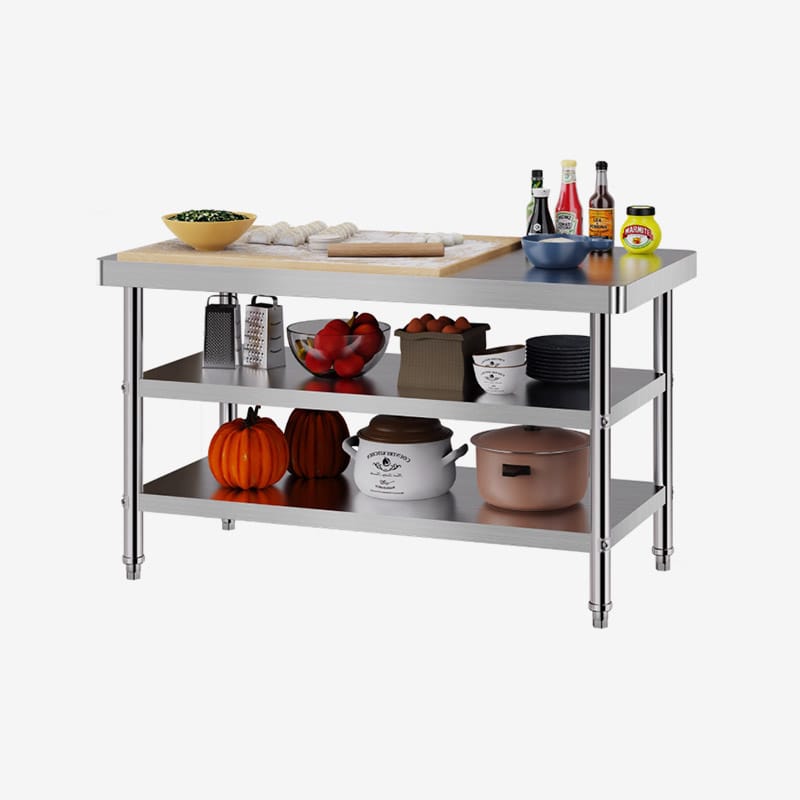
Cost varies based on material, size, load rating, and features like adjustable legs or undershelves. Stainless steel has the highest upfront cost but the longest lifespan, delivering the best long-term value for high-demand kitchens.
Plastic and aluminum cost less initially but may require faster replacement. Wood’s lifetime cost can be high due to frequent maintenance.
Evaluating the total cost over 5–10 years helps determine the true ROI.
Ergonomics and Workflow Efficiency
A comfortable, well-designed workbench makes staff more productive. Height adjustability can reduce back strain and fatigue. Many stainless steel benches support adjustable designs, which make them suitable for kitchens with diverse staff members or varied prep tasks.
Proper bench placement and size also affect workflow. For example, undershelves or drawers make it easier to keep tools organized. A spacious, stable workbench reduces movement and speeds up task completion.
Conclusion
Heavy-duty commercial kitchen workbenches are essential for any professional kitchen that values durability, hygiene, efficiency, and long-term performance. While wood, plastic, and aluminum each serve distinct roles, stainless steel remains the most reliable material for high-volume operations due to its strength, hygiene, and resistance to heat and corrosion.
Choosing the right workbench helps build a safer, more productive, and more cost-effective kitchen environment. By understanding your workload, materials, hygiene needs, and long-term goals, you can select a workbench that truly supports your kitchen’s daily demands.
FAQ
Why choose heavy-duty stainless steel workbenches?
They provide exceptional durability, hygiene, heat resistance, and longevity, making them ideal for fast-paced kitchens.
Can wooden workbenches be used in commercial kitchens?
Yes, but they require sealing and are best for low-moisture tasks such as pastry or dough preparation.
What is the average weight capacity of a heavy-duty workbench?
Stainless steel benches commonly support 500–1,000 lbs, depending on construction and reinforcement.
Are plastic or HDPE benches durable enough?
They work well for mobile kitchens or light prep but are not suitable for heavy equipment.
How often should workbenches be maintained?
Stainless steel: daily wipe-down.
Wood: weekly oiling and sealing.
Plastic: daily cleaning and scratch prevention.
Aluminum: mild soap cleaning.
Do adjustable-height benches make a difference?
Yes, they significantly improve ergonomics and reduce staff fatigue during long shifts.