Table of Contents
Introduction
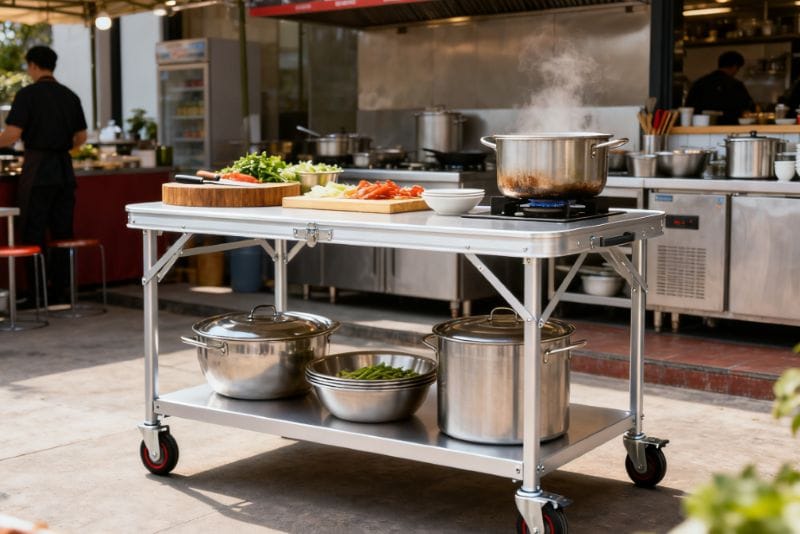
In a commercial kitchen, storage is just as important as cooking equipment. From raw ingredients and cookware to small appliances and daily-use tools, everything needs to be stored in a way that is clean, organized, and easy to access. This is where industrial stainless steel shelves play a critical role.
Unlike ordinary storage racks, industrial stainless steel shelves are designed for demanding environments. They handle heavy loads, resist moisture and corrosion, and meet strict hygiene standards. For restaurants, hotels, catering kitchens, food factories, and central kitchens, stainless steel shelving is not simply a convenience—it is a necessity.
In this guide, you’ll learn why industrial stainless steel shelves are widely used in professional kitchens, how they compare with other storage materials, what types are available, and how to choose the right shelving system for your operation.
Why Industrial Stainless Steel Shelves Matter in Commercial Kitchens
Commercial kitchens operate under constant pressure. Staff move quickly, ingredients are replenished daily, and storage areas are exposed to steam, heat, water, oil, and frequent cleaning. In this environment, storage shelves must remain stable, hygienic, and reliable.
Industrial stainless steel shelves are designed to support heavy cookware, bulk food containers, and commercial equipment without bending or warping. Their smooth, non-porous surface prevents moisture absorption and reduces the risk of bacteria buildup. This directly supports food safety compliance and makes daily cleaning faster and more effective.
Well-designed shelving also improves workflow. When ingredients and tools are stored at the right height and within reach, kitchen staff spend less time searching and more time preparing food efficiently.
Key Advantages of Industrial Stainless Steel Shelves
Stainless steel shelves are widely used in professional kitchens because they solve multiple problems at once.
They offer excellent durability. Industrial-grade stainless steel can support heavy loads for many years without losing structural integrity. This makes it ideal for storing bulk ingredients, stock pots, countertop appliances, and storage bins.
They are highly hygienic. Stainless steel does not absorb liquids, odors, or grease. It is easy to sanitize and fully compatible with food-contact environments, which helps kitchens meet health inspection standards.
They resist corrosion and rust. Kitchens are humid environments, especially around dishwashing areas and cooking lines. Stainless steel performs well under constant exposure to moisture and cleaning chemicals.
They are easy to maintain. Routine cleaning with mild detergent and water is usually enough to keep shelves in good condition. Unlike painted or coated metal racks, stainless steel does not chip or peel.
They provide a professional appearance. Clean, organized stainless steel shelving contributes to a modern and professional kitchen environment, which is especially important for open kitchens and food production facilities.
Common Types of Industrial Stainless Steel Shelves
Industrial stainless steel shelving comes in several configurations to suit different kitchen layouts and storage needs.
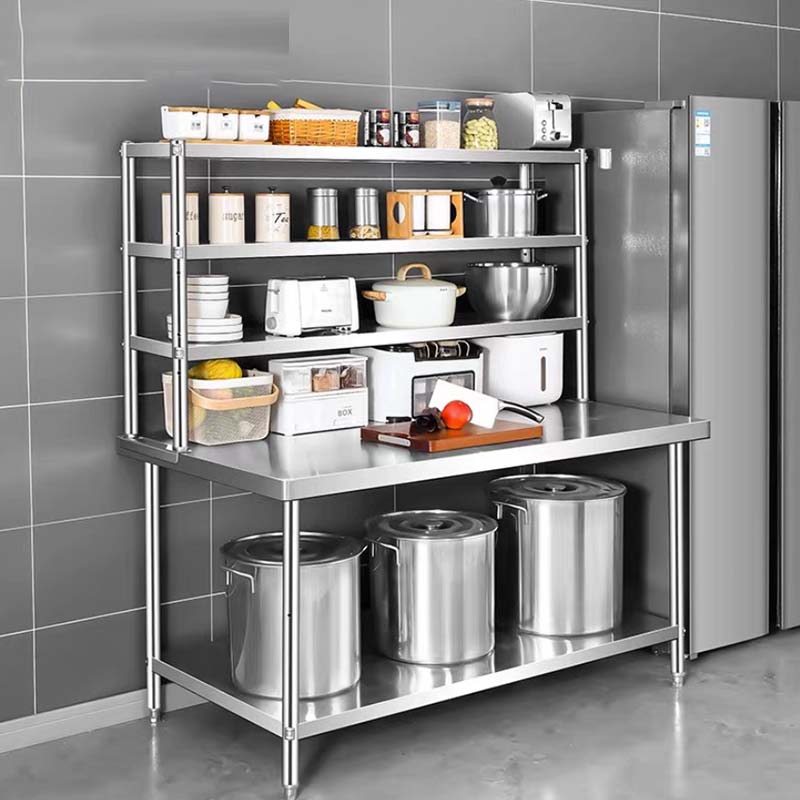
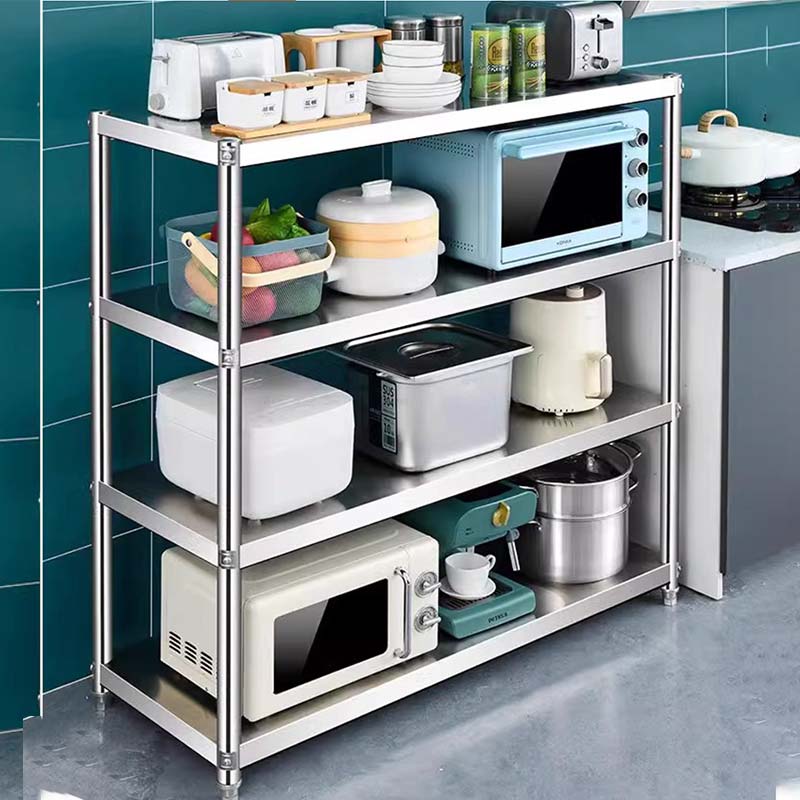
Freestanding stainless steel shelving units are one of the most common options. These multi-tier shelves are placed directly on the floor and can store large quantities of items. Adjustable shelves allow you to customize spacing for different types of products.
Wall-mounted stainless steel shelves are ideal for saving floor space. They are commonly installed above workbenches or prep stations to keep frequently used items within easy reach. This setup improves efficiency and keeps work surfaces clear.
Wire-style stainless steel shelves provide better airflow, making them suitable for dry storage, cooling areas, and walk-in refrigerators. Open wire designs help prevent moisture buildup and make cleaning easier.
Heavy-duty solid stainless steel shelves are often used for storing dense or heavy items such as large cookware or equipment. These shelves offer maximum load capacity and stability.
Comparison of Stainless Steel Shelves and Other Materials
| Material | Durability | Hygiene | Moisture Resistance | Maintenance | Typical Use |
|---|---|---|---|---|---|
| Stainless Steel | Very High | Very High | Very High | Low | Commercial kitchens, food storage |
| Painted Steel | Medium | Medium | Low | Medium | Dry storage only |
| Aluminum | Medium | Medium | Medium | Medium | Lightweight or mobile use |
| Plastic | Low–Medium | Medium | Medium | Medium | Light-duty storage |
| Wood | Low | Low | Low | High | Non-food decorative storage |
Compared to other materials, stainless steel clearly offers the best balance of durability, hygiene, and long-term value for professional kitchens.
Load Capacity and Structural Stability
One of the main reasons kitchens choose industrial stainless steel shelves is their load capacity. Heavy-duty shelving systems are designed to handle significant weight without sagging.
A typical industrial stainless steel shelf can support hundreds of pounds when weight is evenly distributed. Multi-tier units with reinforced frames can safely store bulk food containers, large kitchen tools, and small appliances.
Stability is especially important in busy kitchens where shelves may be frequently accessed. Stainless steel shelving systems with adjustable feet help maintain balance on uneven floors and reduce movement during use.
Hygiene and Food Safety Considerations
Food safety regulations require that storage surfaces be easy to clean and resistant to contamination. Industrial stainless steel shelves meet these requirements naturally.
Because stainless steel is non-porous, it does not trap food particles or liquids. This reduces the risk of bacteria growth and cross-contamination. Shelves can be cleaned and sanitized quickly during daily kitchen routines.
Open shelving designs also support good airflow, especially in refrigerated or dry storage areas. Proper airflow helps prevent mold and moisture buildup, which is essential for food safety compliance.
Applications Across Different Commercial Environments
Industrial stainless steel shelves are not limited to restaurants. They are used in a wide range of professional settings.
In restaurant kitchens, they store cookware, ingredients, and prep tools close to workstations.
In hotels and large catering kitchens, they support high-volume storage needs and heavy equipment.
In food processing facilities, stainless steel shelves meet strict hygiene standards and handle continuous use.
In cloud kitchens and central kitchens, modular stainless steel shelving allows flexible layout changes as operations scale.
In cold rooms and walk-in freezers, stainless steel performs well in low temperatures and humid conditions.
Cost and Long-Term Value
While stainless steel shelves may have a higher upfront cost compared to plastic or coated metal racks, their long-term value is significantly higher.
Stainless steel shelving systems typically last many years with minimal maintenance. They resist damage, require fewer repairs, and rarely need replacement. Over time, this reduces total ownership costs and minimizes downtime caused by broken storage systems.
For commercial kitchens focused on efficiency and reliability, stainless steel shelving is a cost-effective long-term investment.
Maintenance Tips for Stainless Steel Shelves
Maintaining stainless steel shelves is simple and does not require specialized products.
Clean regularly with warm water and mild detergent.
Wipe surfaces dry to maintain their appearance and prevent water spots.
Avoid steel wool or abrasive cleaners that may scratch the surface.
Inspect mounting points and shelf supports periodically to ensure stability.
With proper care, industrial stainless steel shelves retain both function and appearance for many years.
How to Choose the Right Stainless Steel Shelves for Your Kitchen
When selecting stainless steel shelving, consider your available space, storage volume, and load requirements. Think about whether floor-standing or wall-mounted shelves best fit your layout. Adjustable shelves offer flexibility as storage needs change.
Material thickness, welding quality, and overall construction are important factors for durability. Choosing shelves designed specifically for commercial kitchens ensures better performance and compliance with industry standards.
Working with a reliable stainless steel equipment supplier allows you to customize dimensions, shelf spacing, and configurations to match your kitchen’s workflow.
Conclusion
Industrial stainless steel shelves are an essential component of modern commercial kitchens. They provide strength, hygiene, and long-term reliability in environments where performance matters every day.
Compared with alternative materials, stainless steel offers superior durability, easy maintenance, and excellent food safety performance. Whether used in restaurants, hotels, catering kitchens, or food production facilities, stainless steel shelving systems help create an organized, efficient, and professional workspace.
Investing in the right shelving is not just about storage—it’s about building a kitchen that operates smoothly, safely, and efficiently over the long term.
FAQ
Why are stainless steel shelves preferred in commercial kitchens?
They are durable, hygienic, easy to clean, and resistant to moisture, corrosion, and heavy use.
Are stainless steel shelves suitable for cold rooms or freezers?
Yes, stainless steel performs well in cold and humid environments and does not crack or degrade.
How much weight can industrial stainless steel shelves support?
Load capacity depends on design and thickness, but most industrial shelves can support hundreds of pounds when properly installed.
Are wall-mounted stainless steel shelves safe?
Yes, when securely mounted into solid walls, they are stable and ideal for saving floor space.
How long do stainless steel shelves last?
With proper use and basic maintenance, they can last many years in commercial environments.