Daftar isi
The Importance of Well-Designed Commercial Kitchen Workstations
In the fast-paced world of commercial foodservice, every second counts. A well-designed kitchen workstation can make the difference between a smoothly running operation and a chaotic, inefficient one. According to recent data from the National Restaurant Association, restaurants with optimized kitchen layouts see a 25% increase in productivity and a 15% reduction in food waste.
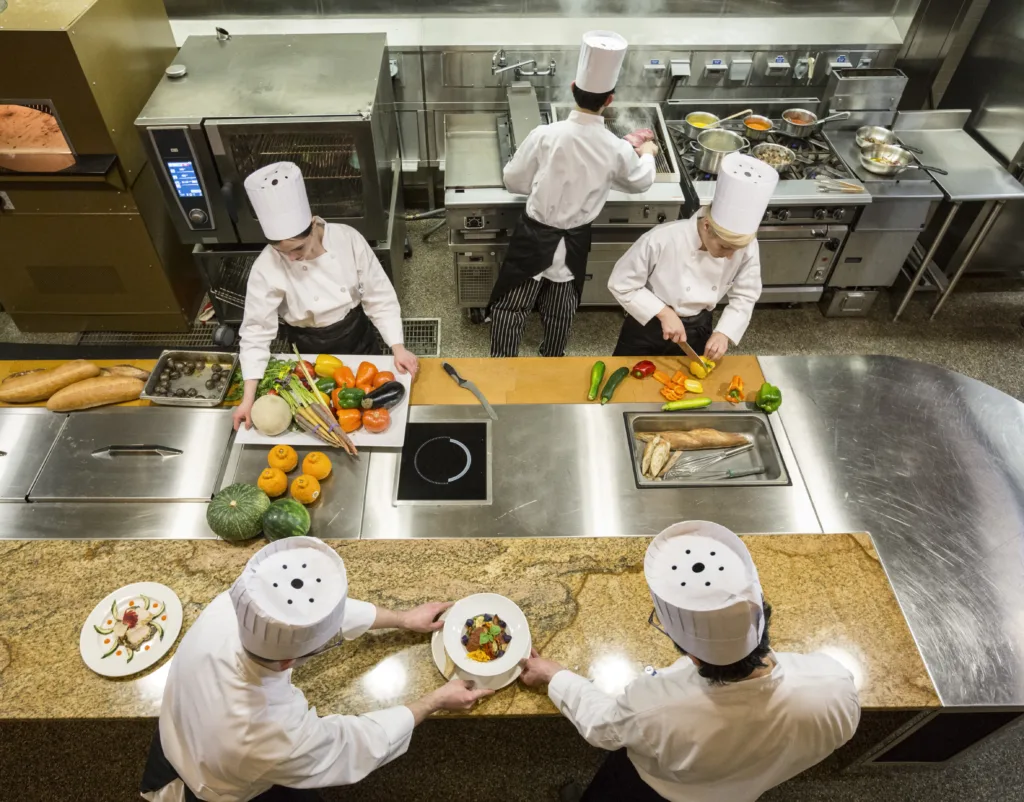
The Science of Kitchen Workflow
The key to an efficient commercial kitchen lies in its workflow. A well-designed kitchen should allow staff to move from one task to the next with minimal effort, reducing the time spent walking between stations and minimizing the risk of accidents.
| Workflow Type | Description | Efficiency Rating |
|---|---|---|
| Straight Line | Staff move in a straight line from prep to cooking to plating | 75% |
| L-Shaped | Two workstations form an L-shape, allowing for easy movement between stations | 85% |
| U-Shaped | Three workstations form a U-shape, creating a compact, efficient workspace | 90% |
| Island | A central island workstation surrounded by other stations | 80% |
This data shows that U-shaped and L-shaped layouts are the most efficient, as they allow staff to move between stations with minimal effort. The right kitchen workstation design can help you adopt these layouts while ensuring that your staff has all the tools they need within easy reach.
Key Components of a Commercial Kitchen Workstation
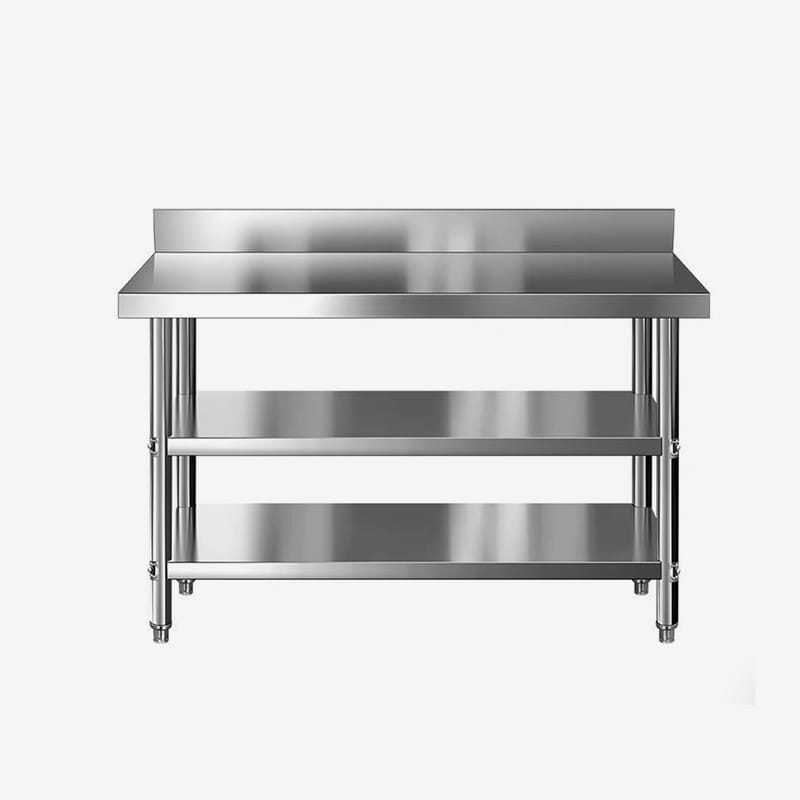
1. Stainless Steel Countertops: The Foundation of Any Commercial Kitchen
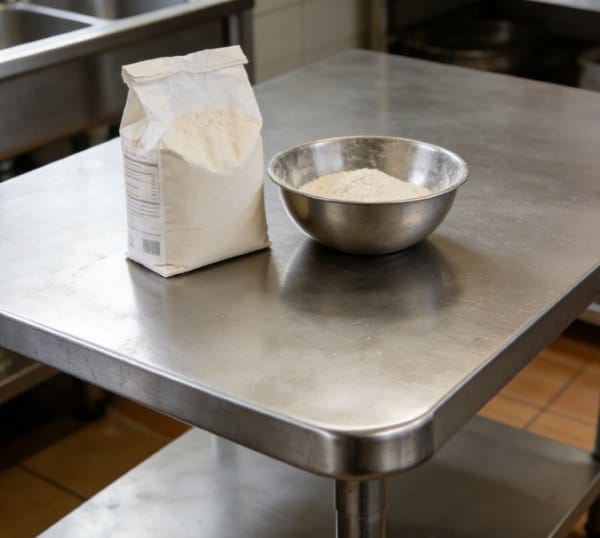
Stainless steel countertops are a staple in any commercial kitchen. They’re durable, easy to clean, and resistant to heat, making them the perfect surface for food preparation.
Why stainless steel is the best choice: Stainless steel is non-porous, which means it won’t absorb bacteria or odors. It’s also heat-resistant, so you can place hot pots and pans directly on the surface without worrying about damage. Stainless steel countertops are also easy to clean, requiring only a quick wipe with a damp cloth to remove spills and stains.
Real-world example: Chef Thomas Keller, owner of The French Laundry, uses stainless steel countertops in his kitchen. He notes that stainless steel is the only material that can withstand the rigorous demands of a high-volume commercial kitchen.
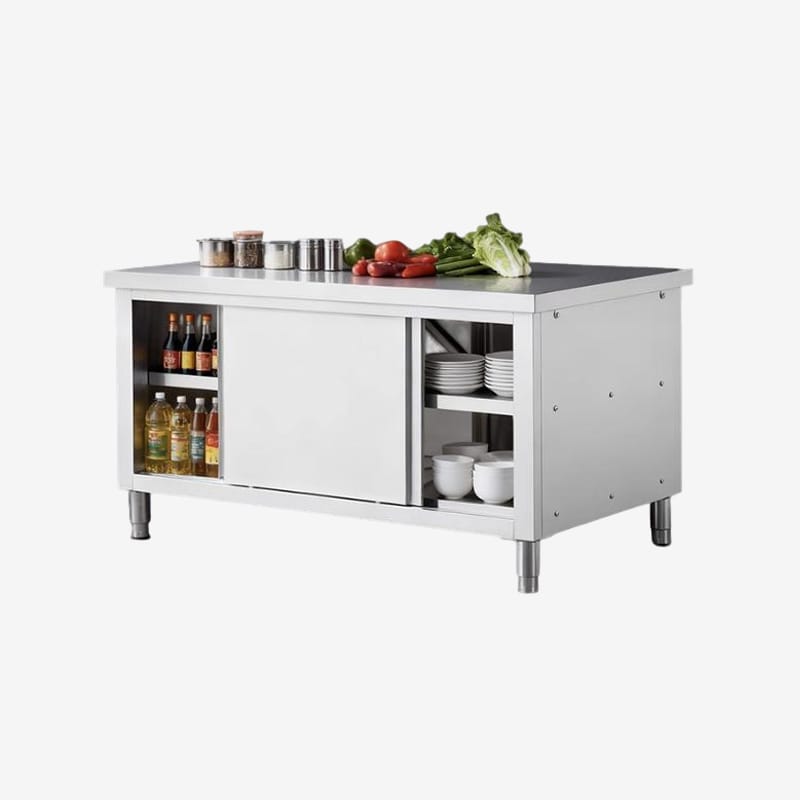
2. Under-Counter Storage: Maximize Space Without Sacrificing Functionality
Under-counter storage is essential for any commercial kitchen. It allows you to store pots, pans, and other kitchen tools within easy reach, reducing the time spent searching for items.
Types of under-counter storage:
- Drawers for storing utensils and small tools
- Cabinets for storing pots, pans, and larger tools
- Shelves for storing bulk ingredients and supplies
Key benefits: Under-counter storage helps to keep your kitchen organized and free of clutter. It also allows you to maximize your workspace, as you can store items out of sight while still keeping them within easy reach.
3. Overhead Shelving: Utilize Vertical Space
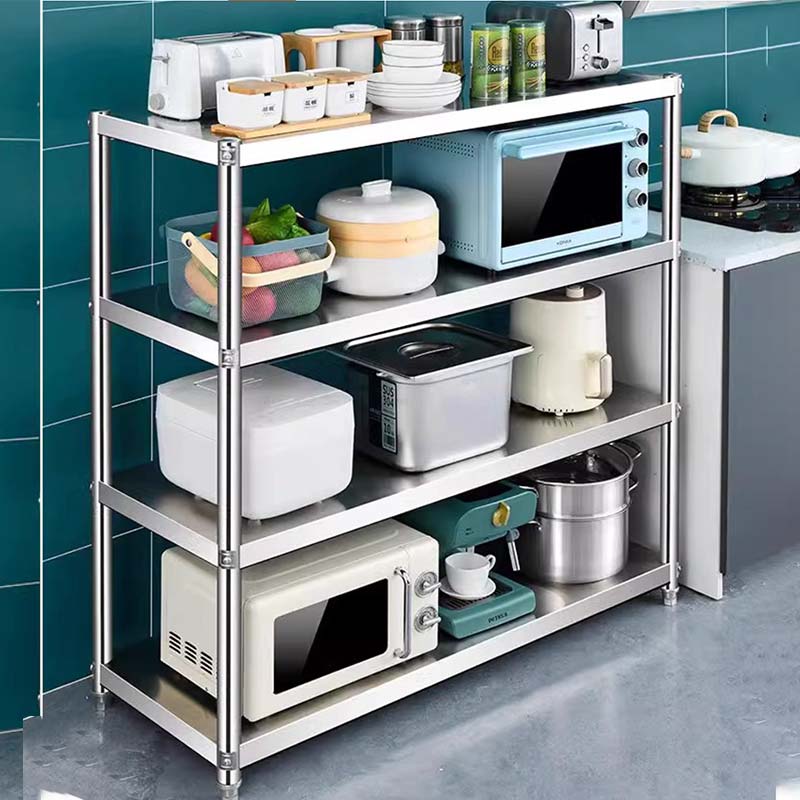
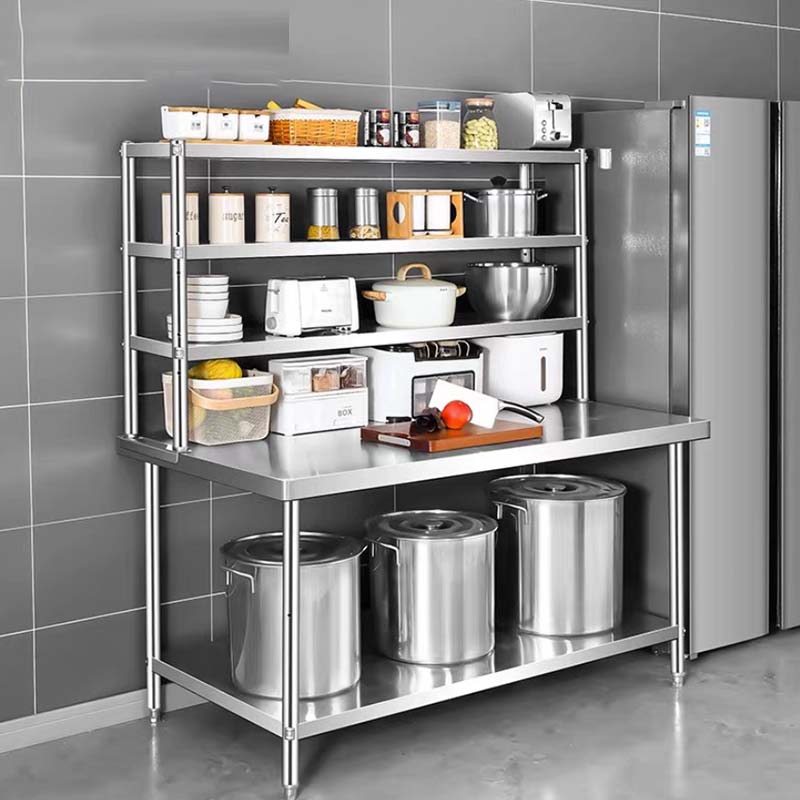
Overhead shelving is a great way to utilize vertical space in a commercial kitchen. It allows you to store frequently used items within easy reach, reducing the time spent bending down to retrieve items from under-counter storage.
Types of overhead shelving:
- Wall-mounted shelves for storing spices, utensils, and small tools
- Ceiling-mounted shelves for storing larger items like pots and pans
- Adjustable shelves that can be moved up or down to accommodate different items
Key benefits: Overhead shelving helps to free up counter space, making it easier to prepare food. It also allows you to store frequently used items within easy reach, reducing the time spent searching for items.
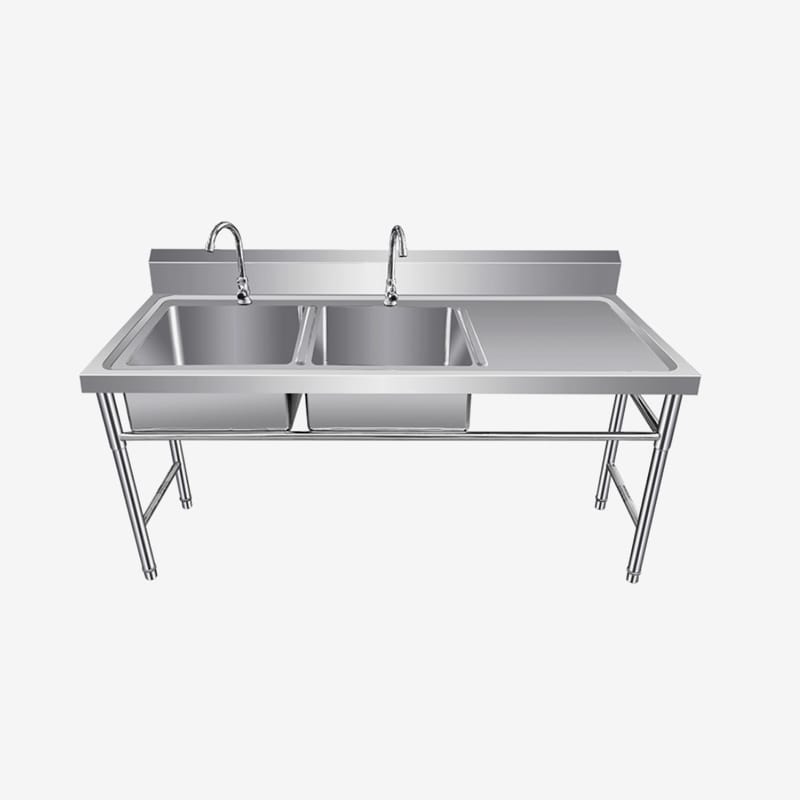
4. Sinks and Drainboards: Essential for Food Preparation and Cleaning
Sinks and drainboards are essential for any commercial kitchen. They’re used for washing hands, cleaning utensils, and preparing food.
Types of sinks:
- Hand sinks for washing hands
- Prep sinks for preparing food
- Pot sinks for cleaning pots and pans
Key benefits: Sinks and drainboards help to keep your kitchen clean and hygienic. They also allow you to prepare food efficiently, as you can wash vegetables and other ingredients without having to move to a different station.
5. Cooking Equipment: The Heart of Any Commercial Kitchen
Cooking equipment is the heart of any commercial kitchen. It includes stoves, ovens, grills, and other appliances used for cooking food.
Types of cooking equipment:
- Ranges for cooking food on a stove top
- Ovens for baking and roasting food
- Grills for grilling food
- Fryers for frying food
Key benefits: Cooking equipment allows you to prepare a wide variety of dishes efficiently. It also helps to ensure that your food is cooked to the right temperature, reducing the risk of foodborne illnesses.
Designing a Commercial Kitchen Workstation for Your Business
1. Assess Your Needs
Before designing a commercial kitchen workstation, it’s important to assess your needs. Consider the type of food you’ll be preparing, the number of staff you’ll have, and the size of your kitchen.
Questions to ask yourself:
- What type of food will I be preparing?
- How many staff will I have working in the kitchen?
- What is the size of my kitchen?
- What type of cooking equipment will I need?
2. Choose the Right Layout
Once you’ve assessed your needs, you can choose the right layout for your kitchen. Consider the workflow types mentioned earlier and choose the one that best fits your needs.
Layout tips:
- Choose a layout that allows staff to move between stations with minimal effort
- Ensure that your cooking equipment is placed in a central location
- Make sure that your prep area is close to your cooking area
- Ensure that your plating area is close to your serving area
3. Select the Right Materials
The materials you choose for your kitchen workstation will have a big impact on its durability and functionality. Stainless steel is the most popular choice for commercial kitchens, as it’s durable, easy to clean, and resistant to heat.
Material tips:
- Choose stainless steel countertops for durability and easy cleaning
- Use non-slip flooring to reduce the risk of accidents
- Choose cabinets and shelves made from durable materials like wood or metal
- Use heat-resistant materials near cooking equipment
4. Incorporate Safety Features
Safety is a top priority in any commercial kitchen. Incorporating safety features into your kitchen workstation design can help to reduce the risk of accidents and injuries.
Safety features to consider:
- Non-slip flooring to reduce the risk of slips and falls
- Heat-resistant materials near cooking equipment to reduce the risk of burns
- Proper lighting to ensure that staff can see what they’re doing
- Fire extinguishers and other fire safety equipment
- First aid kits in easily accessible locations

Real-World Commercial Kitchen Workstation Examples
1. The Fast-Casual Restaurant
Fast-casual restaurants require kitchen workstations that allow staff to prepare food quickly and efficiently. A typical fast-casual kitchen layout includes a prep station, a cooking station, and a plating station, all arranged in a straight line.
Key features:
- Stainless steel countertops for easy cleaning
- Under-counter storage for storing utensils and small tools
- Overhead shelving for storing frequently used items
- A central cooking station with multiple grills and fryers
- A plating station close to the serving area
2. The Fine-Dining Restaurant
Fine-dining restaurants require kitchen workstations that allow staff to prepare food with precision and care. A typical fine-dining kitchen layout includes multiple stations, each dedicated to a specific task.
Key features:
- Stainless steel countertops for easy cleaning
- Under-counter storage for storing utensils and small tools
- Overhead shelving for storing frequently used items
- Multiple cooking stations, each dedicated to a specific type of cooking
- A plating station with ample space for plating dishes
3. The Food Truck
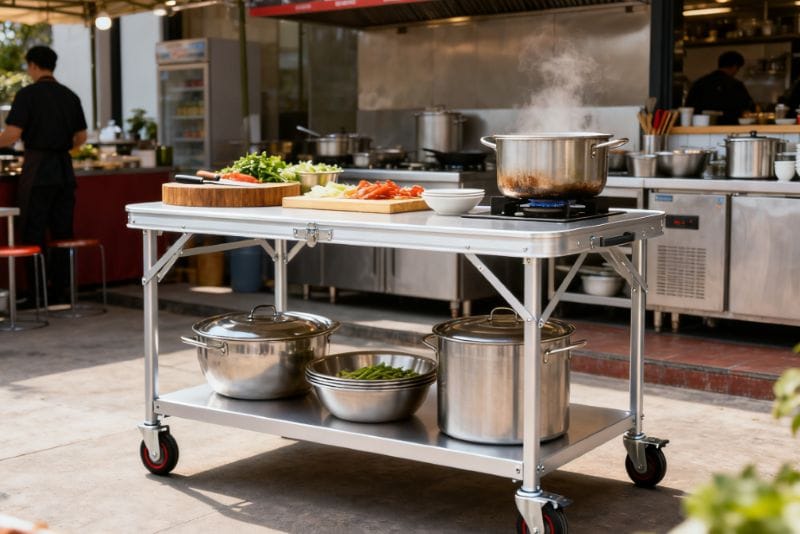
Food trucks require kitchen workstations that are compact and efficient. A typical food truck kitchen layout includes a prep station, a cooking station, and a plating station, all arranged in a small space.
Key features:
- Stainless steel countertops for easy cleaning
- Under-counter storage for storing utensils and small tools
- Overhead shelving for storing frequently used items
- A compact cooking station with a grill and fryer
- A plating station close to the serving window

The Future of Commercial Kitchen Workstations
1. Smart Kitchen Technology
The future of commercial kitchen workstations lies in smart technology. Smart kitchen appliances can help to improve efficiency, reduce waste, and ensure that food is cooked to the right temperature.
Examples of smart kitchen technology:
- Smart ovens that can be programmed to cook food at specific temperatures
- Smart grills that can be controlled remotely
- Smart refrigerators that can track inventory and alert staff when supplies are low
- Smart sinks that can automatically adjust water temperature and flow
2. Sustainable Kitchen Design
Sustainability is becoming increasingly important in the foodservice industry. Sustainable kitchen design can help to reduce waste, conserve energy, and create a healthier work environment.
Examples of sustainable kitchen design:
- Energy-efficient appliances that use less electricity
- Water-saving fixtures that reduce water usage
- Recyclable materials that can be reused or recycled
- Composting systems that reduce food waste
3. Ergonomic Kitchen Design
Ergonomic kitchen design is becoming increasingly important as restaurant owners look to reduce the risk of workplace injuries. Ergonomic kitchen workstations can help to reduce the risk of back pain, carpal tunnel syndrome, and other workplace injuries.
Examples of ergonomic kitchen design:
- Adjustable countertops that can be raised or lowered to fit the height of the user
- Ergonomic tools that reduce the risk of hand and wrist injuries
- Non-slip flooring that reduces the risk of slips and falls
- Proper lighting that reduces eye strain
Tanya Jawab Umum
Q: What is the best material for commercial kitchen countertops?
A: Stainless steel is the best material for commercial kitchen countertops. It’s durable, easy to clean, and resistant to heat, making it the perfect surface for food preparation.
Q: How can I maximize space in a small commercial kitchen?
A: You can maximize space in a small commercial kitchen by using vertical storage solutions like overhead shelving and wall-mounted cabinets. You can also use compact appliances and workstations that are designed to fit in small spaces.
Q: What is the most efficient kitchen layout?
A: U-shaped and L-shaped layouts are the most efficient, as they allow staff to move between stations with minimal effort. These layouts also help to reduce the risk of accidents by minimizing the amount of time staff spend walking between stations.
Q: How can I improve safety in my commercial kitchen?
A: You can improve safety in your commercial kitchen by incorporating safety features like non-slip flooring, heat-resistant materials, and proper lighting. You should also provide staff with training on food safety and workplace safety.
Q: What is the future of commercial kitchen workstations?
A: The future of commercial kitchen workstations lies in smart technology, sustainable design, and ergonomic design. Smart kitchen appliances can help to improve efficiency and reduce waste, while sustainable design can help to reduce the environmental impact of your restaurant. Ergonomic design can help to reduce the risk of workplace injuries and create a healthier work environment.
Kesimpulan
A well-designed commercial kitchen workstation is essential for any successful foodservice operation. By assessing your needs, choosing the right layout, selecting the right materials, and incorporating safety features, you can create a kitchen that is efficient, safe, and productive.
Remember, the key to a successful commercial kitchen is its workflow. A well-designed kitchen should allow staff to move from one task to the next with minimal effort, reducing the time spent walking between stations and minimizing the risk of accidents. With the right kitchen workstation design, you can create a kitchen that is both efficient and safe, helping you to run a successful foodservice operation for years to come.