Table of Contents
Introduction
A commercial kitchen workbench is one of the most important investments for any professional kitchen. It provides a reliable surface for prepping ingredients, plating dishes, and sometimes even housing essential equipment. Choosing the right workbench involves more than selecting a table; it requires careful consideration of materials, durability, ergonomics, workflow, and compliance with food-safety standards. A well-chosen workbench improves efficiency, enhances hygiene, and ensures long-term reliability in a busy kitchen environment.
Material Quality Matters
The material of a commercial kitchen workbench directly impacts its durability, hygiene, and lifespan. Stainless steel is the industry standard because it is non-porous, corrosion-resistant, and easy to clean. Food-grade 304 stainless steel is suitable for most kitchens, while 316 stainless steel is ideal for environments exposed to high moisture, salt, or acidic ingredients. The thickness of the steel, or gauge, also affects performance; lower gauge numbers indicate thicker steel, which improves load-bearing capacity and resistance to bending under heavy use.
Optimizing Work Surface Size and Layout
Choosing the right size and layout for your workbench is crucial. Standard commercial kitchen workbenches typically range from 1800 mm to 3000 mm in length and 600 mm to 900 mm in width. Consider the number of staff working simultaneously, proximity to appliances, and overall workflow when positioning workbenches. Proper placement enhances efficiency, reduces unnecessary movement, and minimizes accidents in high-traffic areas.
Ensuring Adequate Load Capacity
Commercial kitchens often use heavy equipment, such as mixers, slicers, or large ingredient containers. High-quality stainless steel workbenches can typically support 500–700 lbs, with reinforced models capable of handling 800 lbs or more. Selecting a bench with sufficient load capacity prevents structural damage and ensures long-term reliability, even in high-volume operations.
Maintaining Hygiene and Cleanability
Hygiene is critical in professional kitchens. A workbench with a smooth, non-porous surface prevents bacteria, mold, and odors from accumulating. Seamless welding, rounded corners, and NSF-certified surfaces make cleaning easier and more effective. Regular sanitation and proper maintenance of these benches ensure compliance with health inspections and contribute to safer food preparation.
Maximizing Storage and Organization
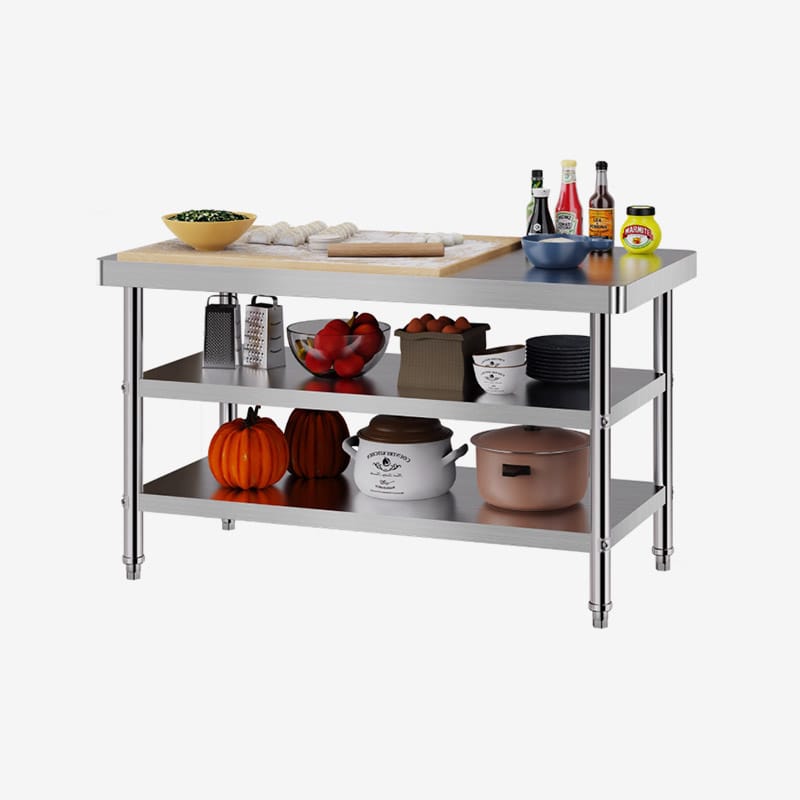
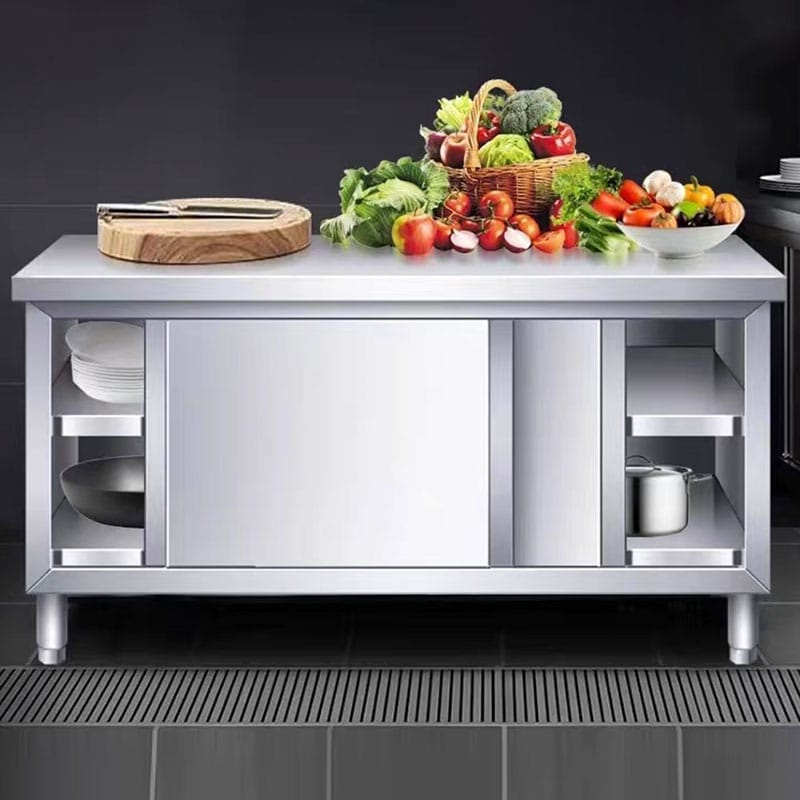
Integrated storage options, such as undershelves or drawers, improve kitchen efficiency by keeping utensils, trays, and ingredients within reach. Organized workspaces reduce clutter, streamline workflow, and save time during peak service hours. A workbench with built-in storage supports faster prep and minimizes errors, allowing kitchen staff to focus on cooking and plating.
Splash Protection for Cleanliness
Workbenches equipped with backsplashes protect walls from water, sauces, and oil splatters, maintaining a cleaner environment and reducing maintenance needs. Splash protection is especially important for benches near sinks or washing stations and ensures compliance with hygiene standards.
Mobility for Flexibility
Casters or wheels provide flexibility in kitchen layout, allowing staff to move benches for cleaning, temporary stations, or seasonal workflows. Lockable casters ensure stability while maintaining the versatility needed in dynamic kitchens.
Ergonomics and Adjustable Height
Adjustable-height workbenches promote better ergonomics, reduce fatigue, and improve staff comfort during long prep sessions. Kitchens with staff of varying heights benefit from this feature, which enhances productivity while reducing the risk of workplace injuries.
Modular and Custom Options
Modular or custom workbenches allow kitchens to optimize workflow for specialized tasks. Options such as integrated sinks, cutting boards, or tailored sizes accommodate specific needs, from bakeries to catering operations, making the kitchen more efficient and versatile.
Compliance and Food-Safety Certification
Compliance with NSF, ANSI, or local food-safety regulations ensures that workbenches meet hygiene standards and are easier to maintain. Certified benches offer peace of mind and reduce the risk of penalties during inspections. Choosing certified equipment is both a legal necessity and a best practice for long-term operations.
Comparison of Key Features
| Feature | Importance | Example / Recommendation |
|---|---|---|
| Material Quality | High | 304/316 stainless steel |
| Size | High | 1800–3000 mm length, 600–900 mm depth |
| Load Capacity | High | 500–800 lbs depending on model |
| Hygiene & Cleanability | High | Smooth, non-porous, NSF-certified |
| Storage | Medium | Undershelves, drawers for utensils & ingredients |
| Backsplash | Medium | Near sinks or washing areas |
| Mobility | Medium | Casters for flexible workflow |
| Adjustable Height | Medium | Ergonomic adjustments for staff comfort |
| Modular / Custom | Medium | Sink integration, tailored sizes |
| Compliance & Certification | High | NSF, ANSI, or local health-code approved |
Conclusion
A commercial kitchen workbench is far more than a prep surface — it forms the backbone of any professional kitchen. High-quality stainless steel benches with the right features enhance efficiency, support staff well-being, maintain hygiene, and ensure compliance with food-safety standards. Carefully planning bench placement, size, storage, and workflow integration can make a significant difference in productivity and long-term operational success.
Tanya Jawab Umum
Why is stainless steel the preferred material for commercial kitchen workbenches?
Stainless steel is non-porous, corrosion-resistant, and easy to clean. It withstands heat, moisture, and heavy use, making it ideal for professional kitchens.
How do I choose the correct size for my workbench?
Measure your kitchen layout, consider staff movement, and account for the number of prep stations. Typical sizes range from 1800–3000 mm in length and 600–900 mm in depth.
Are adjustable-height benches necessary?
Adjustable-height benches improve ergonomics, reduce fatigue, and increase productivity, though fixed-height benches may be sufficient for smaller kitchens.
What certifications should I look for?
NSF, ANSI, or local certifications ensure the bench meets hygiene standards and complies with food-safety regulations.
How much weight can a commercial kitchen workbench support?
Standard benches support 500–700 lbs, while reinforced or heavy-duty benches can handle 800 lbs or more.