
So, you’re running a bakery, patisserie, or a bustling café, and you’ve hit that critical point where your current prep surface just isn’t cutting it anymore. Dough is sticking, cleanup is a chore, and you’re losing precious minutes (and product) to inefficient workflows. It might be time to seriously consider the backbone of any professional baking operation: the stainless steel bakery workbench.
This isn’t just about buying a table. It’s about investing in the central nervous system of your food production. A well-chosen workbench improves hygiene, boosts staff productivity, and directly impacts the quality and consistency of your baked goods. This guide will walk you through everything you need to know to make an informed decision, ensuring your next workbench is a perfect fit for years to come.
Table of Contents
Why Stainless Steel is Non-Negotiable in a Bakery Environment
Let’s start with the material. You might see options for wood, laminate, or even plastic, but for any serious food preparation, stainless steel is the undisputed champion. Here’s why:
- Unmatched Hygiene: Stainless steel is non-porous. This means it doesn’t absorb moisture, fats, or food particles. Bacteria, yeast, and mold have nowhere to hide. A simple wipe-down with a food-safe sanitizer is all it takes to maintain a microbiologically clean surface, which is critical for food safety compliance (think HACCP plans and health inspections). According to a study on surface hygiene in food service, non-porous surfaces like stainless steel showed significantly lower bacterial retention and were easier to disinfect effectively compared to porous alternatives.
- Durability Under Pressure: A bakery workbench must withstand a daily assault: heavy bags of flour and sugar, the impact of rolling pins, the scraping of bench scrapers, and constant moisture. Stainless steel, particularly grades like 304 (which is food-grade), is incredibly resistant to impact, corrosion, and heat. It won’t warp, crack, or stain like other materials.
- Functional Purity: The smooth, hard surface is ideal for kneading, rolling, and shaping dough. It provides just the right amount of friction and coolness, which is especially beneficial for managing pastry and butter-based doughs that can become too soft on a warm surface.
Key Features to Analyze Before You Buy
Not all stainless steel bakery workbenches are created equal. Here are the critical specifications to scrutinize:
1. Gauge (Thickness) Matters
The thickness of the stainless steel top is a primary indicator of quality and longevity. It’s measured in gauge, where a lower number means thicker steel.
| Gauge Number | Approximate Thickness | Best For |
|---|---|---|
| 22-20 Gauge | ~0.8mm – 1.0mm | Light, occasional use. May dent under heavy loads. |
| 18 Gauge | ~1.2mm | Good for general-purpose commercial use. A solid, standard choice. |
| 16 Gauge | ~1.5mm | Recommended for busy bakeries. Excellent resistance to heavy impact and weight. |
| 14 Gauge | ~2.0mm | Heavy-duty, industrial-grade. For maximum durability, regardless of cost. |
For a professional bakery, we strongly advise not going thinner than 18 gauge, with 16 gauge being the sweet spot for most operations.
2. The Understructure: It’s What’s Inside That Counts
The shiny top gets all the attention, but the frame beneath is what prevents wobble and ensures stability. Look for:
- Tubular Steel Frames: Square or rectangular tubing (e.g., 1.5″ x 1.5″) is far more rigid than angle iron.
- Reinforced Legs and Cross-Bracing: Additional horizontal or diagonal supports between the legs eliminate any side-to-side movement, crucial when dealing with vigorous kneading.
- Adjustable Leveling Feet: Floors are rarely perfectly level. These feet allow you to stabilize the workbench on uneven surfaces, preventing rocking and ensuring a solid feel.
3. Top Design: Edges, Backsplashes, and Drainage
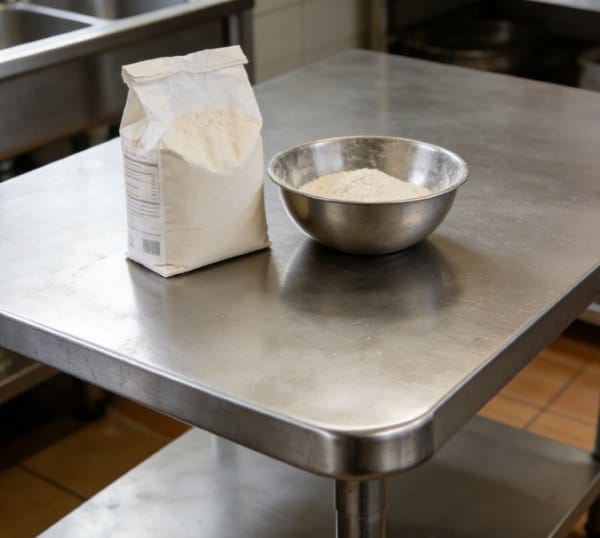
- Edge Details: A coved or integral edge (where the top curves seamlessly up to form a lip) is superior. It prevents crumbs and liquids from dripping onto the floor and makes cleaning easier. A simple folded edge can trap debris.
- Backsplash: A tall (4-6 inch) stainless steel backsplash integrated into the rear of the bench protects walls from splashes and provides a clean, contained workspace.
- Drainage: For benches dedicated to tasks like washing fruit, draining cheese, or working with very wet items, consider a top with a slight slope and a stainless steel drip tray that channels liquids to a drain outlet.
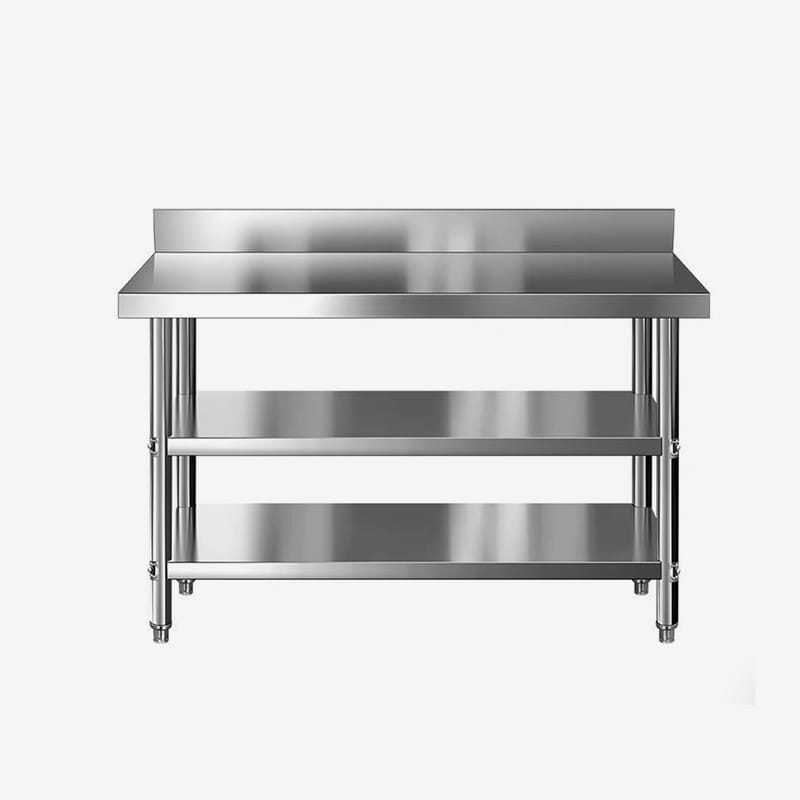
Case Study: From Chaos to Flow at “Rise & Shine Bistro”
Consider the experience of “Rise & Shine Bistro,” a mid-sized café struggling with morning rush prep. Their old, wooden-topped bench was stained, difficult to clean, and shook violently when rolling out large batches of pastry. They upgraded to a custom 16-gauge stainless steel workbench with a 4-inch backsplash, a sturdy 2-inch square tube frame, and two integrated undershelves for sheet pan storage.
The Result?
- Prep Time Reduced: The larger, stable surface allowed two staff to work simultaneously without congestion. Dough rolled out more evenly and quickly on the cool, smooth steel.
- Cleaning Time Halved: Post-rush cleanup, which used to involve scrubbing and scraping, became a 5-minute wipe-down.
- Staff Morale Improved: The professional, stable workstation reduced physical strain and frustration. The head baker reported, “It feels like we finally have the right tool for the job. It’s changed our entire morning dynamic.”
Integrating Your Workbench into an Efficient Kitchen Layout
Your new workbench shouldn’t be an island. Think about workflow:
- Positioning: Place it centrally between mixers, proofers, and ovens to minimize unnecessary steps.
- Height: Standard height is 34-36 inches. For specific tasks like detailed decorating, a slightly higher table might be ergonomic. For heavy kneading, some prefer a lower surface. Check if the manufacturer, like Bafang, offers custom height options.
- Mobility: If your space needs to be flexible, consider a workbench with heavy-duty locking casters. This allows you to rearrange your kitchen for large-batching or cleaning.
Beyond the Basic Table: Essential Add-Ons
Modern stainless steel bakery workbenches are highly configurable. Think about these add-ons:
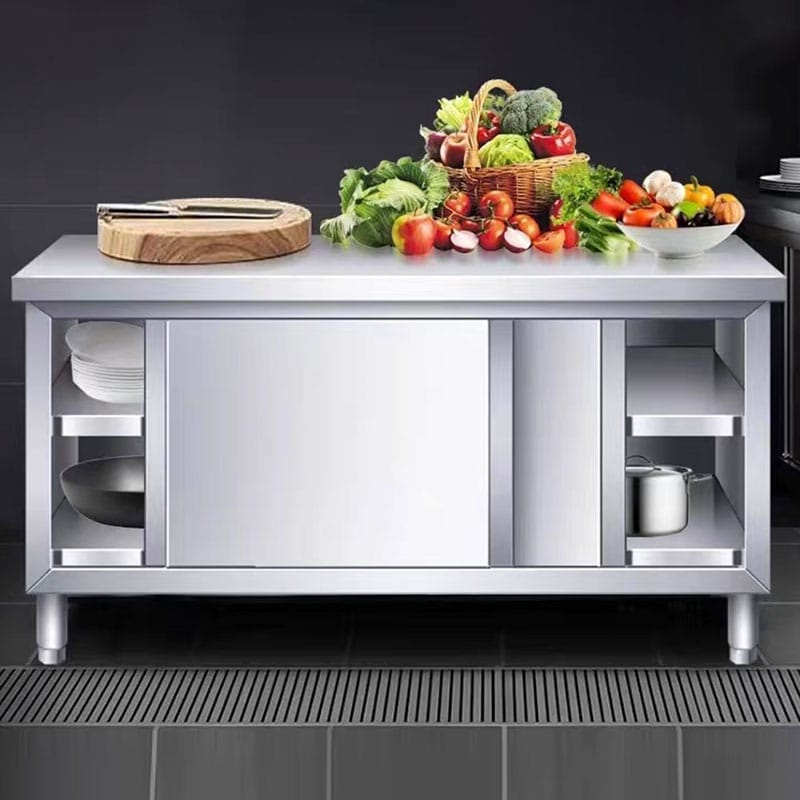
- Undershelves & Drawers: For storing rolling pins, scales, cutters, and liners right beneath the work surface. A stainless steel workbench with storage transforms a simple table into an organized command center.
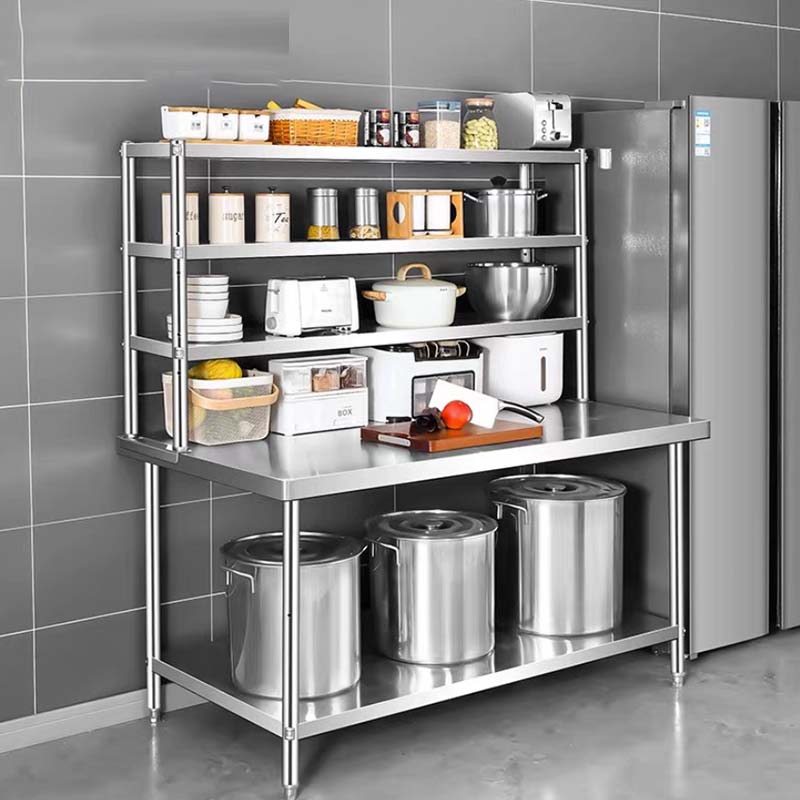
- Overhead Racks: Utilize vertical space for drying racks or storing baking sheets.
- Sinks & Taps: Integrate a stainless steel bowl sink or even a pot filler tap directly into the workbench for the ultimate all-in-one prep station.
Your Investment Checklist
Before finalizing your purchase, run through this list:
- Confirmed stainless steel grade (304 is food-grade).
- Verified top gauge (16 gauge recommended).
- Inspected frame design (tubular steel, cross-braced).
- Checked for coved edges and backsplash.
- Considered storage needs (undershelves, drawers).
- Measured for a perfect fit in your kitchen layout.
- Confirmed load capacity and warranty details.
Choosing the right stainless steel bakery workbench is a strategic decision that pays daily dividends in efficiency, safety, and output quality. It’s the foundation upon which great baking is built.
FAQ
Can I use a stainless steel workbench for both pastry and bread?
Absolutely. Its neutral, cool, and non-stick properties make it ideal for all dough types. For pastry, some bakers lightly flour the surface or use a marble slab on top for extra coolness, but stainless is an excellent all-rounder.
How do I remove scratches or light stains from my stainless steel workbench?
Light surface scratches are often just in the polish and don’t affect hygiene. For cleaning, always use non-abrasive tools and cleaners. For persistent stains or to restore grain, use a dedicated stainless steel cleaner and polish, always following the manufacturer’s grain direction.
Is it worth getting a workbench with a lower shelf?
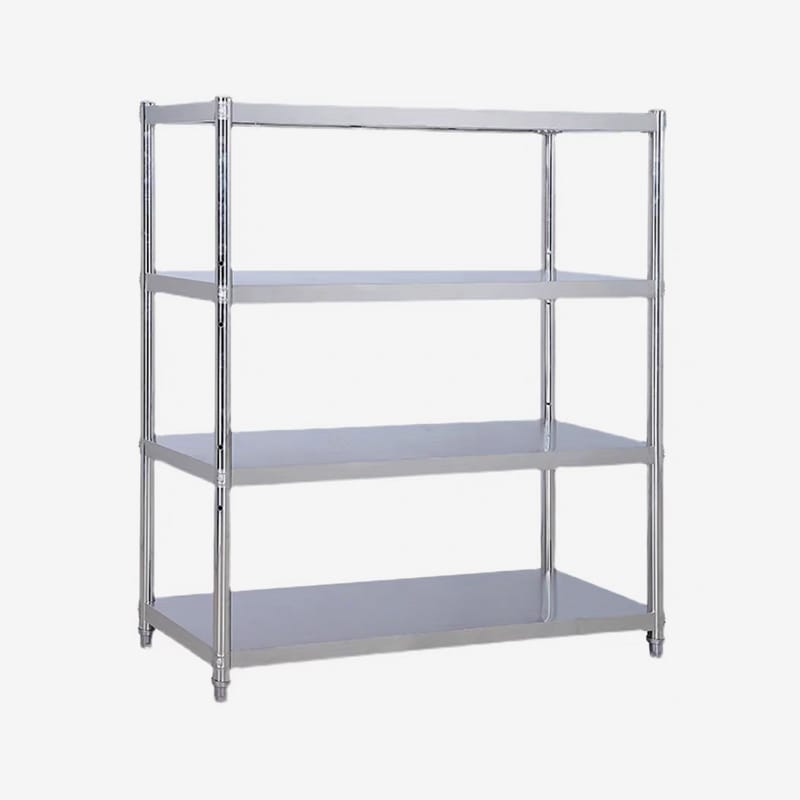
In almost all cases, yes. An undershelf, whether solid or wire, provides invaluable storage for sheet pans, cooling racks, or bins of ingredients, keeping the floor clear and tools within arm’s reach.
What’s the typical lead time for a custom-configured bakery workbench?
Lead times vary by manufacturer and complexity. For standard models with one or two add-ons, expect 2-4 weeks. For fully custom designs, it can take 6-8 weeks. Always confirm with your supplier during the quoting process.
How much weight can a commercial bakery workbench typically hold?
A well-built workbench with a 16-gauge top and a robust frame can typically support distributed loads of 1,000 lbs or more. Always check the specific load rating from the manufacturer for the exact model.
Are there any surfaces I should avoid using on stainless steel?
Avoid using steel wool or harsh abrasive pads, as they will leave deep scratches. Also, avoid highly concentrated chlorine bleach, which can cause pitting over time. Stick to soft cloths, plastic scrapers, and food-safe, non-abrasive cleaners.