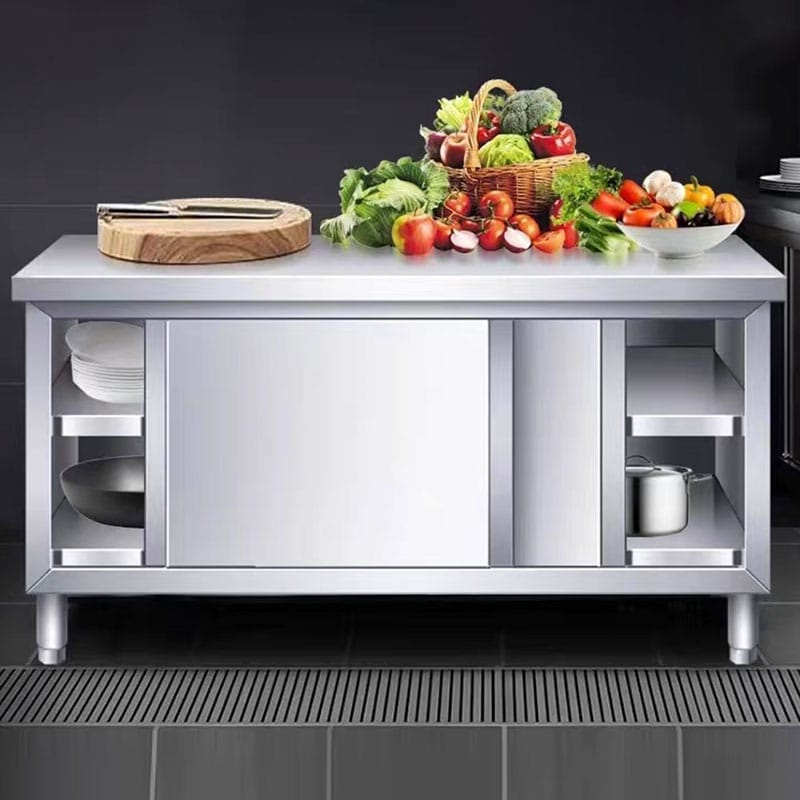
Is your commercial kitchen a constant battle against clutter? Do your chefs and prep cooks spend more time searching for utensils and sheet pans than actually cooking? You’re not alone. Space is the ultimate luxury in any kitchen, and wasted space is wasted money. The solution isn’t necessarily a bigger kitchen—it’s smarter furniture. Enter the transformative power of stainless steel workbenches with storage.
This article goes beyond just recommending a table with a shelf. We’ll delve into strategic, innovative storage integrations that turn a simple workbench into a highly efficient, space-saving hub. We’ll look at real-world configurations, data on kitchen efficiency, and help you design a workstation that puts every tool within reach and reclaims your valuable floor space.
Table of Contents
The High Cost of Kitchen Clutter: More Than Just an Annoyance
Disorganization has tangible, negative impacts on your business:
- Time Wastage: A study published in the International Journal of Productivity and Performance Management found that in disorganized work environments, employees can spend up to 20% of their time searching for tools and information. In a kitchen, that translates to delayed orders and higher labor costs.
- Safety Hazards: Cluttered floors and overstuffed counters are prime causes of slips, trips, and falls—the leading type of restaurant workplace injury according to the National Safety Council.
- Hygiene Issues: When items don’t have a designated home, they are less likely to be cleaned properly and can contribute to cross-contamination.
A stainless steel workbench with integrated storage is a proactive solution to these problems, creating a designated “home” for every essential item.
Anatomy of a Storage-Optimized Workbench: Beyond the Basic Shelf
Let’s break down the storage components you can integrate, moving from standard to highly innovative.
1. The Foundational Tier: Undershelves & Solid Cabinetry
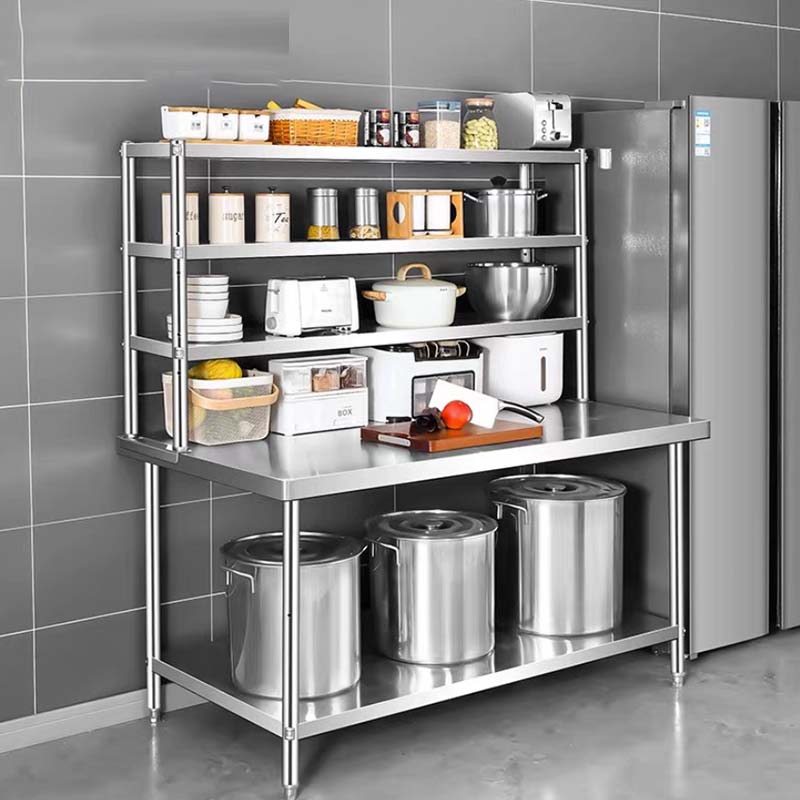
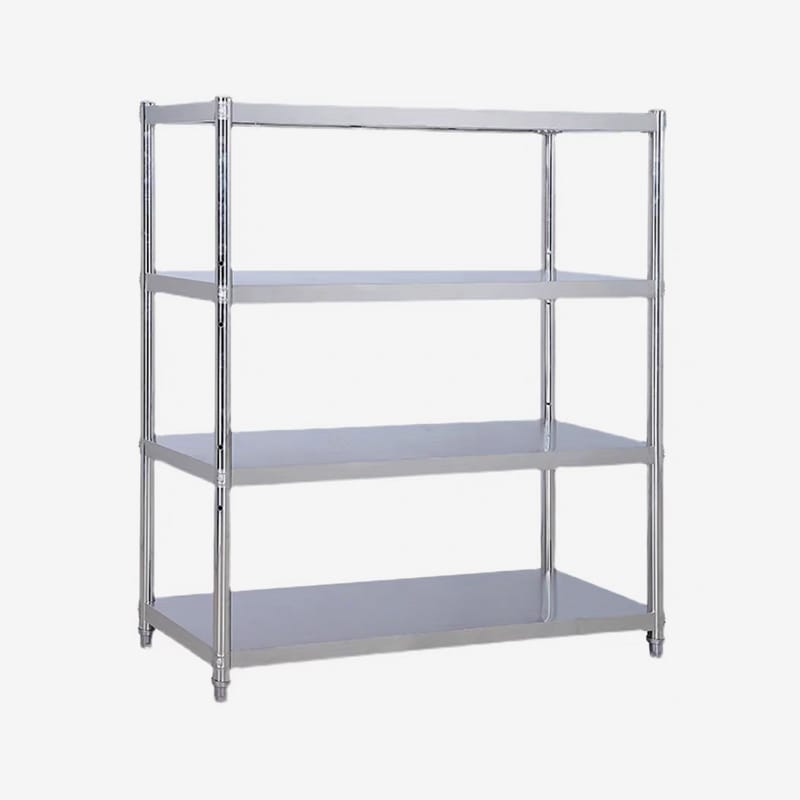
- Wire Grid Shelves: The most common add-on. They are lightweight, allow for air circulation (great for drying or storing pots), and are easy to clean. Ideal for bulky items like mixing bowls, stockpots, and sheet pan storage.
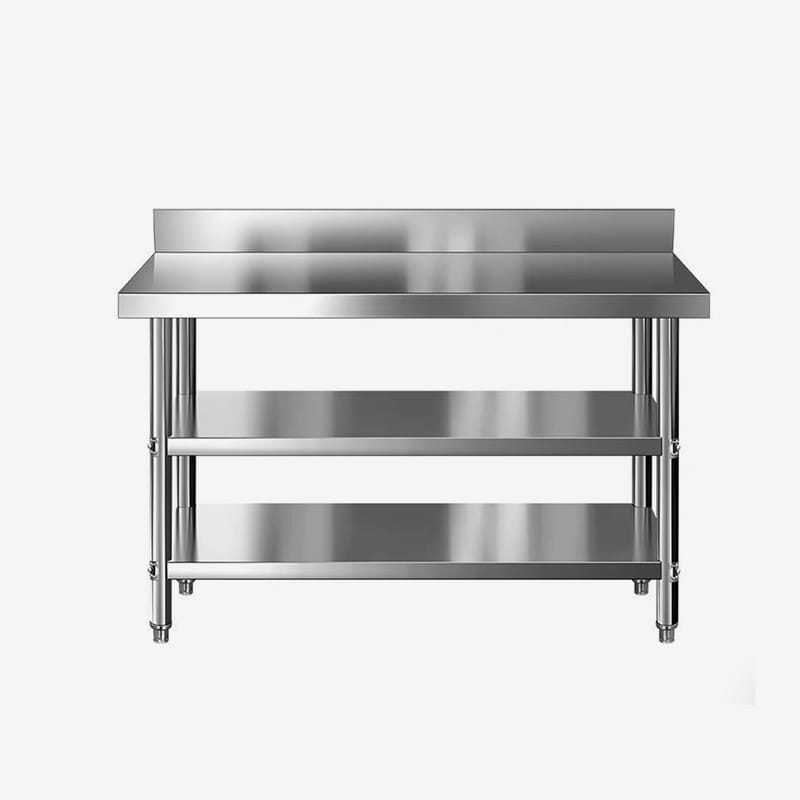
- Solid Stainless Steel Shelves: Provide a completely sealed surface. Perfect for storing dry goods in bins, smaller equipment, or anything you want to protect from dust or spills from above. They create a cleaner, more finished look.
- Enclosed Cabinets: For securing high-value items (e.g., specialty spices, sharp tools) or creating a completely hidden storage area for a neater appearance. Doors can be solid or equipped with ventilation louvers.
2. The Accessibility Tier: Drawers & Roll-Outs
This is where efficiency leaps. Drawers bring items to you, eliminating bending and searching in the back of a dark shelf.
- Full-Extension Drawers: These drawers pull out 100%, revealing their entire contents. Essential for organizing smaller tools: measuring spoons, piping tips, peelers, thermometers, etc. Consider drawer dividers for ultimate organization.
- Tool-Well Drawers: Shallow drawers designed specifically for holding knives, spatulas, and other long utensils securely and safely.
- Roll-Out Shelves or Carts: Imagine a heavy-duty shelf on wheels that nests under your workbench. It can be loaded with prepped ingredients or specific project items and rolled directly to the cooking line or plating station. This is a game-changer for mise en place.
3. The Vertical Frontier: Overhead Racks & End Panels
Don’t ignore the airspace above your bench.
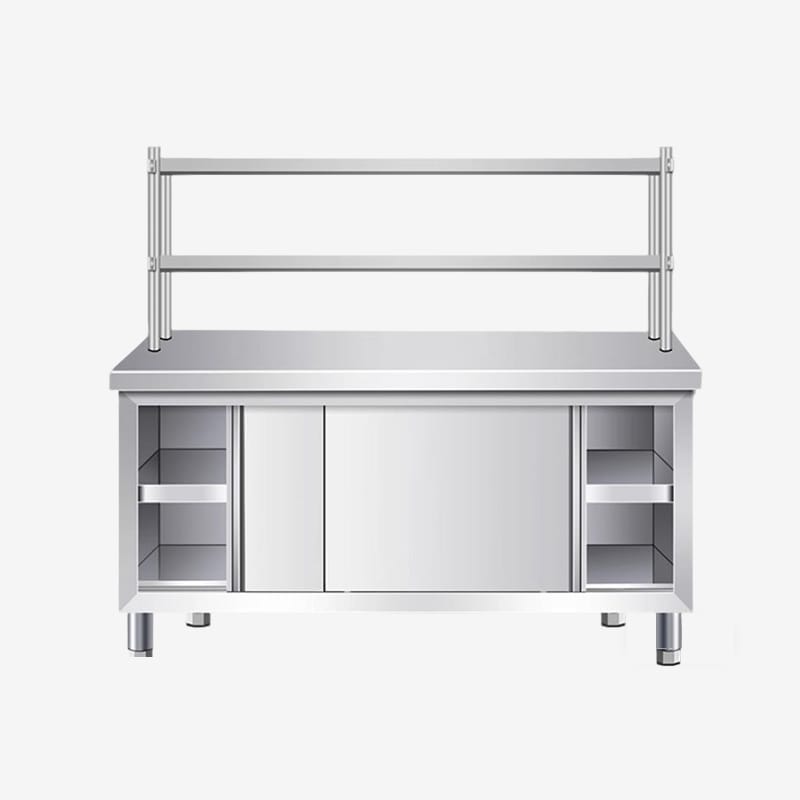
- Overhead Pot Racks: Mounted directly to the workbench or the wall above it, these racks keep pots, pans, and ladles accessible but off the precious counter space.
- Slotted Backsplashes or End Panels: These panels allow you to hang utensils, towels, and small equipment using S-hooks. It turns the workbench structure itself into a vertical organizer.
Data-Driven Layout: The “Triangle” Meets the “Zone”
You’ve likely heard of the kitchen work triangle (sink, stove, fridge). In a commercial context, think in terms of work zones. A storage workbench becomes the heart of a specific zone.
Case Study: “The Urban Eatery” Streamlines Its Salad & App Station
This fast-casual restaurant had a bottleneck at their cold prep station. Ingredients were in a walk-in across the kitchen, bowls were on an overhead shelf, and utensils were in a drawer by the grill. They installed a long, low stainless steel workbench with storage configured as follows:
- Undershelf: Holds clear, labeled bins of pre-washed greens, chopped veggies, and proteins (refrigerated units were placed below in a custom configuration).
- Drawer 1: Dedicated to serving bowls and plates.
- Drawer 2: Divided for tongs, spoons, and portioning tools.
- Overhead Rack: Holds small ramekins for dressings and toppings.
The Efficiency Gain: By creating a dedicated “Salad Zone,” the average order assembly time dropped from 3.5 minutes to under 2 minutes. The storage was task-specific, which cut down movement and decision fatigue for staff.
Configuration Table: Matching Storage to Your Kitchen’s Needs
| Deep drawer for peelers/choppers, wire shelf for colanders/strainers, integrated sink with drainboard, and overhead rack for pots. | Primary Tasks | Recommended Storage Configuration |
|---|---|---|
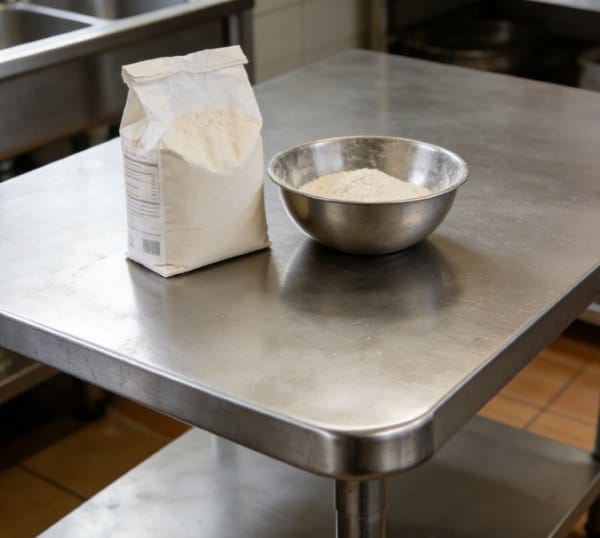
| Pastry & Baking Station | Dough work, decorating, plating | Solid undershelf (for flour bins), shallow tool drawer for tips/cutters, dedicated knife drawer, optional marble slab insert on top. |
| Prep & Vegetable Station | Chopping, peeling, washing | Deep drawer for peelers/choppers, wire shelf for colanders/strainers, integrated sink with drainboard, overhead rack for pots. |
| Finishing & Plating Station | Assembly, garnishing, saucing | Multiple shallow drawers for garnishes & utensils, solid shelf for clean plates, integrated refrigeration below for cold components. |
| Utility & Holding Station | Holding prepped items, staging | Multiple heavy-duty roll-out shelves/carts, solid enclosed cabinets for backup dry storage. |
Material & Hygiene: Why Stainless Steel for Storage Too?
You wouldn’t use a wooden cabinet inside a refrigerator. The same logic applies here. Stainless steel storage components:
- They are equally non-porous and easy to sanitize.
- Resist moisture, preventing warping, rust, and mold.
- Can withstand the high-pressure spray and heat of commercial dishwashers if drawers/shelves are removable.
- Maintain a consistent, professional look throughout the kitchen.
FAQ
Q1: Are drawers on a workbench hard to keep clean?
A: Not if designed correctly. Look for drawers with seamless, coved interiors and full-extension, heavy-duty slides. They should be easily removable for deep cleaning in a pot sink or dishwasher. Stainless steel itself is simple to wipe down.
Q2: Can I add storage to my existing stainless steel workbench?
A: It depends on the design. Some manufacturers offer retrofit kits for undershelves or end panels. However, adding drawers typically requires custom fabrication. It’s often more cost-effective and structurally sound to purchase a bench designed with storage from the start from a provider like Bafang.
Q3: What’s better: open shelving or enclosed cabinets under a workbench?
A: It depends on need. Open shelving (wire or solid) offers better accessibility, airflow, and is easier to clean around. Enclosed cabinets look neater, protect items from splashes and dust, and can be locked. Many kitchens use a combination.
Q4: How do I prevent my undershelf from becoming a cluttered catch-all?
A: Use organizational tools like shelf dividers, labeled bins, and sheet pan racks. Establish a “everything has a place” rule and incorporate cleaning the shelf into the closing checklist. Good design enables good habits.
Q5: Is it safe to store heavy equipment like stand mixers on an undershelf?
A: Generally, undershelves are designed for distributed storage, not extreme point loads. A heavy mixer is better placed on the sturdy main top. Always check the manufacturer’s specified weight limit for the shelves, which is usually lower than the top’s capacity.
Q6: Can I get a workbench with both storage and refrigeration?
A: Yes, this is a popular high-efficiency configuration. Manufacturers can integrate under-counter refrigerators or freezer drawers directly into the workbench frame, creating a seamless cold-prep station.